Brave new world: One-on-one with Nancy Whiteman, co-owner of Wana Brands
Manufacturer of marijuana edibles addresses dosing, packaging and product safety.

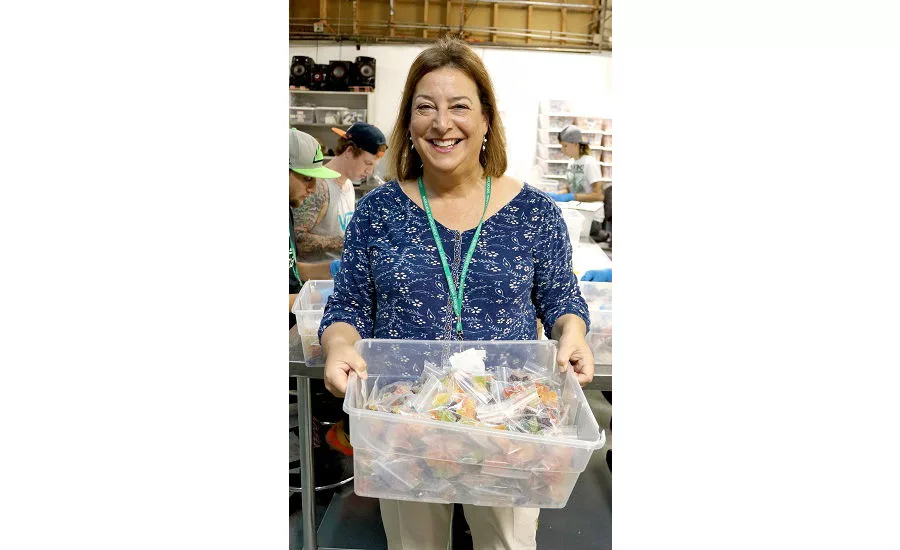
Nancy Whiteman, co-owner of Wana Brands. Submitted photo.
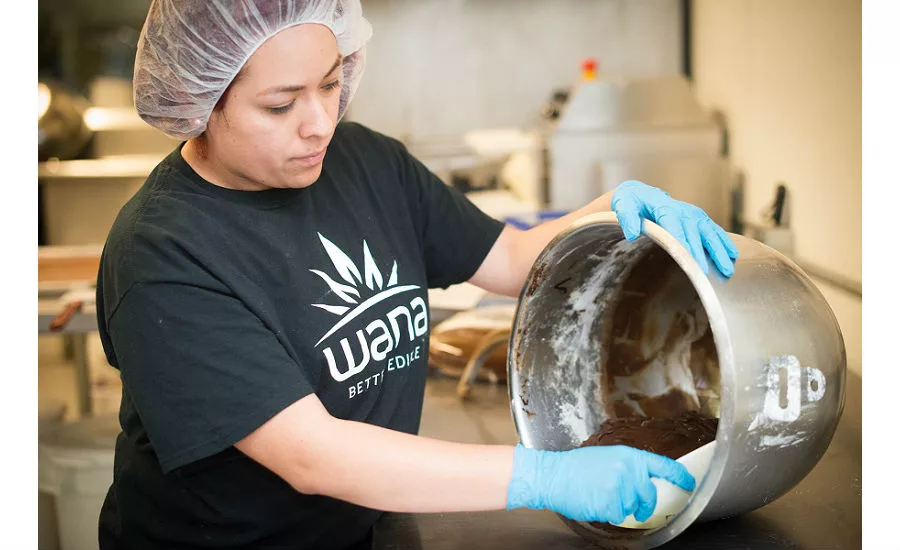
A Wana Brands employee prepares marijuana-infused confections. Submitted photo.
Wana Brands has been an innovator in the cannabis infused-products industry in Colorado since 2010. As one of the state’s original infused products manufacturers, the Boulder, Colo.-based company has developed a broad range of artisan, made-from-scratch edibles, concentrates and medicinal products, including the state’s most popular sour gummies. It’s ranked No. 1 in sales revenue in the highly competitive Colorado market.
The company’s products are also available in more than 160 dispensaries in Oregon, and it launched a product line in Nevada at the end of 2016. The company also has a partnership in Illinois that will bring its products to that state this year. Additionally, Wana Brands has deals in the works in four new emerging markets. Candy Industry discusses the edibles segment as it involves confections with Wana Brands’ co-owner, Nancy Whiteman.
CI: How did you get involved in the edibles business?
NW: I ran a sales and market consultancy focusing on Internet business models for 10 years, and before that I was in the insurance industry. However, the truth is that consultancies are hard to scale, and therefore I always was interested in building a product-focused business that did not rely on my billable hours to generate all the revenue. So, when an opportunity came along, my partner John and I thought it would be fun to try our hand at edibles.
The idea for the business started out somewhat lightly, but along the way, I fell in love with the business. I really never did anything before in my professional life where I received heartfelt feedback from customers about how much something that I had a part in creating helped them and enhanced their lives. It wasn’t until that started to happen on a regular basis that I recognized the full power of what we — and the rest of the industry — were really creating. By that time, I was hooked.
I love a steep learning curve, and being involved in something brand new has been fascinating to me — especially after years in the insurance industry, which is pretty set in its ways. It has also been amazing to be part of the process of creating what a multi-billion industry is becoming by participating in industry groups. Even with all of its frustrations and challenges, I really cannot imagine a better industry to be in at this moment in history.
CI: What are the benefits of infusing cannabis into edibles?
NW: Edibles are popular for a number of reasons. First, they are discrete. Additionally, some consumers may find smoking cannabis flower irritates their respiratory tract and lungs, and there are potential cardiovascular side effects.
Cannabis consumed in the form of edibles, whether food or beverages, is absorbed into the gastrointestinal (GI) tract and then metabolized by the liver, consequently giving the cannabis different medicinal properties and a different experience in lift. This digestion time ultimately affects the onset period of the lift. Novice consumers need to be very mindful when consuming edibles for the first time.
The truth is that edibles take about an hour to an hour-and-a-half to kick in. But unfortunately, some new consumers don’t wait and eat more, which can lead to a very uncomfortable and intense experience. For this reason, consumer education is paramount. We suggest following the motto coined by the Cannabis Business Alliance: “Start low and go slow.” By following this guideline, consumers can really enjoy the edibles experience as well as get relief and comfort for a medical condition.
That said, gummies are the most popular edible in Colorado.
CI: What production challenges did you face in producing edibles in the form of gummies?
NW: One of the key challenges Wana Brands faces in manufacturing is finding the sweet spot between production efficiency and cost effectiveness. In the confectionery industry, there is a sizeable gap between equipment that works well for small businesses and large, plant-level equipment for very large businesses. There just isn’t much choice in the middle. Because edibles companies can’t ship across state lines, there is a logical limit to how large the market can grow, and therefore, plant-level equipment is a capital investment that doesn’t make any sense for a company that is limited to the Colorado market. That means putting up with less production efficiency than we would like.
Another significant challenge is to put full GMP (good manufacturing practices) and Quality Assurance protocols in place. Wana Brands has committed to ensuring that its manufacturing processes are up to federally approved standards even though it is not yet required of the industry. It's really the best way we know of to ensure safety, quality and consistency.
CI: Do you have your own facility and what’s your output?
NW: Wana Brands produces about 20,000 units a week in its 30,000-sq.-ft. Colorado facility. The company also licenses with other companies in emerging markets — states where cannabis is legal.
CI: In producing edibles, what kind of regulations do you face regarding dosing and packaging?
NW: In Colorado, all edibles for adult/recreational use must be available in serving sizes of 10 milligrams or less, and the servings must be easily delineated, such as an individual gummy or a scored piece of a chocolate bar.
In addition, all edibles must come in child-resistant packaging. Adult-use edibles must be in child-resistant packaging that retains its child resistant quality after opening if it contains more than a single serving.
We designed our packaging so that it is consistent with our products’ quality and consistency. We aim to make the consumer comfortable and confident in their purchase, because our packaging communicates that our products are made by people who know what they are doing. The days of hand-wrapped edibles in saran wrap are over. We want our packaging to be as attractive and professional as any products that you would see in Whole Foods or any other mainstream retail outlet. We chose a clean, uncluttered aesthetic because we feel that accurately conveys the brand.
CI: There’s been plenty of discussion regarding the safety of edibles. How have you dealt with that issue?
NW: There is a lot of work that goes into remaining compliant. We are really proud of all the ways that the industry has contributed to public safety for infused products, and we continue to actively address concerns regarding consumer safety. As mentioned earlier, all packaging is child resistant. In June 2016, a bill was signed that mandates that the products cannot be shaped like animals or be in packaging designed to appeal to children. The industry in Colorado also ramped up for stamping regulations that went into full effect Dec. 1, requiring all packaging, as well as cannabis-infused products, to be marked with the specific symbol of THC and ! within a diamond shape. Recent regulations also prohibit edibles manufacturers from buying commercial non-infused products and spraying them with hash oil, as the average consumer or child would not be able to tell the difference between a medicated and unmedicated product.
With these regulations in place, the cannabis industry can safely claim that between stamping, regulation of shapes, child-resistance, prohibited advertising of cartoon characters, opaque packaging and warning statements, that Colorado infused-products manufacturers are doing more than any other industry to make their products less appealing to kids while maintaining colors and flavors that still appeal to the adult market it serves. Legal cannabis products are less likely to be accidentally ingested by kids than dish detergent packets, diaper rash cream, and even alcohol-infused chocolates. With more than 5 million infused product units sold each year and diminishing cases of accidental ingestion, the industry feels strongly that it is headed in the right direction. In fact, recent federal data found that teen marijuana use in Colorado fell roughly 12 percent year-over-year since 2014, when the adult-use market came online.
Banning legal edibles or regulating edibles out of existence merely pushes a safe, regulated, taxable industry with professionally produced, lab-tested products packaged in childproof packaging into the black market, where homemade edibles with no testing or limits on potency and no required packaging become a much more dangerous situation for children. Adults must keep cannabis products safely out of the reach of children and educate youth on the dangers of underage consumption.
CI: Where do you see the growth in the edibles market?
NW: The preliminary demographic research shows that edibles are very popular with older consumers and female consumers, both of which are growing segments of the cannabis market. So, it definitely bodes well for the edibles industry.
I’d also like to add that the edibles industry is moving toward more pharma-like standards in precision dosing and consistency. In Colorado, for example, all products must be sent to a third-party lab to ensure that they meet potency regulations, as well as test clean for contaminants and residual solvents. The potency variation standards are actually even more stringent than what is required of pharma, ensuring that only manufacturers who know how to precisely and consistently dose their products participate in the industry.
CI: Several states legalized cannabis, either for recreational or medicinal use, in voter referendums last year. At the same time, the fed’s laissez-faire attitude could change with the new administration. Your thoughts on the political climate?
NW: In the United States, cannabis is legalized by state. This means that states that legalize marijuana take the product out of the black market, regulate and tax it. These taxes are a huge bonus and a big reason why states are willing to come online. Other states have seen the economic benefits that Colorado has reaped since bringing cannabis into a regulated market. Colorado is on track to see a $3-billion economic impact for 2016. Additionally, Colorado’s 2016 tax revenues are projected to total more than 2014 and 2015 combined. The cannabis industry is compliant, a job creator and a tax engine bringing state budgets out of the red and into the black.
Looking for a reprint of this article?
From high-res PDFs to custom plaques, order your copy today!