Castronovo Chocolate founder combines ecology PhD with chocolate making
Denise Castronovo discusses why it's so important to be a bean-to-bar chocolate maker.
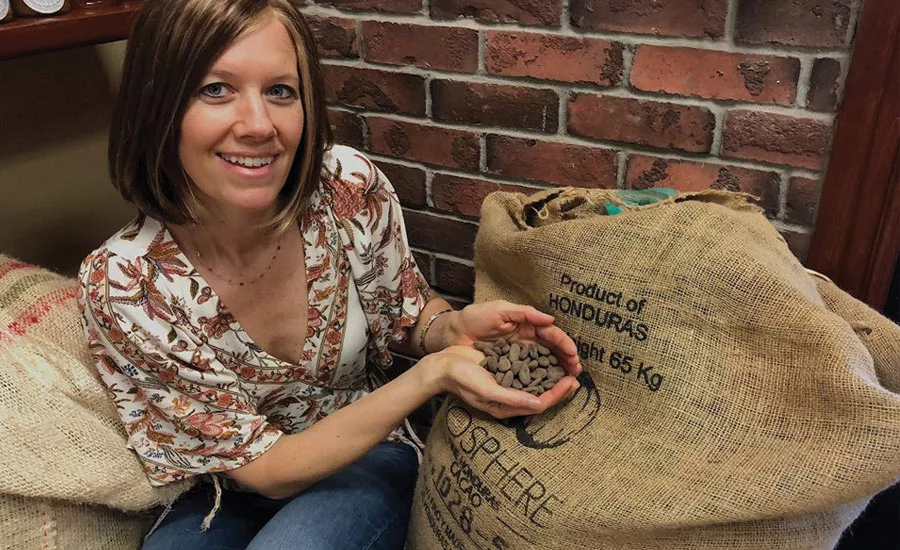
When Denise Castronovo launched Castronovo Chocolate in 2013 with her husband Jim, she brought with her a PhD in ecology and a passion for rainforest conservation. So to her it was only natural that her company start in an actual forest — with the cocoa beans.
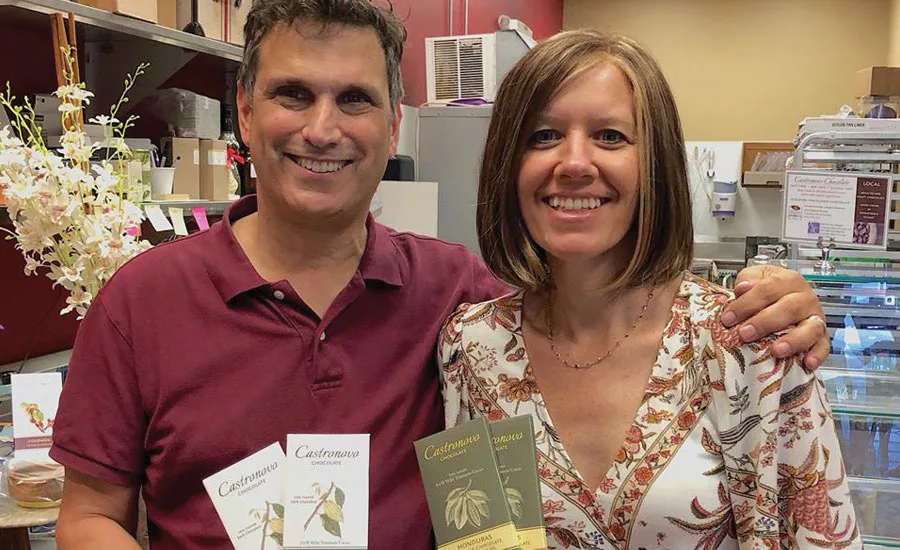
When Denise Castronovo launched Castronovo Chocolate in 2013 with her husband Jim, she brought with her a PhD in ecology and a passion for rainforest conservation. So to her it was only natural that her company start in an actual forest — with the cocoa beans.
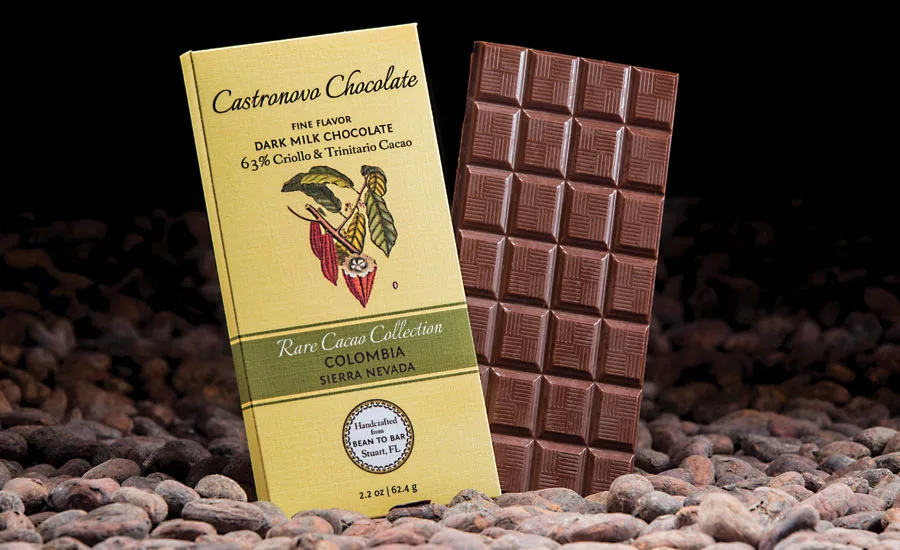
When Denise Castronovo launched Castronovo Chocolate in 2013 with her husband Jim, she brought with her a PhD in ecology and a passion for rainforest conservation. So to her it was only natural that her company start in an actual forest — with the cocoa beans.
When Denise Castronovo launched Castronovo Chocolate in 2013 with her husband Jim, she brought with her a PhD in ecology and a passion for rainforest conservation. So to her it was only natural that her company start in an actual forest — with the cocoa beans.
“We’re making a product that we’re able to trace right back to the source and we’re able to help with conservation, and also a lot of our cocoa beans are harvested by indigenous people,” she says.
Today, she runs a bean-to-bar chocolate company, and works hands on with suppliers like Uncommon Cacao to source her beans.
“Each origin chocolate bar that we make tastes different,” she says. “From a taste perspective it was important for me to do the bean-to-bar.”
Aside from the control it gives her over the flavor profile, it also is important to her from an ethical standpoint.
“We do not purchase cocoa from the commodity market and even fair-trade price designation does not offer enough income to the farmers,” she says. “We purchase through a direct trade model where there is full transparency about what is paid to the farmers. The prices we pay for cocoa beans turn out to be at least three times higher than commodity prices for cocoa beans.”
They also purchase rare, heirloom varieties of cocoa produced on small family farms or harvested in the wild and are not grown on plantations.
“Often the cocoa we purchase is processed at a centralized fermentation and drying facility, so the farmers are paid for their wet cocoa beans that are removed by hand from the cocoa pods,” she explains.
Then, when they receive the cocoa beans, they sort them by hand to remove debris, roast them in small batches and grind the chocolate for several days.
“All of our chocolate bars are molded and packaged by hand at our factory in Stuart, Florida,” she says.
And all of their bars have a story behind them too.
For example, their Amazonas 72% bar is made with an heirloom cacao harvested from the Amazonian jungle by two indigenous Piaroa communities.
“Cacao beans travel by water on a two-day canoe trip to the nearest road or by land on a treacherous day-long 4x4 expedition,” reads the product description.
The end result is a chocolate featuring blackberry, floral, malt and cashew flavors with a robust chocolate backbone.
Meanwhile the The Lost City, Honduras 72% bar is, “a tribute to the Lost City of a vanished ancient civilization, discovered within Honduras’ virgin tropical rainforest,” according to the product description.
“The indigenous people living nearby in the Gracias a Dios region protect the forest and make a sustainable living as harvesters of wild cacao,” it continues. “The cacao is processed in their village and put on hollowed-out tree log canoes, called pipantes, for a two-day voyage upstream to the nearest road. The chocolate bar has exceptional nutty flavor notes of roasted almonds. It’s our homage to timelessness of this place.”
Castronovo admits her bars are more expensive than many consumers are used to, but there’s a reason for that.
“The current pricing model for chocolate, especially large-scale manufactured chocolate is broken,” she explains. “Cocoa is a labor-intensive crop that is also paradoxically sold as a commodity. There is nothing mechanized in its harvest, fermenting, drying, and packing. It all relies on human labor. So to drive the price down, the laborers are underpaid.
And Castronovo doesn’t cut corners.
“For super-premium to have the fine flavor qualities you would expect, the fermentation and drying that occur at the farm need to be impeccable,” she explains. “When beans are under-fermented or if any mold develops in the process, the flavor of the chocolate can be severely hurt.”
She says it’s up to the chocolate maker to recognize flaws as they arise and ensure that chocolate made from flawed beans does not hit the super-premium market, thereby giving it a bad name.
“It is up to the chocolate maker to micro-manage the entire process from bean-to-bar and make the on-the-fly decisions that do not fit into formulaic production,” Castronovo says. “Sometimes this may mean altering a roasting profile to highlight specific flavors. These are all of the elements that add the ‘craft’ to the chocolate.”
It’s a process that seems to be working for her.
Looking for a reprint of this article?
From high-res PDFs to custom plaques, order your copy today!