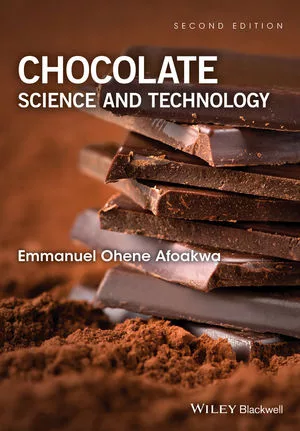
‘Can you believe it’s not (cocoa) butter?’
Cocoa butter — a smooth, rich, dark brown paste that results from crushing delicate cocoa beans. Although chocolate has come in many forms over the centuries, be it in a liquid or solid state, the sweet we know and love always has been made using crushed cocoa beans — and that is, real, authentic cocoa butter.
But as ingredient technology continues to progress, manufacturers are finding reasons to either reduce or replace real cocoa butter in their chocolate. Drivers such as cost efficiency, functionality and nutritional value are causing them to re-evaluate just how much authentic cocoa butter to use in their products. And many have found the solutions they’re seeking in cocoa butter alternatives.
“We can use cocoa butter alternatives in a flexible manner to help reduce calories, lower saturated fats, achieve unique textures or target specific applications,” say Melissa Tisoncik and Dan Kazmierczak from the R&D Group at Blommer Chocolate Co. “These fats are truly one more source of ingredient technology to help achieve a unique, delicious confection.”
But chocolate aficionados shouldn’t fret — authentic cocoa butter isn’t going anywhere anytime soon. Although the alternatives are being used by some manufacturers, consumers have shown their true loyalties lie with authentic cocoa butter.
Tempting alternatives:
In a world in which more and more manufacturers now are realizing the importance of cocoa sustainability, soaring cocoa prices are becoming one of the main reasons why chocolatiers are opting for cheaper alternatives.
Cocoa prices jumped 10% last January, according to a 2011 Bloomberg survey. That same report predicts prices could hit $3,720 per metric ton, the highest numbers for cocoa since January 1979.
Alternatively, cocoa butter replacers are much cheaper. One such replacer is an emulsifier, an ingredient that helps a liquid remain suspended in another, like oil and water in a salad dressing. In chocolate, emulsifiers are used to help dry ingredients, like sugar and milk powder, remain suspended in the cocoa butter.
Emulsifiers are used when there’s not enough cocoa butter used in the chocolate recipe — as a cocoa butter alternative, emulsifiers increase the viscosity of the mixture. Cocoa butter’s role is to engulf the dry ingredients and support them in the suspension, so once the amount of cocoa butter is reduced, the mixture immediately becomes less fluid. Lecithin is the most commonly used emulsifier in candy bars.
PGPR (polyglycerol polyricinoleate) is an emulsifier made from castor beans, and usually is used as an adjunct to lecithin. When added to chocolate, the chemical substantially reduces the amount of cocoa butter needed in the chocolate. This makes the chocolate cheaper and more fluid, which in turn facilitates and speeds up processing.
“Emulsifiers make life easier, since it is easier to adjust the chocolate to have the correct viscosity,” says Peter Poulsen, international sales manager of the bakery and confectionery group at the Denmark headquarters of Palsgaard, an emulsifier and stabilizer company.
And manufacturers are replacing cocoa butter with PGPR for more reasons than price.
“The main drivers [for cocoa butter alternatives] we see at the moment are to create healthier products by fat replacement, but also to get the functional advantages in the production by using emulsifiers,” says Poulson.
Functionality is one of the main purposes of cocoa butter alternatives. Although real cocoa offers lots of antioxidant benefits, the product still contains a considerable amount of saturated fats.
“Saturated fats are a targeted area of concern for consumers and thus manufacturers are trying to remove them from products,” say Tisoncik and Kazmierczak.
That’s where more cocoa butter alternatives come in.
Palsgaard also produces ammonium phosphatide (AMP), a cocoa butter alternative that acts as an emulsifier. AMP’s main advantage, however, comes in the form of fat reduction. A chocolate manufacturer can replace lecithin with AMP to reduce the amount of fat found in the candy bar, allowing manufacturers to use less authentic cocoa butter and lecithin, and thereby decreasing the cost of the candy bar.
A “Dark” Future
Even though cocoa butter alternatives are often used, this doesn’t mean they’re going to be replacing the authentic paste anytime soon. At the end of the day, nothing beats the real thing.
That’s because chocolate made with real cocoa beans has been getting a pretty impressive rep lately — namely, dark chocolate. Now more than ever, the product is increasingly being viewed as a treat that’s not only tasty, but good for you as well.
This year, an independent study done by members of Swinburne University in Australia showed that chocolate containing high amounts of flavanols — chemicals dark chocolate is laden with — can improve brain activity. Another 2012 study done by the Nestlé Research Center showed that dark chocolate reduces stress levels.
“Dark chocolate is one more food that can provide a balance in our lives,” say Tisoncik and Kazmierczak. “It can provide a small source of antioxidants and indulgence.”
And it’s precisely because of antioxidant-wielding cocoa butter that these benefits exist. Because dark chocolate contains such a high cacao mass, it can be healthier than compound chocolate made with cocoa butter alternatives. This means health-conscious consumers may shy away from purchasing chocolate made with anything but the real thing.
“Consumers do perceive [authentic] chocolate to be ‘more natural’ than compound,” say Tisoncik and Kazmierczak.
Nonetheless, it continues to be a valuable tool for manufacturers seeking to satisfy consumers needs for a “chocolatety” taste at a great value.
Looking for a reprint of this article?
From high-res PDFs to custom plaques, order your copy today!