Chocolatier Tsuchiya offers Japanese chocolate fanatics hope
Antonio Koji Tschuiya helping to bring chocolate revolution to Japan
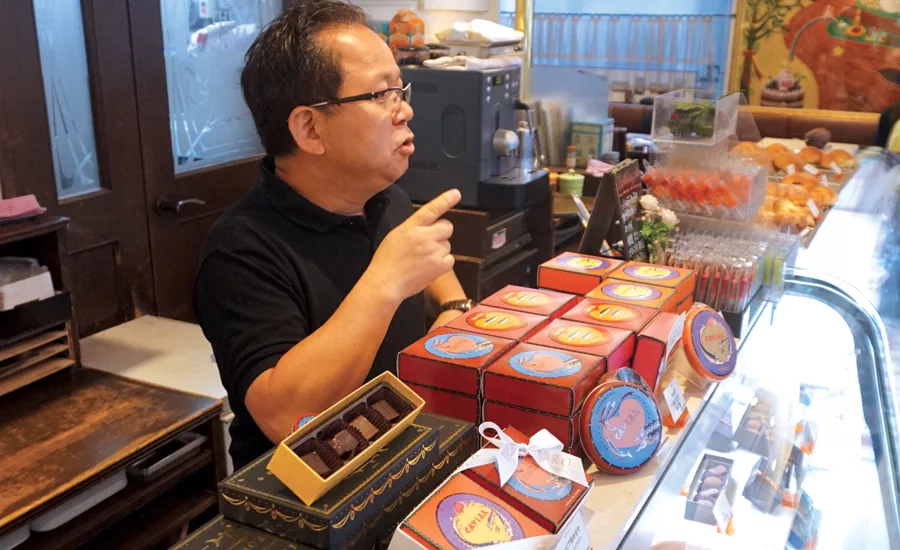
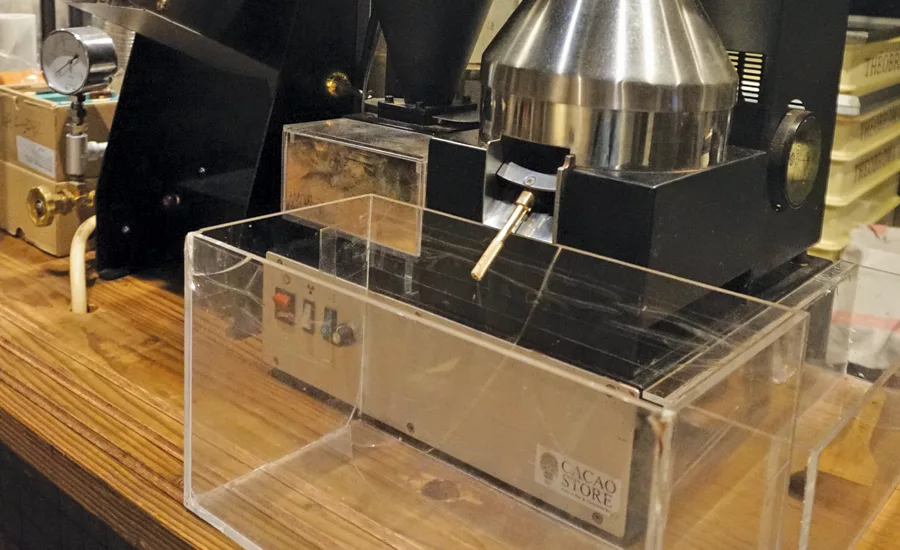
Chef Antonio Koji Tsuchiya feels gregarious, knowing that he can speak about chocolate for a few hours. He sits at a table in the dining space of one of his five shops, the one most centrally located in the Shibuya-Ku district of Tokyo.
While Tsuchiya is about to start his monologue, an elderly man walking past interrupts him: “This is the best chocolate in Japan,” he says. It’s Mr. Iijima, a loyal customer, Tsuchiya explains after the man has left the shop. “On the day of the opening, he came by the store three times. He never really left,” the chef explains.
Although a lot of the shops in his area have closed their doors, Tsuchiya managed to stay relevant to his clientele. But how did he get there?
Tsuchiya learned to make chocolate in France, where he worked for several shops between 1981 and 1986. And when he returned to Tokyo he realized how little people knew about high quality chocolate.
“High quality chocolate was still a niche market back then. This has a historical reason: Western countries had the technology and know-how to make tasty chocolate, but Japan had been a closed country for centuries. It was only after the war that chocolate was introduced in Japan, when the Americans occupied Japan,” Tsuchiya says with a nostalgic sigh.
Today the approach to chocolate is rather different in Japan compared to the Western countries.
“Chocolate doesn’t have a central place in Japanese gastronomy,” Tsuchiya explains. “In Europe and in America it is common to eat chocolate together with coffee or tea, or you get it at parties — in Japan this would be unthinkable.”
Birth of chocolate culture in Japan
Slowly chocolate is getting more grounded in Japanese society — one could even say there’s been a small chocolate revolution, Tsuchiya says. And, he has happily profited from this wave, which prompted him to start importing cacao beans from various orgins.
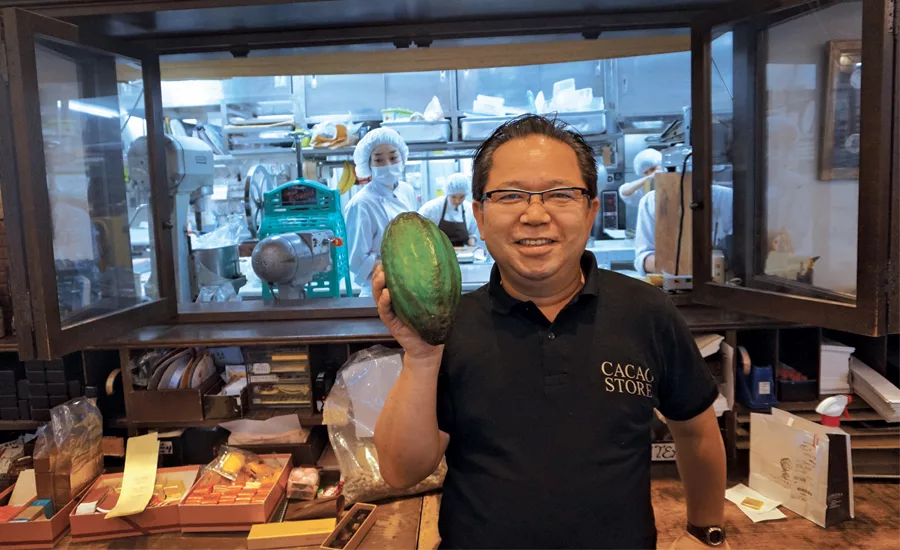
A little further down the road, just a five-minute walk from his main shop in Shibuya, one can find Tsuchiya’s cacao store.
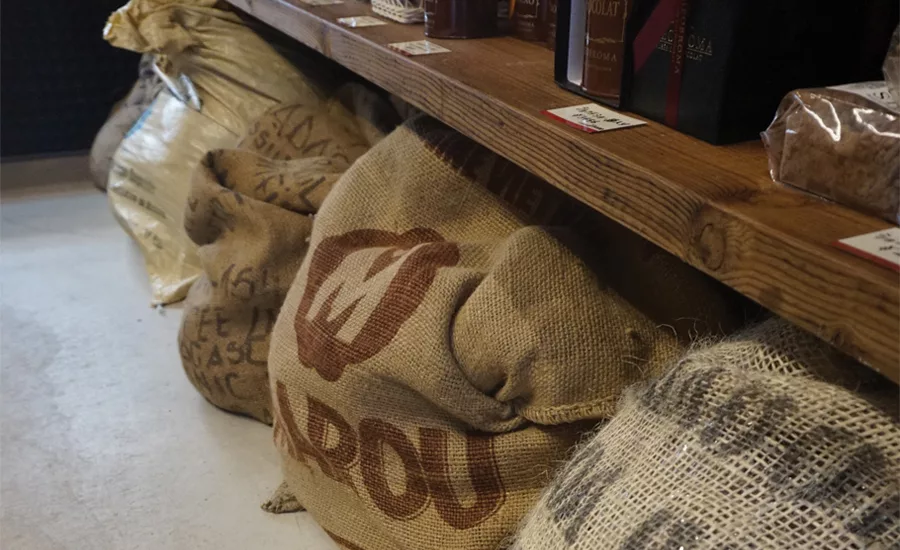
He points outside of the window. “That is where we make the chocolate,” he says while holding on to a big bag filled with beans.
As for high quality cacao beans, Tsuchiya says, “It depends a lot on the climate and weather. For example, last year’s harvest from Peru was great, the best beans we had that year. However, this year’s quality isn’t that great.”
But the chocolate expert does have a good idea of the kind of chocolate his clientele — and what Japanese people in general, like.
“Beans from Madagascar are also good; those from Vietnam are very fruity and tasty,” he explains. “Another interesting trend is the growing popularity of chocolate mixed with matcha and yuzu [a typical Japanese lemon fruit],” Tsuchiya says.
In the past it was very common to mix several beans, to neutralize a strong taste, or to compensate for a certain bean that has less quality.
“Now there is this new way of thinking, the single origin bean has gained popularity among chocolate makers — a similar trend as we have seen in the whisky and coffee industries,” he says.
Tsuchiya grabs a big bag full of beans; on the side it reads Colombia.
“Bitter isn’t it?” he asks rhetorically after opening the bag. A strong bitter smell spreads across the table.
“By making chocolate out of single origin beans it is easier to trace where the chocolate is from, the character of chocolate becomes more distinct,” Tsuchiya believes.
Award-winning chocolates
It is time to taste, Tsuchiya says, half way through the interview. He places the red-colored chocolate box on the table; right beside it a knife to cut the chocolate in small pieces.
This selection, the chef explains, won him the prestigious Award of Excellence (organized by the Club des Croqueurs de Chocolat) in Paris last year.
“Last year’s theme was specialty chocolates; this is the highest prize you can win as a foreigner,” he says.
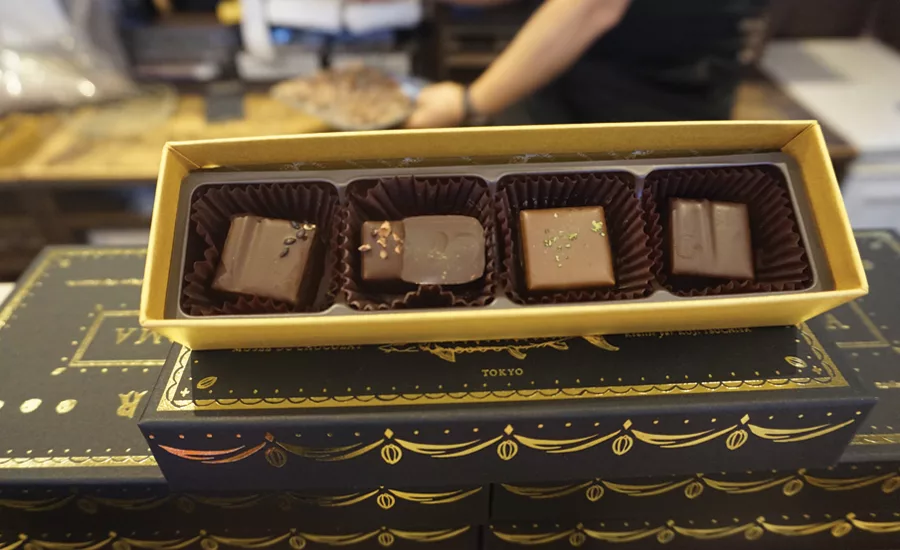
This winning selection consisted of four small pieces of chocolate, including:
- Sesame Framboise: Chocolate (blended) with sesame seeds and raspberry.
- Matchalait: Milk chocolate ganache (blended with fresh cream) and matcha.
- Vietnam single bean: Chocolate from Vietnam.
- La Nuit Du Japon: Chocolate (blended) with shisho (belongs to the mint family Lamiaceae) and wasabi.
“The ingredients should not be predominantly present, especially with the wasabi. If you use too much wasabi that would be too simple, there is no creativity in that,” Tsuchiya emphasizes. “In the case of the Vietnam chocolate, the jury loved the delicious fruity and sour taste — a very strong taste.”
This year’s chocolate
This year he is planning to mix chocolate with vegetables, something that is very uncommon in Japan.
“This year we combined chocolate with spring onion and kombu, that’s brown seaweed. I have always wanted to combine chocolate with vegetables. First I thought of tomato. In March I was visiting Shanghai, I saw someone making bread with tomato and thought: why shouldn’t I try that with chocolate. In the end the taste was too sour,” he explains.
But it did get him to think about experimenting with vegetables. Not long after he mixed chocolate with spring onions from Kyoto — a city in the west of Japan, known for its high quality vegetables.
“It wasn’t as bitter as usual, but quite sweet actually. When I mixed it with chocolate, and added some vanilla, it really worked well,” he says with enthusiasm.
This was also the starting signal for his 2016 assortment, consisting of four small pieces of chocolate:
- Pistachio marzipan
- Japanese walnut (from Uchiko, Ehime prefecture) and cassis
- Kelp (brown seaweed), shiitake (Japanese mushroom), Japanese pepper with lime (not too spicy)
- Colombian single origin chocolate
And when it comes to ingredients, the chocolatier doesn’t compromise.
“It is important to judge your ingredients in an objective manner: for the best almonds you need to go to Spain, for the best pistachio you need to go to Italy, and so on. You need to judge the product in a fair manner,” Tsuchiya says. “This is for all types of foods, also for sweets and chocolate. We buy good ingredients, even though it is expensive, we make no compromises.”
Looking for a reprint of this article?
From high-res PDFs to custom plaques, order your copy today!