Fats & Oils: Challenged to be clean, sustainable, functional
Suppliers, reacting to demands from manufacturers and consumers, address requirements for fats and oils.

It’s quite a rarity for baseball fans to see a triple play. It’s even rarer for baseball players to execute one. But consider what fats and oils suppliers are facing these days. Customers are demanding and expecting the equivalent of such a spectacular feat on a regular basis.
Instead of a typical 5-4-3 put out — that’s a scenario whereby there are men on first and second, a ground ball is hit to the third basemen who then tags third, throws to second, followed by the second baseman throwing to first for the third out — fats and oils suppliers must contend with providing confectioners with products that are sustainable, have a free label and still function well in formulations.
As Jessica Blackford, Cargill’s senior scientist for global oil solutions, notes, her group has “helped customers with a variety of formulation challenges, including PHO replacement, storage, processing and shelf-life extension.
Clean label has been a key driver for many of our reformulation projects, including interest in alternatives to hydrogenated fats for compound coatings,” she says.
Zachary Freed, AAK customer innovation application specialist, affirms the clean-label demand. “Today, the confectionery industry is challenged to provide products that are clean label — and as delicious as ever,” he says. “Confectionery fats with natural antioxidants from AAK answer this challenge. Options such as green tea extract or tocopherols improve product quality and shelf life in any confectionery application, while meeting consumer demands.”
A different perspective: Palm oil-free certification
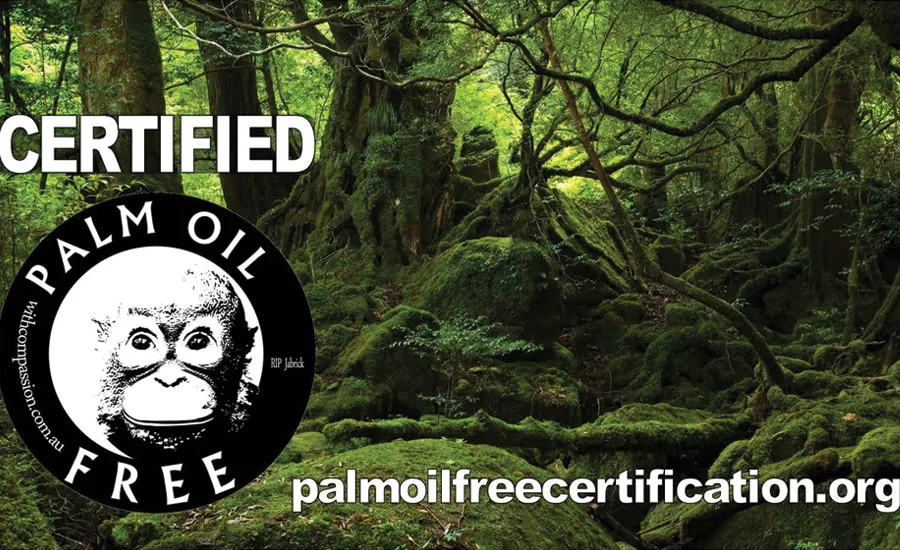
Not everyone believes there’s enough progress being made with regards to sustainable palm oil. In fact, to coincide with World Orangutan Day on Aug. 19, the world’s first International Palm Oil Free Certification Accreditation Programme (POFCAP) was launched.
With the goal being to sit within the same realm as other respected certification trademarks such as Cruelty Free, Certified Organic, Vegan and Fair Trade, POFCAP’s team, aside from working with trademark offices across the globe, has begun working with a number of large and small companies that are seeking to certify products.
PODCAP’s founders hope that Jabrick — the cheeky little orangutan on the logo who was herself a victim of deforestation — will one day look out at shoppers from supermarket shelves across the world.
The team behind POFCAP comprises a group of passionate women who have educated, campaigned, fundraised for and championed the numerous issues surrounding palm oil for many years. The complicated and contentious concerns surrounding the use of palm oil, the impact the harvesting of the product has on the rainforests and wildlife — and, in turn, consumer demand for such accreditation — was the driving force behind the motivation to research, develop and trademark the certification process that has evolved over the past 8 years.
“Members of the POFCAP team have been involved with researching and educating people on palm oil production for a long time and have been increasingly inundated with people asking where or how they could buy palm oil-free products,” said spokesperson Bev Luff. “With no fully certified Palm Oil free Accreditation Program or Trademark in existence globally we decided the only way forward was to create one.”
Whilst on a global level there are many organizations working hard to regulate and improve the deforestation issues surrounding palm oil, it is slow and arduous for many complex reasons, the group says. After a decade of work, only 17 percent of all palm oil used can be classed as “non-conflict.” Nonetheless, POFCAP acknowledges that many millions of hectares of rainforest have undoubtedly been saved by these efforts.
The organization points out that the certification is product-based, not brand-based, since many companies market and sell both Palm Oil Free as well as products containing either palm oil or its derivatives.
Australia and the UK are the first two countries to adopt the trademark following approval by their respective authorities — the Australian, Competition and Consumer Commission (ACCC), IP Australia & IPO UK. An additional 14 nations have applications pending in a landmark move in response to consumer demand for transparency in labelling on the topical issue.
The clean label phenomenon has a far-reaching impact, adds Wade Schmelzer, technical leader for confection, Cargill Texturizing Solutions. “Interest in clean-label formulations has also driven changes in lecithin choices,” he says. “Traditionally, soy lecithin was used in chocolate application to control the viscosity and yield force. Today, sunflower and canola lecithins are receiving more attention from the industry due to their ‘Big 8’ allergen-free status. Also related to clean-label efforts, formulators are using sunflower or canola lecithin to replace the mono and diglyceride emulsifiers traditionally used in confectionery applications.”
When it comes to sustainability, many of the multinational suppliers have invested serious resources to build on existing programs.
For example, Cargill has been working to improve the sustainability of the palm oil industry throughout Indonesia and Malaysia – both on its plantations and on those of third-party suppliers and the smallholders for more than 10 years, the company says.
An early member of the Roundtable on Sustainable Palm Oil (RSPO) in 2004, Cargill introduced an updated palm oil policy in July 2014, committing to sustainable, deforestation-free, socially responsible palm oil. In the same period, it joined The Forest Trust (TFT), a non-profit organization that helps companies deliver products responsibly
TFT supports Cargill’s supply chain mapping and the implementation of its palm oil policy. The company also signed the Indonesian Palm Oil pledge at the 2014 U.N. Climate Summit. These actions build on prior commitments and help it move toward the goal of 100 percent transparent, traceable and sustainable palm supply chain by 2020, a Cargill spokesperson explained.
AAK, which is a founding member of the Roundtable on Sustainable Palm Oil (RSPO) uses GreenPalm, a web-based platform enabling electronic trade in certificates that either support or use RSPO-certified palm oil and palm kernel oil.
No one, however, expects the process to be easy. Recent projections indicate that the world population will approach 9 billion by 2050, spurring demand for edible oil.
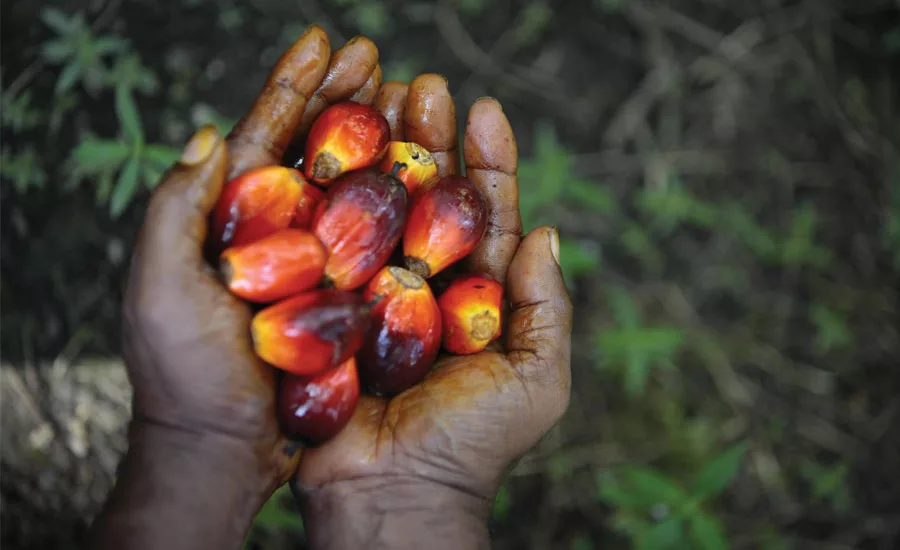
According to Cargill, palm oil is best positioned to satisfy this demand. It is the highest yielding edible oil crop, using less land per ton of oil produced than any other vegetable oil, the company says. However, with this opportunity comes the responsibility to address the known environmental, social and economic challenges associated with its supply chain.
Companies such as Cargill and AAK have committed to building a fully traceable and transparent palm oil supply chain. For Cargill, this translates into the following: no deforestation of high conservation value (HCV) lands or high carbon stock (HCS) areas; no development on peat; and no exploitation of rights of indigenous peoples and local communities.
Progress, nonetheless, takes time. In the first quarter of 2017, Cargill achieved a global combined average traceability to mill of 93 percent (100 percent of the kernel and 92 percent of palm) and 33 percent traceability to plantation (20 percent of kernel and 35 percent of palm). The company’s plantations and mills in Indonesia are fully traceable.
In addition, for the first quarter of 2017, 71 percent of its supply chain was implementing transformation and certification programs. The company measures this progress through its suppliers’ involvement in engagement programs. Then there are the smallholder farmers, who account for roughly 40 percent of Cargill’s palm oil supply. Here, too, movement is incremental.
Increased interest, however, has initiated additional resources by suppliers to address sustainability issues more than ever. In doing so, they hope to execute the triple-play goals for manufacturers and consumers.
Looking for a reprint of this article?
From high-res PDFs to custom plaques, order your copy today!