Caramel gains popularity despite production challenges
Caramel growing as a confection and an ingredient.
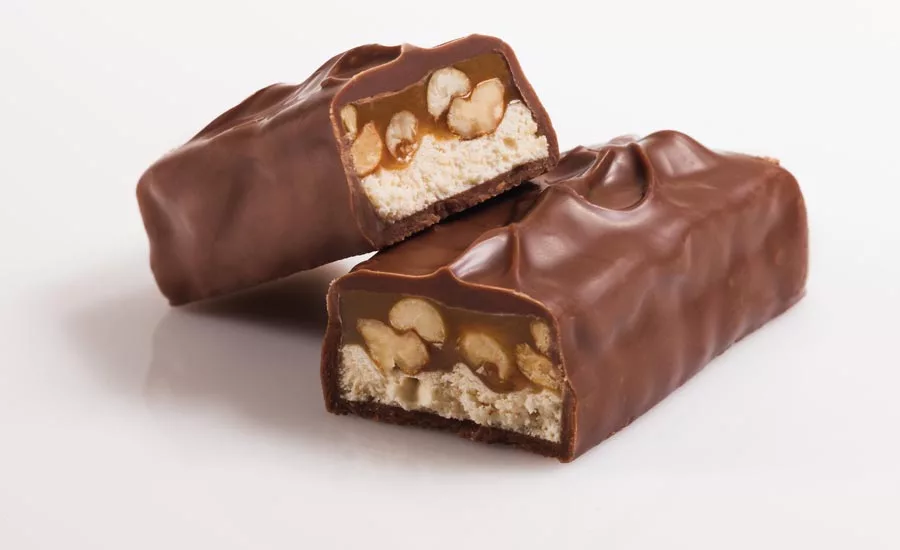
When Mars Chocolate North America announced last year that it will be launching Caramel M&M’S – this spring – many consumers wondered, “What took you so long?”
But as most candy makers and confectioners know, we’re talking caramel here. And as Hank Izzo, v.p. of research and development of parent company Mars Chocolate North America, told CNN Money last year, creating a caramel-filled chocolate, candy-coated lentil isn’t as easy as it sounds.
“It was a big technological challenge for us,” said Izzo in the CNN Money story. “We never before had an M&M lentil with a true soft center, so we had to figure out how to not make the chocolate too sticky or too soft that it could collapse.”
And then there was the caramel. As Rod Oringer, v.p. – sales and marketing for the Rice Co. explains, “Caramel is the most difficult of the confectionery items out there. It’s both science and an art form.”
Scott Lutz, business development manager, ingredients, The Warrell Corp., agrees. He calls it a “unique bugger. People generally don’t understand it.”
So what can go wrong? Just about everything, Oringer says. Whether it’s atmospheric conditions, temperature controls, the heating element, barometric pressure, the list goes on.
As Randy Hofberger, president of R&D Candy Consultants, emphasizes, caramel is one of those “more complicated” confectionery ingredients.
“You need good recipes, good equipment,” he says. “It’s easy to screw it up.”
Hofberger, who has taught countless caramel courses and has given dozens of presentations [Editor’s Note: Caramel 101, which was given at the PMCA conference in 2009 is an excellent primer.], points out that there are several different types of caramel: classic; caramelized sugar; liquid sugar, low-water activity; and sugar-free.
The key ingredients include syrups, sugar, dairy (typically sweetened condensed milk); fats, emulsifiers and flavorings. Even rework is considered as a desired ingredient.
Although most consumers view caramel in the classic sense — that is a smooth, chewy and flavorful brown confection — caramel as an ingredient covers many industries, beginning with the confectionery industry and extending into the baking, ice cream and foodservice industries.
As Izzo told the CNN Money reporter, “Caramel is extremely trendy,” he said. “It’s a $2.2-billion flavor segment and the fastest growing segment in food right now.”
When one bores down to just confectionery, Lutz estimates that segment alone accounts for nearly $500 million, and growing. Moreover, thanks to sea salt caramels, the problem-child ingredient is proving to be a boon to many midsized manufacturers.
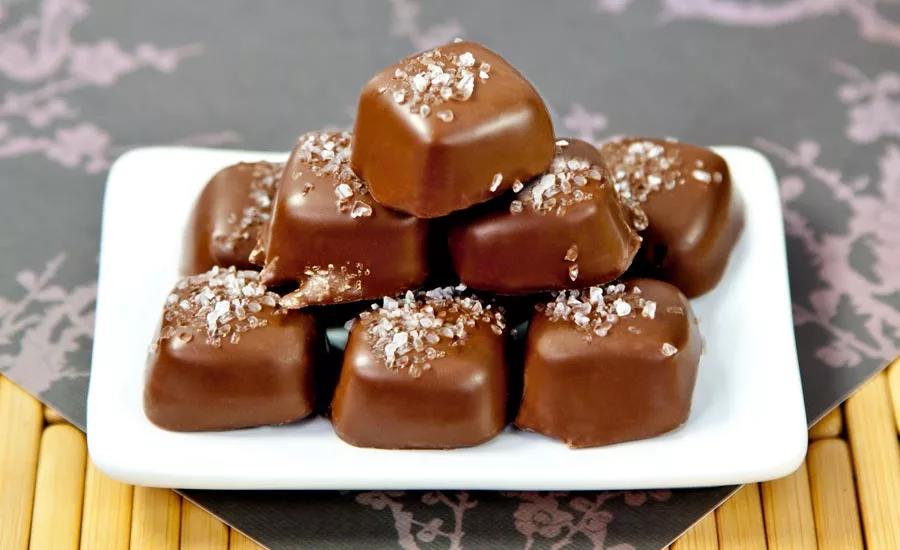
The combination of sweet and savory, a popular culinary technique, works well with consumers, Lutz adds. “Sea salt is more granular that regular salt and delivers a grainy texture and mouthfeel.” It’s a perfect complement to caramel and the combination has definitely captured the consumer’s fancy.
Even as an ice cream topping, it’s the flavor of choice. “Salted caramel variegate outsells plain caramel variegate two to one,” Oringer says.
Sea salt caramels are now nearly ubiquitous. But where did the concept of adding sea salt to caramels come from? A December 2008 New York Times article claims it was Pierre Herme, the famed Parisian pastry chef, who started the craze by inventing a salted caramel macaroon in the 1990s.
It even cites San Francisco confectioner Michael Recchuiti as offering fleur de sel caramels covered in chocolate in 1998. But Oringer believes the sea salt caramel had even earlier origins, going back to See’s Candies, which offered them in the mid-1980s.
The UK’s Daily Mirror goes back even further — and this explanation seems most probable — pointing to a chocolatier called Henri Le Roux from Brittany who launched them in 1977. Seems “Brittany is famous for its salted butter, apparently a legacy of a 14th century French tax on salt which didn’t apply to the region,” the British reporter writes.
“When Le Roux was trying to find something new and unusual to make his sweeties stand out from the crowd he hit on the idea of using the famous regional salted butter instead of the usual plain stuff and an instant classic was born.”
Viola! Mystery solved. But what about tomorrow? What’s beginning to gain traction as a caramel trend these days?
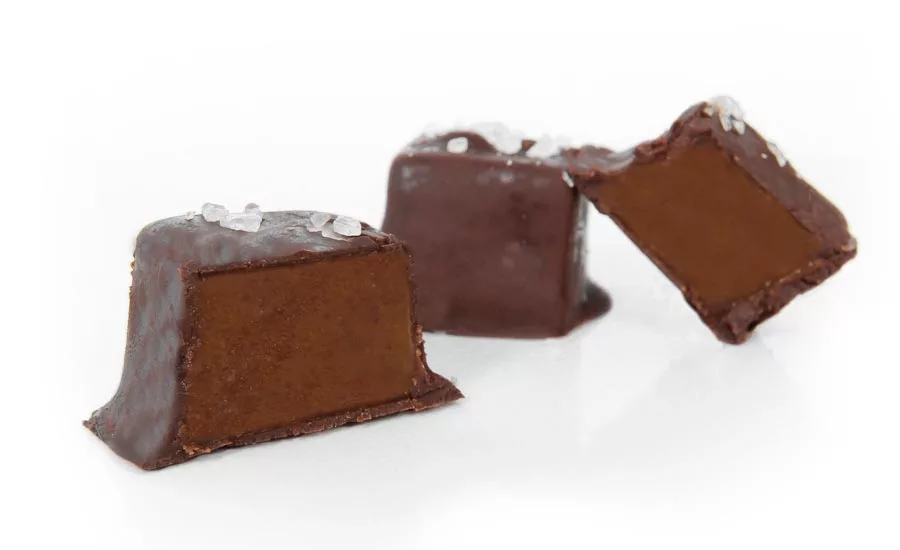
Well, Oringer points to Ghirardelli’s liquid caramel-filled chocolate squares, which proved to be trendsetting when they were introduced several years ago. That launch, however, also had its challenges.
“We launched our first filled caramel square back in 1999,” says Steve Genzoli, Ghirardelli Chocolate’s v.p. of research & development/quality assurance. “It was tricky to figure out how to get the caramel ‘liquidy’ enough to spread at line speeds, but not be too liquid.”
The successful launch encouraged other line extensions, including the most recent one: dark chocolate bourbon-flavored caramel squares. This, too, taps into history, Oringer says.
“Liquor-flavored caramels, which were popular in Louisiana, were typically flavored with bourbon or rum,” he says.
That could be a coming trend, Oringer adds. But what’s definitely trending now is the rise in organic and vegan caramel items.
“You’re seeing products being made with coconut and almond milk,” he says. “Much of this is being driven by Starbucks and its line of vegan products.”
Hofberger, who was actually working on a vegan coconut milk caramel when contacted by Candy Industry, notes that dairy ingredients deliver the flavor as well as the protein, which makes caramel stand up.
“The vegetable proteins aren’t as good as dairy when delivering texture,” he says.
From Lutz’s perspective, non-GMO represents the biggest trend in caramel today, which, of course, ties into the organic movement.
“Flavored caramels are also very popular with artisan candy makers,” he adds. And while a one-month shelf life works well for artisans and entrepreneurs, it doesn’t translate well when sales growth prompts commercialization and wholesale distribution.
“It’s difficult getting these candy makers to understand that when they start to ‘industrialize’ caramel for larger outputs, there may be ingredients added to the formula that an artisan candy maker doesn’t like.”
Extending shelf life typically begins with using less sugars and more syrup solids, Hofberger says. Doing so, however, can change the texture, he adds.
The rise in popularity of caramel and its use in the confectionery industry can be seen by the growing interest among candy makers in caramel-making courses. Hofberger points out that the Retail Confectioners International course on caramel making sold out in 48 hours.
Apparently, for confectioners, it really doesn’t matter how you pronounce caramel, as long as you make a good one.
Looking for a reprint of this article?
From high-res PDFs to custom plaques, order your copy today!