Rising cocoa demand prompts turn to cocoa butter alternatives
Compounds made with replacements for cocoa butter, uses not dictated by Chocolate Standard of Identity.
When it comes to candy, versatility is a big bonus.
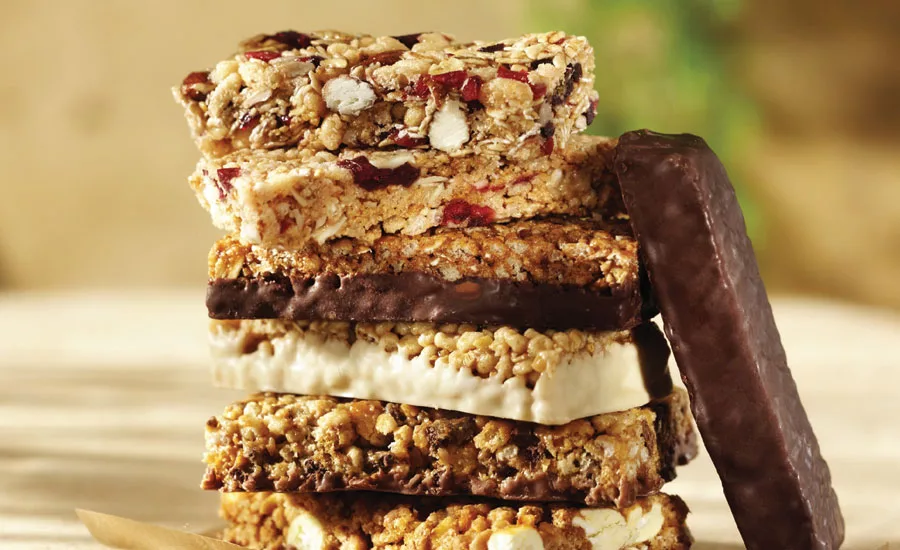
That’s one of the reasons compound coatings can be popular – they can be used in a variety of application forms, including coatings, drizzles, chunks and drops. The vegetable oil often used in compounds also creates a range of melt points, which makes it easily adaptable to different applications.
And, according to Cargill, compounds don’t need to be exclusively chocolate-like in flavor; they can come in any flavor or color you can imagine.
Since compounds are made with replacements for cocoa butter, they’re typically used in applications that aren’t dictated by the Chocolate Standard of Identity. Thus, vegetable oil, or other cocoa butter equivalents like shea butter and kokum butter, can be used as part of the finished product system.
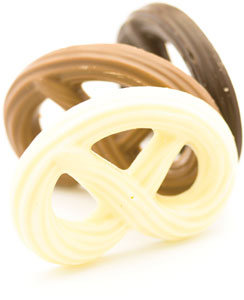
But the non-standard nature of compounds can prove to be challenging. They can’t be labeled as chocolate based on the Code of Federal Regulations Standard of Identity, and creating the right texture can be difficult due to varying vegetable oil systems and melt points. Without the proper combination of the two, the compound can become too waxy in texture and mouthfeel.
On the other hand, that very same non-standard nature can be seen as a plus. Compounds come in a seemingly endless variety of colors, flavors and melt points. Having almost unlimited variability makes it easy to adapt to different applications, and their higher melt points make them better suited to handling supply chain and production demands.
And just like many other areas of the industry, compounds are changing, adapting to consumers’ increased awareness of health and wellness.
According to Cargill, the most recent changes in the formulation of compound coatings can be seen in the removal of partially hydrogenated fats to reflect today’s clean label demands. As those formulations have changed, the use of non-hydrogenated (palm kernel and palm oil) and fully hydrogenated fats have become the most commonly used fats in compounds.
Not only have the formulations changed, but their uses have taken on new spins as well. Compounds can be used as vessels for adding vitamins, minerals and proteins to finished products. One of the biggest innovations in the compound space is the development of functional compounds, which help manufacturers target the health and wellness trend by providing the ability to add an incremental amount of protein to the finished snack or sweet.
But it’s not just about the versatility.
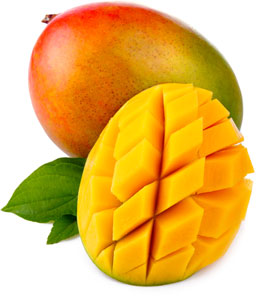
With demand rising and global cocoa production on the decline due to crop difficulties, researchers have looked toward potential substitutes for cocoa butter. In “Mangifera sylvatica (Wild Mango): A new Cocoa butter alternative,” an article published in Scientific Reports, British scientists detailed the possibility of using wild mango butter as a suitable alternative to cocoa butter.
According to the study, wild mango is an underutilized fruit found in Southeast Asia. Analyses have shown that wild mango butter is a light-colored fat with a characteristically nutty flavor. It also has a similar fatty acid profile and triglyceride profile to cocoa butter. These similarities, along with comparable thermal and physical properties, mean that wild mango butter has the potential not only to be a cocoa butter alternative, but a cocoa butter improver.
There are, however, some differences between wild mango butter and cocoa butter that could prove to be challenging. Wild mango butter has higher iodine and acid values, which could make it more susceptible to oxidation. Its moisture content and free fatty acid content are also higher, suggesting that it might require different processing and storage protocols than cocoa butter. But although wild mango butter may be trickier to use, proper and controlled processing could still yield high quality butter with decreased degradation.
Processing and storage could prove to be obstacles to using wild mango butter on a large scale, but the study says there’s evidence to suggest that the butter’s higher moisture content could produce more low fat chocolate, which could — in turn — help prevent obesity, heart disease, diabetes, strokes and arthritis.
Found in Bangladesh, India, China, Cambodia, Myanmar, Nepal and Thailand, the mango is underutilized due to a lack of awareness of its potential value as a source of food, nutrition and medicine. As a result, the species has not been afforded any conservation protection due to a lack of documented value. Increased utilization, says the study, could very well benefit the species as a whole.
The study also suggests that the species’ seed germination rate and early growth of seedlings are indications that it could be easily domesticated and incorporated into small-scale farm operations. The Mangifera sylvatica is the wild mango species that most resembles, genetically, the domestic Mangifera indica. Those similarities mean that it could be easily domesticated. Adding value to such products could then generate a way to help conserve the species while creating alternative income sources for the rural inhabitants of the mangoes’ native countries.
And while larger-scale plantings would still require field trials and improved knowledge of the mango species, there are already possibilities when it comes to using these wild mangoes.
Looking for a reprint of this article?
From high-res PDFs to custom plaques, order your copy today!