Sustainability
Barry Callebaut wants to talk about climate change
Climate Change already has shifted which area can produce cocoa, and Barry Callebaut wants to get out ahead of the problem.
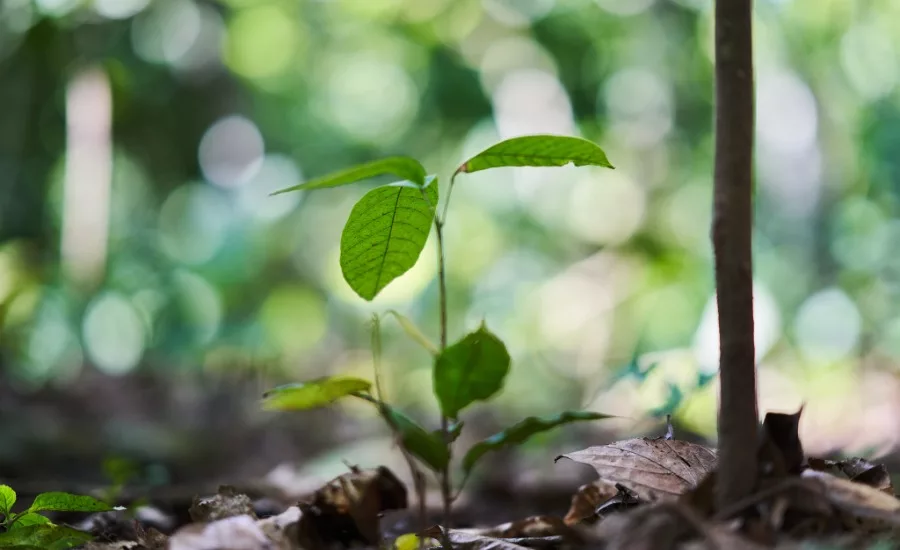
Editor’s note: Barry Callebaut recently hosted a press trip in Ghana, offering members of the media, including Candy Industry, an up-close look at its efforts there under the Forever Chocolate program. This article is part three in the three-part series.
The other parts in the series include:
Part 1: Barry Callebaut wants to talk about chocolate's child labor.
Part 2: Barry Callebaut wants to talk about cocoa farmer poverty.
It’s not an exaggeration to say that climate change could destroy the cocoa industry as we know it.
Nicko Debenham knows this first hand. He started in the cocoa industry 30 years ago, and in the last three decades climate change has had enough of an impact on cocoa that it isn’t growing in the same regions.
In fact, Barry Callebaut even had to close a buying center in Ivory Coast because there just wasn’t any more cocoa growing there, says Debenham, Barry Callebaut’s VP, head of sustainability.
“Now that’s an anecdotal story, but it’s real. Because it’s real and it is happening,” he explains. “It’s a very different place where people are growing cocoa. It’s a fact.”
And that’s why combating climate change is incorporated into the company’s Forever Chocolate goals. Specifically, the goal to be carbon and forest positive by 2025.
In the Forever Chocolate brochure, Barry Callebaut explains the urgency like this:
“If industry does not commit to reducing its carbon footprint and achieving zero net deforestation in its supply chain, the ecosystem that provides chocolate ingredients will rapidly erode.”
In short, we might not have any chocolate.
Our approach is to make a commitment which is measurable and time bound, report on it annually in an open and public and transparent way and have it independently verified.
– Nicko Debenham, VP head of sustainability for Barry Callebaut.
Barry Callebaut is working hard to fight climate change, though. Since 2009, the company has reduced its relative energy use and carbon emission by 20 percent.
So the good news is that Barry Callebaut seems to be making progress on the issue. In fact, a third-party organization called Sustainalytics recently ranked the company as No. 1 in the food industry for its sustainability strategy.
Another organization, the Carbon Disclosure Project (CDP), an independent organization that receives and assesses the carbon reduction plans of companies, gave Barry Callebaut an A- rating for its carbon reduction plans, putting the company in the top 6 percent.
“We’re pretty proud of those two. Those are pretty amazing achievements, quite honestly,” Debenham says. “When we compare ourselves to our peers we are in a different category.”
All of these sustainability efforts cost money, and it hasn’t always been easy to convince Barry Callebaut’s investors that it was worth it to think long-term. The company’s CEO Antoine de Saint-Affrique said that attitude is changing, and ratings like the ones from third party organizations help.
“You flip on its head,” says de Saint-Affrique. “You do it because you fundamentally believe it can be an element of competitiveness of your company.”
For example, the company’s sustainability efforts help them get ahead of things like carbon taxes, which they expect to eventually come into play. It also helps them reach customers who want to use sustainable chocolate.
“If we are much better performing from a carbon standpoint, the day the carbon tax is kicking in, or kicking in at a greater extent than today, we will be more competitive,” de Saint-Affrique says. “If we are capable of providing for sustainable cocoa and sustainable chocolate, we can serve customers that care about that and because it’s difficult to do, you serve those customers better than your competition.”
And farmers, who see the impact of climate change first hand, are happy to work with Barry Callebaut on these efforts – even if it means planting company-provided trees that leave less space for cocoa trees.
“With any farmer you show them the value proposition. And they do understand that the climate in which they are growing cocoa is changing and they understand that trees are what will slow that change from happening. So they do want to plant trees,” Debenham says. “They do understand it. They just can’t afford to pay for the trees. It is literally that.”
As for Barry Callebaut’s goal of lifting more than 500,000 farmers in its supply chain out of poverty by 2025, here too the company is relying on pilot programs to find the most successful path forward for fighting climate change.
One of them is biochar, which is a form of charcoal created with the waste shells from the cocoa beans. And they may even be able to feed it to cows to reduce their methane emissions.
“This is a pretty cool project, and it’s pretty wacky and it scares the hell out of everybody, but we’re going ahead with a pilot in one of our factories. If it works, we’ll roll it out across every factory and then we’ll end up with a carbon-neutral factory network,” Debenham says.
And the company also has done a pilot program that involves giving cook-top stoves to farmers. The stoves are much more efficient and can burn thin sticks rather than large logs they used before. They also have the added benefit of making it so farmers no longer have to spend hours each day searching for wood to burn for dinner.
Now they are planning to scale up the project.
“As you saw with the cook stoves, they’re putting twigs in there and not large logs. Their health is better, and it’s less work. At the same time, it really supports us. It’s a win-win on both sides,” Debenham explains.
Another big part of sustainability for any cocoa company is land-use change, or how they measure things like deforestation. So if a crop isn’t native to the area, then they need to make sure they aren’t cutting down more of the natural habitat to grow it.
“Our entire carbon footprint — over 50 percent — is land-use change. And of that, about 80 percent is cocoa. And a huge chunk of that is Ivory Coast,” Debenham explains.
Indeed it is a particularly imposing issue for cocoa in Africa, because the plant is not native to the continent — it was brought over from South America. So to meet cocoa-specific deforestation standards, 20 years have to pass since it was originally planted in an area on the continent.
“So if we are to hit our target on land-use change, when we get to 2025, we need to be sourcing cocoa from farms that only were deforested before 2005,” Debenham says. “So in other words, we cannot tolerate anymore deforestation that is going into our supply chain.
In the end, the entire cocoa industry should be rooting for Barry Callebaut to succeed in all its efforts with Forever Chocolate, whether it’s related to child labor, farmer poverty or climate change. Because if they fail, chocolate doesn’t stand much of a chance long-term.
Thankfully, the company is more than willing to share its progress with the industry.
“Our approach is to make a commitment which is measurable and time bound, report on it annually in an open and public and transparent way and have it independently verified,” Debenham says.
If Barry Callebaut truly can pull that off, with success, perhaps there’s hope for the rest of the industry as well.
Read the other parts of this series to see how Barry Callebaut is working to eradicate child labor and lift farmers out of poverty.
Part 1: Barry Callebaut wants to talk about chocolate's child labor.
Part 2: Barry Callebaut wants to talk about cocoa farmer poverty.
Looking for a reprint of this article?
From high-res PDFs to custom plaques, order your copy today!