Fairtrade program supports changing cocoa landscape
The West Africa initiative reaches more than 270 cooperatives and 51,000 farmers.
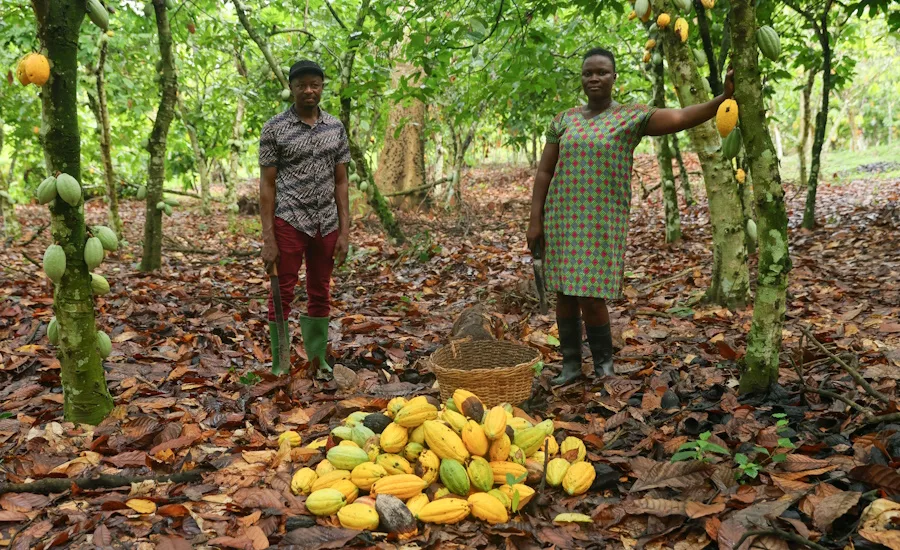
According to a new evaluation from Fairtrade, its Fairtrade West Africa Cocoa Programme plays a key role in preparing cooperatives to navigate regulatory changes, economic fluctuations, climate change, and other pressures.
Launched in 2016 by producer network Fairtrade Africa, the program reaches more than 270 cooperatives and 51,000 farmers in Côte d’Ivoire, Ghana, and Sierra Leone with trainings, in-person and remote support, and ad hoc guidance. Training and support topics reflect farmer priorities and the prevalent issues in global cocoa sector, with the aim of strengthening cooperatives so they can meet the needs of their members and trade partners.
The West Africa Cocoa Programme evaluation, conducted by the research firm Syspons and the second evaluation conducted since the program’s start, found:
- Strong cooperatives. The program has reportedly resulted in Fairtrade cooperatives achieving stronger management systems; better financial management; greater awareness of legislative demands, such as the EU Deforestation Regulation and the African Regional Standard; and increased ability to monitor and manage human rights risks such as child labor.
- Responsive businesses. Cooperatives are proactively responding to member needs. For instance, following West Africa Cocoa Programme trainings and support, all surveyed cooperatives have reportedly taken concrete action to improve productivity and quality of members’ crops; strengthen youth and women participation in cooperative governance or membership; and promote environmental protection. Democratic decisions on use of the Fairtrade Premium have become more participatory, with 72% of Ivorian and 92% of Ghanaian farmer survey respondents reporting they were engaged in decision-making.
- More knowledgeable and successful farmers. Farmers have better financial literacy and business orientation, such as matching expenditures to expected income. Farmers have also adopted practices such as pruning, effective spraying, and agroforestry systems, and expanded to other income sources including chick rearing, beekeeping, and cassava farming. Furthermore, farmers have greater awareness of child labor and monitoring and referral systems that cooperatives have put in place, contributing to a decline in observed child labor cases and a rise in school enrolment.
“During the almost 10 years of continuous partnership work with cooperatives and farmers in West Africa, Fairtrade Africa has built expertise combined with institutional strength and depth. The West Africa Cocoa Programme has led to stronger and more viable cooperatives and acted as a springboard for an increasing complementary commercial partner and donor investment in Fairtrade cooperatives and farmers," says Fairtrade Africa’s Head of Region, West Africa, Edward Akapire.
The West Africa Cocoa Programme has become “a flexible, highly relevant, and widely appreciated platform” that can be leveraged to reach cocoa farmers with a range of services, the researchers note. For example, the program’s staff and structure have delivered complementary trainings on Village Savings and Loan Associations (VSLA) and have helped manage the successful Fairtrade Women’s School of Leadership in Côte d’Ivoire and Ghana since 2017.
Despite the program’s success in capacity building of cooperatives and farmers, translating this into expanded market access remains a key need expressed by cooperatives. Cooperatives reported benefiting from the West Africa Cocoa Programme’s role in facilitating buyer linkages, helping to prepare reports, and supporting their attendance at trade shows and other commercial engagements. Still, many expressed a need for better understanding of market dynamics and how to engage buyers, including more training on marketing, outreach, negotiation skills, and business planning.
The evaluation highlights opportunities to strengthen the program operationally, such as applying learnings from the initial experiences using a “training of trainers” model of information sharing, where producer organization staff or farmer members receive a training and then cascade it to peers. Furthermore, the evaluators also suggest re-clarifying the program’s core focus areas to maximize staff and budget effectiveness, and exploring innovative support models, such as partnerships and co-financing of some services by more experienced cooperatives.
Finally, the evaluation also acknowledges the many factors affecting the cocoa farmers, such as price fluctuation, climate change, plant disease, illegal mining, deep-rooted gender dynamics, and an evolving regulatory landscape. While these trends are outside the control of any single actor, the West Africa Cocoa Programme does prepare cooperatives to act when faced with these challenges.
Dashboards released by Fairtrade earlier this year showcase the program's key performance indicators and results in more detail, and overall data about Fairtrade cocoa.
The full program evaluation is available here on the Fairtrade International website.
Related: Fairtrade remains ‘go-to’ ethical label for shoppers
Looking for a reprint of this article?
From high-res PDFs to custom plaques, order your copy today!