Just Born uses PACK EXPO to adapt and thrive
The legacy manufacturer aims to operate effectively in its historic facility, it says.
Every two years, PACK EXPO East transforms Philadelphia into a hub of packaging and processing innovation, delivering a showcase of cutting-edge technologies directly to the doorstep of local companies, enabling them to find what they need to evolve and grow, says PMMI (the show organizer).
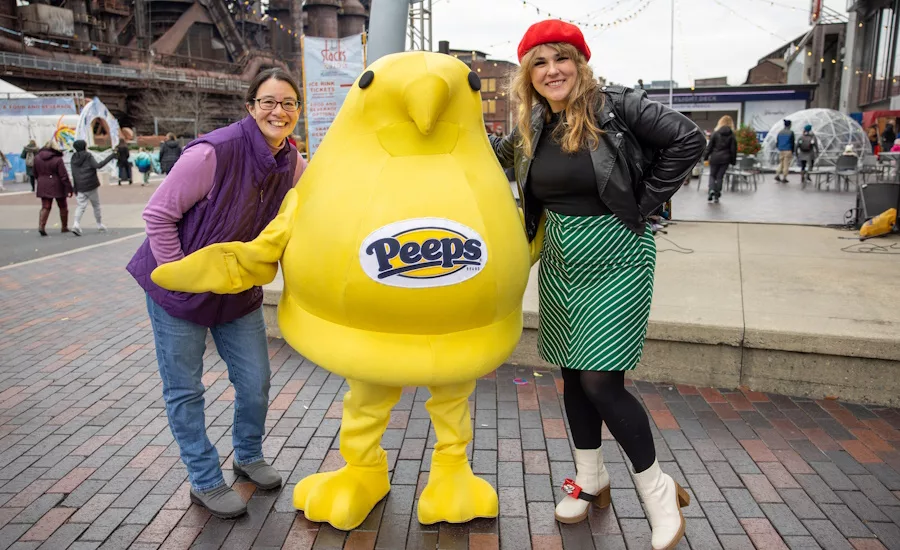
Just ask the team at Just Born Quality Confections. The century-old, family-owned, Bethlehem-based institution behind classic candies like Mike and Ike, Hot Tamales, Goldenberg's Peanut Chews, and Peeps have sent teams to PACK EXPO events in Philadelphia, Chicago, and Las Vegas.
To learn more, we touched base with Charlotte Ashcraft, senior manager of packaging and graphic development, Just Born, and Rebecca Marquez, director of custom research, PMMI.
Liz Parker Kuhn: How do companies like Just Born utilize PACK EXPO as a resource?
Charlotte Ashcraft: For companies like Just Born, PACK EXPO East is a place where we can start envisioning our strategy in action. As a legacy manufacturer, it’s important that we can operate effectively in our historic facility. That means producing high-volume runs of both seasonal and year-round candies in a fixed footprint. So, we’re constantly balancing our space and labor needs alongside the unique product requirements—like delicate handling—and improving our sustainability. The show gives us an opportunity to address all of those priorities in one place.
For example, it was at a previous PACK EXPO where a member of our team discovered a soft robotic gripper that became a key solution for our pick-and-place applications. We wound up expanding use of that gripper across a second full production line. That experience reflects how PACK EXPO events allow us explore automation that supports our workforce. In modernizing operations, we focus on improving ergonomics, consistency and throughput. Seeing live demonstrations of robotic end-of-arm tooling, vision systems, and gentle product handling technologies helps us evaluate what will truly work in our environment.
At the same time, attending PACK EXPO East allows us to stay ahead of regulatory and sustainability shifts, including Extended Producer Responsibility requirements and recyclable-ready packaging. We’re able to validate materials, better understand reporting implications, and connect with suppliers driving innovation in this space.
Just as importantly, the event brings our teams together. Because PACK EXPO East is in Philadelphia, we can include colleagues from procurement, engineering, and operations in a collaborative day trip—shared exposure that consistently sparks ideas we bring back to the plant.
LPK: What does Just Born look for at PACK EXPO, specifically?
CA: We go to PACK EXPO East with a focused agenda centered on practical, plant-ready solutions. Because we’ve operated in the same facility since the 1930s, we prioritize compact, high-performance equipment that increases output without requiring major footprint expansion.
We also look closely at gentle product handling technologies, such as soft robotic grippers, advanced end-of-arm tooling, vision-guided robotics, and low-stress conveyance that can protect delicate candy products. Flexible robotics and automation that can adapt across SKUs and seasonal production shifts are important, as are sustainable packaging solutions like recyclable-ready films, paper-based alternatives, and equipment capable of reliably running those materials. We’re also interested in suppliers who can help integrate new technology into existing lines, allowing us to modernize in phases. Seeing systems run live and speaking directly with engineers helps us make informed, long-term decisions.
LPK: What types of solutions do PACK EXPO suppliers offer for candy manufacturers?
Rebecca Marquez: Across the PACK EXPO portfolio of trade shows, candy manufacturers can find a range of solutions spanning confectionery processing, packaging, automation, and materials including high-speed wrapping, bagging, cartoning, labeling, and case-packing solutions tailored to the unique handling and shelf-life needs of confectionery products.
Up next is PACK EXPO East (February 17-19, Pennsylvania Convention Center, Philadelphia), where East Coast candy manufacturers can see key packaging and processing solutions conveniently in their own backyard. The show features 500 exhibitors showcasing the latest machinery, automation technologies, packaging materials, and processing equipment relevant to CPGs, including candy production and packaging lines. At PACK EXPO East, attendees can see live demonstrations of equipment, connect directly with suppliers, and assess solutions that help streamline production, improve throughput, and enhance packaging quality—all within a three-day event in Philadelphia.
At PACK EXPO East, expect to see a strong emphasis on automation, robotics, and sustainable packaging materials—to help them address labor challenges, efficiency goals, and evolving regulatory and sustainability demands while evaluating new technologies and suppliers to improve throughput, flexibility, and long-term performance. There are also many educational features like Innovation Stage and Industry Speaks offering insights on trends such as automation, sustainability, and operational efficiency. This blend of technology discovery, materials innovation, and knowledge sharing makes PACK EXPO East especially beneficial for candy manufacturers aiming to optimize their processes and packaging ahead of the year’s major projects.
PACK EXPO International 2026 (October 18-21, McCormick Place, Chicago) will feature a Confectionery Pavilion showcasing technologies specifically for candy production. These include aeration systems, enrobers, cooling tunnels, molding and shaping equipment, portioning technologies, and integrated lines. More information on all the PACK EXPO events can be found at packexpo.com.
LPK: What’s next for candy equipment companies, both big and small?
RM: In PMMI’s October 2024 industry report on snack foods, we found that SKU proliferation and packaging variety are accelerating in confectionery. Candy manufacturers are expanding into single-serve, variety packs, multiple counts, and channel-specific formats (convenience stores, club stores, healthcare, etc.), which is forcing greater demand for flexible, modular, and customizable machinery. This shift is pushing machinery manufacturers toward equipment that can handle frequent size changes, resealability, and different materials without full line replacements. In addition to this, shelf life, clean-label products, sustainable packaging, and new flavor profiles are expected to become even more prominent in confectionery portfolios.
Another key finding in the report is that automation is emerging as a top priority, largely due to labor shortages and workforce turnover. Candy companies report difficulty finding, training, and retaining operators willing to perform repetitive or physically demanding tasks. This challenge makes automated packaging, end-of-line systems, and material handling solutions increasingly attractive. There is strong interest in equipment that can self-diagnose, support troubleshooting, and simplify training, including embedded digital tools, remote access, predictive maintenance, and even AI-supported guidance at the machine level. While most companies haven’t fully digitized operations yet, momentum is clearly building in this direction.
Finally, food safety and sustainability are rising together as innovation drivers for candy manufacturers. Even though confectionery is typically considered a lower-risk, dry category, manufacturers want improved foreign-material detection (x-ray, magnets, sensors) and better safeguards built into packaging lines. At the same time, pressure from retailers and regulators is accelerating the adoption of recyclable materials, reduced packaging, and compliance with state-level regulations (notably California and emerging EPR policies). Candy manufacturers can make themselves future-ready by prioritizing flexible automation, modular/flexible equipment, built-in intelligence/monitoring, and sustainable packaging designs—not as “nice-to-haves,” but as necessities for growth over the next three years.
Looking for a reprint of this article?
From high-res PDFs to custom plaques, order your copy today!