Taza Chocolate CEO talks confectionery issues
The industry is being shaped by unprecedented volatility, he says.
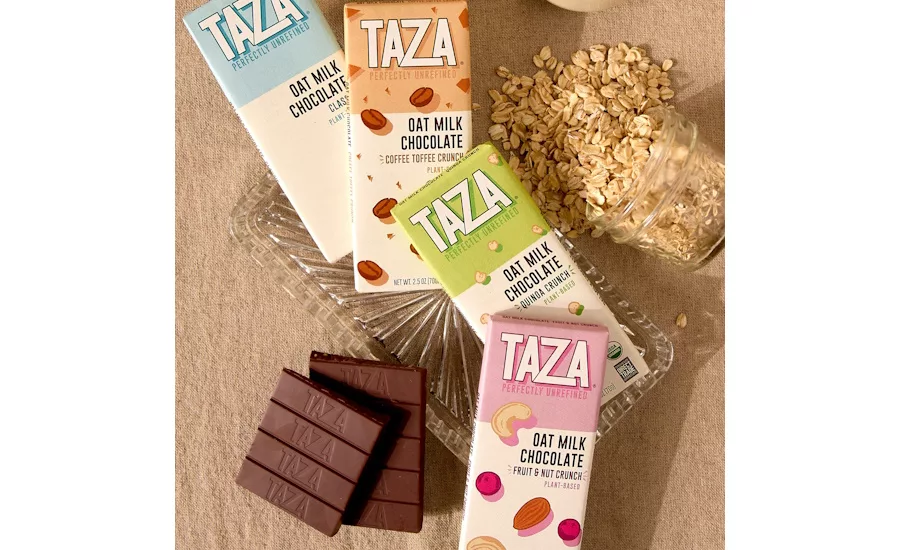
Despite twenty years of progress in how cocoa is priced and tracked, the chocolate industry is entering 2026 still grappling with deep-seated challenges.
We reached out to Alex Whitmore, founder and CEO of Taza Chocolate, to learn more. The company has spent the last 20 years building a business around a transparent, Direct Trade sourcing model, it says. In addition, Taza was the first U.S. chocolate company to achieve third-party certified Direct Trade cacao and the first to publicly disclose exactly what it pays cacao farmers each year through annual transparency reports, offering longitudinal data across two decades of operation.
Liz Parker Kuhn: Can you please offer a long-view perspective on how pricing, sourcing, and transparency have evolved over the past 20 years in the chocolate industry?
Alex Whitmore: 20 years ago, transparency in the chocolate industry was rare. Pricing was opaque, sourcing was largely invisible, and cacao was treated as a commodity rather than a crop shaped by people and place.
When Taza started, we set out to challenge that model by building direct relationships with producers, becoming the first U.S. chocolate company with a third-party-verified Direct Trade program, and publicly sharing the prices we pay for cacao. For us, transparency was a commitment to accountability.
Today, the industry has made meaningful progress. More brands are prioritizing traceability, fairer pricing, and long-term partnerships with producers. While there’s still work ahead, it’s encouraging to see transparency move from the margins to the mainstream.”
LPK: What pressures are shaping the industry in 2026?
AW: The industry is being shaped by unprecedented volatility. Ongoing disruption in global cocoa markets continues to ripple through chocolate manufacturing, especially given that cocoa is contracted years in advance. At the same time, uncertainty around tariffs, rising costs for other key ingredients, and broader supply-chain pressures are forcing companies to plan with less predictability than ever before. Overlaying all of this is climate change, a growing wildcard that’s already impacting yields and quality, and will continue to shape how the industry thinks about sourcing, pricing, and long-term resilience.
LPK: Can you talk about Taza’s Direct Trade model and multi-year transparency reports, and how it provides data?
AW: Taza’s Direct Trade model was built to serve two goals at once: sourcing exceptional organic cacao for our minimal stone-ground process, and ensuring growers are paid a meaningful premium for quality. Because our process and ingredients are intentionally simple, there’s no room to mask inferior beans; commodity cacao, and even many Fair Trade models, can’t deliver the consistency or quality that comes from working directly with producers.
We were inspired early on by the transparency movement in the specialty coffee world in the early 2000s and set out to apply a similar approach in chocolate, guided by our own mission and values. Since 2011, we’ve published a yearly transparency report that discloses the prices we pay each grower partner, alongside detailed information about our sourcing relationships, organic practices, and agroforestry standards. These reports provide concrete data that holds us accountable and help advance broader conversations about quality, pricing, and equity in cacao.
LPK: What's new for Taza for 2026?
AW: Heading into 2026, we are leaning into our unique strengths. Our R&D team is focused on showcasing how our stone-ground process delivers exceptional flavor and texture, particularly in high-percentage cacao chocolate. As consumer demand continues to shift toward darker, lower-sugar options, we see a real opportunity to lead; we believe we do ultra-dark better than anyone else out there.
We’re currently testing new baking and snacking formats, alongside a slate of limited-edition offerings across both our bar and disc lines. These launches allow us to explore new use cases while staying grounded in our core strengths. More to come soon.
LPK: Do you have any advice for chocolate producers in 2026?
AW: Volatility and uncertainty are a reality for chocolate producers in 2026. In moments like this, having a clear mission isn’t a nice-to-have—it’s essential. Using your values as a north star helps guide difficult decisions around sourcing, pricing, and partnerships when the market is unpredictable. Brands that stay rooted in why they exist, invest in long-term relationships, and resist short-term compromises are better positioned to weather the volatility and emerge stronger on the other side.
Looking for a reprint of this article?
From high-res PDFs to custom plaques, order your copy today!