Mars transitions all Europe snacking factories to renewable energy
The ten factories produce 900,000 tons of confectionery annually, including Snickers, M&M's, and others.
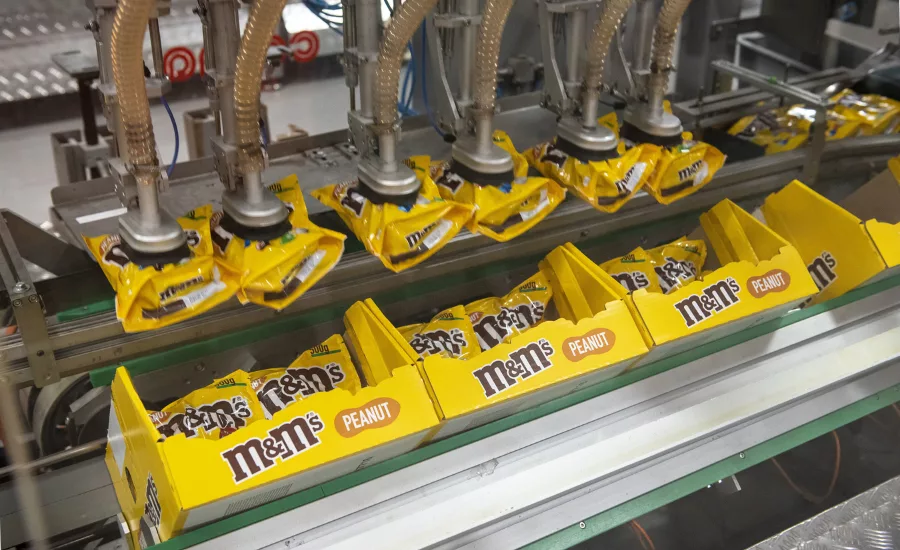
Mars has announced that all ten of its snacking factories in Europe are now fully powered by renewable energy.
The transition follows more than a decade of investment in the company’s European manufacturing footprint, including €1.5 billion over the past five years. Mars began its shift in 2016 with its first European wind farm and has since converted all confectionery manufacturing sites in the region to renewable electricity. To offset remaining energy use, the company has purchased Guarantees of Origin (GO) certificates for renewable electricity and biomethane equivalent to its direct operational consumption.
The ten factories—located in Czech Republic, France, Germany, the Netherlands, Poland, and the UK—produce approximately 900,000 tons of confectionery annually, including Snickers, Twix, M&M’s, Skittles, and Orbit/Extra. About 85% of production is consumed within the region.
“At Mars, we believe that the world we want tomorrow starts with how we do business today,” says Marc Carena, regional president for Mars Wrigley. “We measure our success not only by financial results, but also by the positive impact we have on people, the planet, and society. Sustainability makes good business sense and is at the heart of our strategy.”
The milestone supports Mars’ broader goal of achieving net-zero emissions across its global operations by 2050. The company plans to invest an additional €1 billion in EU manufacturing by the end of 2026 to support innovation, infrastructure modernization, and energy efficiency.
Mars is on the current Candy Industry “Global Top 100 Candy Companies” list. Click here to view the current “Global Top 100” rankings.
Looking for a reprint of this article?
From high-res PDFs to custom plaques, order your copy today!