How to manage allergens in confectionery production
Preventative procedures, training, oversight can protect consumers, avoid product recalls.
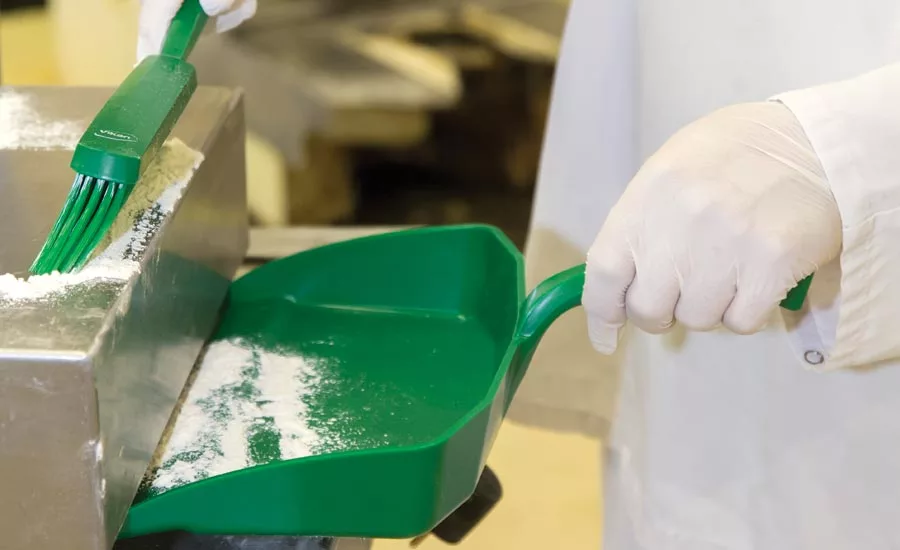
Using color-coded hand tools, such as green for peanut ingredients and blue for dairy immediately alerts employees about the allergens involved in cleanup or processing.
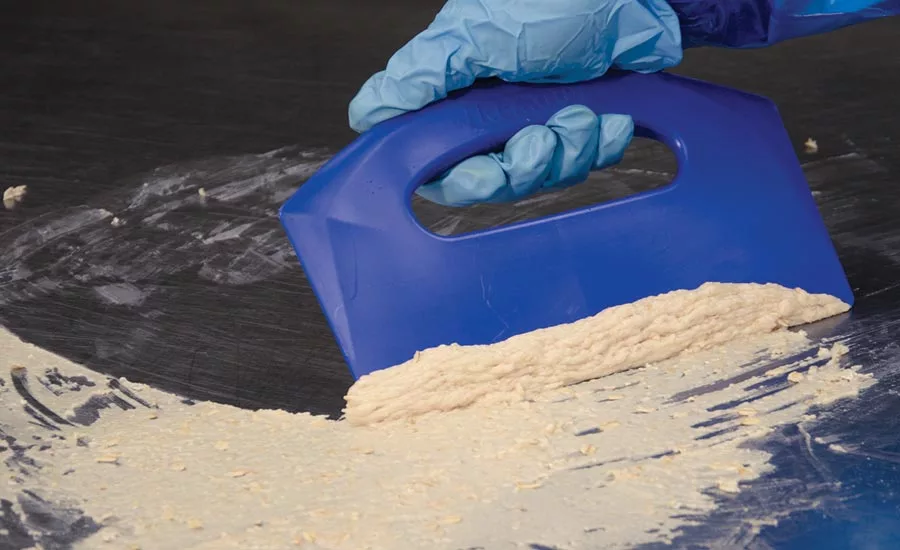
Using color-coded hand tools, such as green for peanut ingredients and blue for dairy immediately alerts employees about the allergens involved in cleanup or processing.

Depending upon the ingredients processed, such as nuts, dairy or soy, manufacturing facilities can color-code commonly used hand tools and create “zones” that denote allergens present.
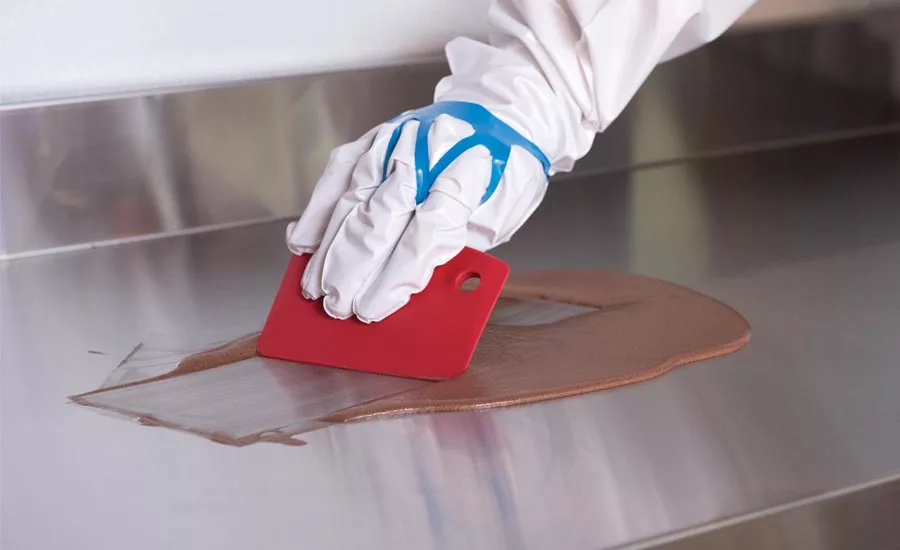
Depending upon the ingredients processed, such as nuts, dairy or soy, manufacturing facilities can color-code commonly used hand tools and create “zones” that denote allergens present.
For customers with food allergies, the simple pleasure of consuming a confection could have disastrous effects. Individuals with food allergies can rapidly develop symptoms of fever, vomiting, asthma, skin rashes, and hives, or they may even enter mild-to-severe anaphylactic shock. Compounding the problems of allergic reactions for consumers, there is a good chance they are allergic to more than one confectionery ingredient. The best way for consumers to prevent a reaction is to avoid products with declared allergens. However, consumers have no control over undeclared allergens, and that’s why manufacturers must recognize and separate common allergens in confectionery production.
According to Food Allergy Research and Education, up to 15 million Americans have food allergies, and the economic cost of children’s food allergies in the United States is about $25 billion each year. Undeclared allergens are also one of the most common reasons for food recalls. In 2014, undeclared allergens were behind half of the FDA’s fourth-quarter recalls. Moreover, according to the 2009-2012 FDA Reportable Foods Registry, about 90 percent of all reports involved three hazards: Salmonella, Listeria monocytogenes, and undeclared allergens, with undeclared allergens accounting for essentially the same number of reports as Salmonella (34 percent and 36 percent respectively).
An allergen is a type of antigen that, in specific individuals, produces an abnormally vigorous body response in which the immune system fights off a perceived threat that would otherwise be harmless to another person. These body responses are called allergies. Any protein-based product has the capability to elicit allergic reactions in humans at varying levels of severity. However, the following eight foods account for 90 percent of all food allergies: milk, eggs, peanuts, tree nuts, wheat, soy, fish, and shellfish.
So, how can we manage allergens in the confectionery industry?
Above all, the personnel preparing and handling confectionery products must be trained on allergen awareness and shown through proper demonstration how to prevent allergen cross-contact. This training should include identifying the various allergens in a facility, zones of production, material handling procedures, and appropriate sanitation practices.
The first line of defense starts with receiving raw ingredients. It is important to identify and separate different allergen-based products from each other, and from other non-allergen based ingredients to avoid cross-contact. One helpful practice, for example, may be using white color-coded tags to identify milk-based ingredients, and green color-coded tags to denote peanut ingredients. This aids in tracking ingredients and helps avoid accidental mix-ups. The same concept could apply during storage and handling, as well as during other operational processes.
In storage areas, especially if allergen cross-contact is a significant hazard, additional precautions should be taken. One sample recommendation is storing wheat flour bags and soy flour bags side-by-side rather than one on top of the other. This reduces the chance of accidental cross-contact. During handling, care should also be taken not to pierce ingredient bags, as cross-contact between different ingredients may occur.
Material accountability through proper recordkeeping is another important part of training. For instance, if an operator is supposed to use 250 lbs. of milk powder in making a certain batch of product, and eventually ended up using 275 lbs., he/she must account for where the additional 25 lbs. was used. Was it wasted, spilled, or used in another product? Good recordkeeping subsequently strengthens the traceability and recall program for the facility.
Beyond training for allergen identification and material handling, training workers on sanitation practices reduces risks in the facility. When cleaning in high-risk areas, using hygienically designed tools helps mitigate the risk of cross-contact or cross-contamination. Specific color-coded sanitation tools can also be used in the presence of different allergens to further reduce risk. To verify the effectiveness of sanitation, a mere visual check may not be sufficient, and ATP swabs or specialized allergen swabs should be used. As an example, there are fast and reliable peanut detection kits that provide accurate and rapid results within minutes, and similar test kits are available for other common allergens.
A qualified and competent group of personnel should supervise employees to ensure that the allergen management program is effective. Oversight is one way is to confirm that employees are washing their hands and changing their protective equipment when moving from one allergen processing zone to another. Visual cues such as color-coded hairnets, gowns, smocks, aprons, or gloves may also assist in proper identification and segregation of employees working in a facility.
Apart from proper identification and separation of ingredients, the key operation to focus on is processing. Production runs should be scheduled so that products with no allergens are processed first, followed by the product with least number of allergens, then second most, and so on (i.e. milk and wheat, followed by milk and wheat and soy products). After processing products with allergens, there must be a rigorous sanitation run before switching over to products with fewer, different, or no allergens. For instance, if you process a peanut-based confection and want to switch to a non-peanut-based confection, you must first clean and sanitize the food contact surfaces (equipment surfaces, conveyors, etc.). Then, you should sufficiently clean surrounding areas until no trace of the allergen is left.
Some allergen hazards extend beyond the production environment and should be considered by manufacturers. One potential hazard to consumers is that many do not know the scientific names listed on food labels. Because of this, product labels must explicitly list every allergen in the product. As an example, some products contain sodium caseinate, and many consumers are unaware that it is a milk-based ingredient. Therefore, apart from providing the scientific name, the label should explicitly state that the product contains milk. In addition, certain flavorings, spices, condiments, and preservatives may contain hidden allergens – for instance, Cajun sauce may contain peanuts.
Another important point to note is that certain countries may recognize a wider array of allergens than those recognized in the United States. For example, Canada recognizes mustard and sesame seeds as allergens. These international differences are especially important to consider when importing or exporting products.
With the projected global confectionery market projected to reach $275.8 billion by 2025, the cost of recalls due to allergens will be an ever-increasing issue. Manufacturers can reduce the risk of these costly incidents by instituting a preventive allergen management program that runs across their production facilities and training the workforce on that program.
Looking for a reprint of this article?
From high-res PDFs to custom plaques, order your copy today!