Color Trends: Consumers, activists pushing natural
While debate still continues about natural versus synthetic colors use, suppliers and manufacturers aren’t sitting on the sidelines.
“The purest and most thoughtful minds are those which love color the most.”
—John Ruskin, The Stones of Venice
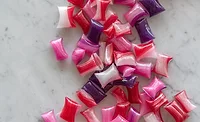
John Ruskin, the famed Victorian art critic, didn’t realize he was complimenting confectioners across the world with his reference to those loving color. After all, what confectioner doesn’t love color? A glance at today’s lineup of hard and chewy gummies, of jelly beans and chocolate truffles, of candy canes and caramels, reveals an unabashed desire to not only entice consumers with a bright and bold swatch of colors, but to mesmerize us as never before.
But unlike painters and photographers, candy technologists face more mundane issues regarding their choice of colors. First, there’s the functionality of the colors with the recipe itself. Is it compatible? Will it last? And does it have to be a naturally derived color?
Recently, consumer activists and consumer groups have intensified the debate regarding the use of natural versus synthetic colors. Last year, the Center for Science in the Public Interest (CSPI), together with Renee Shutters, a consumer in Jamestown, N.J., launched a petition asking Mars Chocolate North America to replace the artificial dyes used in coloring M&M’S. To date, more than 160,000 signatures have supported the petition.
Most recently, CSPI issued a press release drawing attention to a Purdue University study that measured the levels of synthetic colors/dyes in packaged foods, including candies. CSPI called the findings “disturbing, since the amounts of dyes found in even single servings of numerous foods — or combinations of several dyed foods—are higher than the levels demonstrated in some clinical trials to impair some children’s behavior.”
With regards to candies, CSPI cited Mars’ Skittles and M&M’S, which are dyed with Blue 1, Blue 2, Yellow 5, Yellow 6, and Red 40, as having the highest levels of synthetic colors found in candies. Skittles Original had 33.3 mg. per serving; M&M’S Milk Chocolate had 29.5 mg. per serving.
According to the Center, “Clinical trials have shown that modest percentages of children are affected by doses up to 35 mg. of mixtures of synthetic coloring, with larger percentages generally being affected by doses of 100 mg. or more. The amount of dye that is needed to trigger reactions in the most sensitive children is not known.”
The Purdue researchers also point out that the amount of synthetic colors certified for use by the Food and Drug Administration (FDA) has increased five-fold, per capita, between 1950 and 2012. “The researchers estimate that a child could easily consume 100 mg. of dyes in a day and that some children could consume more than 200 mg. per day,” the CSPI says in its press release. “Studies that tested much smaller amounts could easily have downplayed or missed entirely the effect of dyes on behavior,” it adds.
According to Mars, “All the colors we currently use in our products comply with our own strict internal quality and safety requirements as well as all applicable laws, regulations and safety assessments relating to colors added to food. And, all colors are declared on the label in accordance with applicable national laws and regulations. We have absolute confidence in the safety of all the ingredients we use, as do the U.S. Food & Drug Administration.”
Moreover, long-time suppliers and users of synthetic colors see very little evidence that their use causes hyperactivity in children.
“There’s no scientific evidence to back it up,” asserts David Hibbs, direct of business development for Byrnes & Kiefer Co. Even the famed Southampton study, which suggested there was such a link in 2007, quickly sparked debate. A subsequent European Food Standards Authority review stated that, “The Panel concludes that the McCann et al. study [Southampton] provides limited evidence that the two different mixtures of synthetic colours and sodium benzoate tested had a small and statistically significant effect on activity and attention in children selected from the general population excluding children medicated for ADHD.”
Even the FDA, when asked to look into the connection between synthetic colors and hyperactivity, asserted that a link between the two had not been scientifically established.
That, however, doesn’t rule out the perception that natural colors are “better for you.” As Hibbs points out, “Many people are convinced that natural is the way to go.”
Still, for confectionery companies, there are several issues to overcome, he adds. First, is the higher cost. And second, there’s less stability. Nonetheless, he does see the market evolving toward natural. To what extent, however, is the million-dollar question.
Indeed, last August, the FDA approved a specific spirulina extract (a blue-green algae) as a color additive in candy and chewing gum. Ironically, the approval stemmed from a petition filed by Mars. It didn’t take long for suppliers to offer manufacturers a new natural coloring agent.
For example, GNT USA uses spirulina for its blue, green and violet colors as part of its recently launched Exberry OD line of colors.
As Kelly Newsome, corporate communications — GNT, notes, “Since the approval of spirulina extract for use in confectionery this past September, we have seen a huge surge of interest in our spirulina-based color products from the confectionery industry.”
Moreover, the “demand from candy makers is markedly increased since even one year ago,” she points out. “As the ‘clean-label’ movement continues to gain ground, confectionery companies are responding — and color is one of the top concerns from a marketing standpoint.”
However, as Hibbs alluded, and as GNT acknowledges, certain applications that were oil-based, such as chocolate, “presented a major challenge for ‘natural’ color ingredients.” GNT says that its recent launch of Exberry OD oil-dispersible line of colors addresses that issue.
Alice Lee, GNT’s color culinologist, says the natural OD products are simple to use and require no special processing considerations. “Oil-dispersed natural colors show true innovation.”
Still, the use of natural colors requires special attention. As Lee points out, spirulina products can be affected by high heat.
“In the case of hard-boiled candies, however, one simply needs to let the mass cool before adding the color — and the result is a vibrant, enticing candy colored naturally with fruits and vegetables,” she says.
Looking for a reprint of this article?
From high-res PDFs to custom plaques, order your copy today!