Sustainable packaging can innovate confections: Somic
The company's 434 equipment can run any variation of flexible pouches and bags.
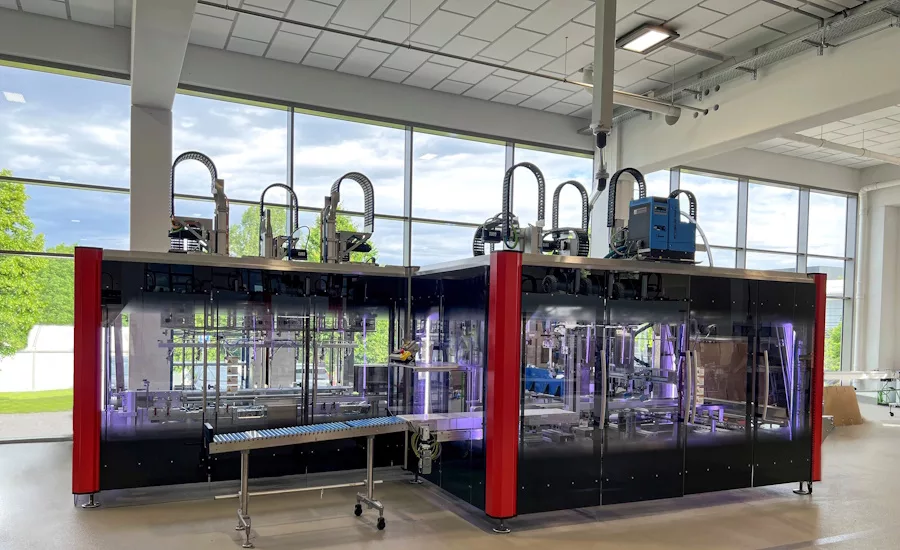
Packaging for a confectionery item can make or break the product, sometimes literally—it's what consumers may notice first on the shelf in their local store, or while shopping online.
We recently touched base with Peter Fox, CEO, Somic Packaging, Inc., to learn more about current trends in candy packaging.
Liz Parker Kuhn: In your view, how has packaging changed in the confectionery world since Somic moved into the North American market 11 years ago?
Peter Fox: I think one area of change has been the shift to what are perceived as more sustainable materials, which are more friendly to recycling systems and processes. Flexible materials have become much more common as they are cost effective, lightweight, and offer beneficial add-on features such as resealable zippers.
Smaller, individually wrapped portion control packaging has become more common. It often involves the primary small package, which is then packed in a larger stand up resealable pouch. Paper-based packaging continues to be considered a replacement for plastic and foil.
The challenge, of course, is to meet the same barrier requirements.
LPK: What lessons were learned from the Somic 424 to make the 434 the right system for confectionery products?
PF: The Somic 434 platform shares many of the features of the 424 that were beneficial to the confectionery packaging industry. Most notable would be the product handling and conditioning of the packages prior to case or tray packing. While these features and functional groups have been refined and standardized, they have found a home in the new 434. The 434 platform itself could not have been developed without the decade of refinements that we experienced with the 424.
3. Can you talk about the configuration possibilities of the 434 SuperFlex, and how confectionery companies can benefit from its capabilities in terms of speed, packaging consistency, less downtime, etcetera?
PF: The new 434 Superflex that was introduced two months ago is designed to provide the flexibility to run both smaller retail-ready formats. This is for both standing, shelf-ready displays, as well as larger bulk shipping configurations, on one platform. While the first six of these machines were specifically designed for stand up pouches, the 434 SuperFlex can run any variation of flexible pouches and bags. The integration of the collation, grouping, case erecting, and closing on one platform consolidates the layout, and provides the most effective and efficient case packer design available.
4. Are there other things about the 434 SuperFlex that relate to confectionery manufacturers? If you met with any of them in Las Vegas or have spoken to them since the show, can you share any of those discussion points?
PF: We spoke to one confectioner at the Las Vegas show who indicated they had difficulty controlling their flexible packages of gummy products. This is precisely where the 434 SuperFlex shines. We have integrated a pouch conditioner into the infeed section of the machine so it ensures product consistency and positioning, which eliminates the variation associated with inconsistent product presentation. While this is a small detail, it does improve the overall packaging performance significantly.
Related - Podcast: Somic Packaging on innovation
Looking for a reprint of this article?
From high-res PDFs to custom plaques, order your copy today!