Cordillera launches biodiversity conservation initiative
The program aims to transform cocoa sustainability in Colombia.
B2B Colombian sustainability brand Cordillera Chocolate has launched a major Biodiversity Conservation Initiative designed to place ecosystem health at the center of cocoa production in Colombia. The initiative signals a shift in how sustainability is defined across the global chocolate supply chain, the brand says.
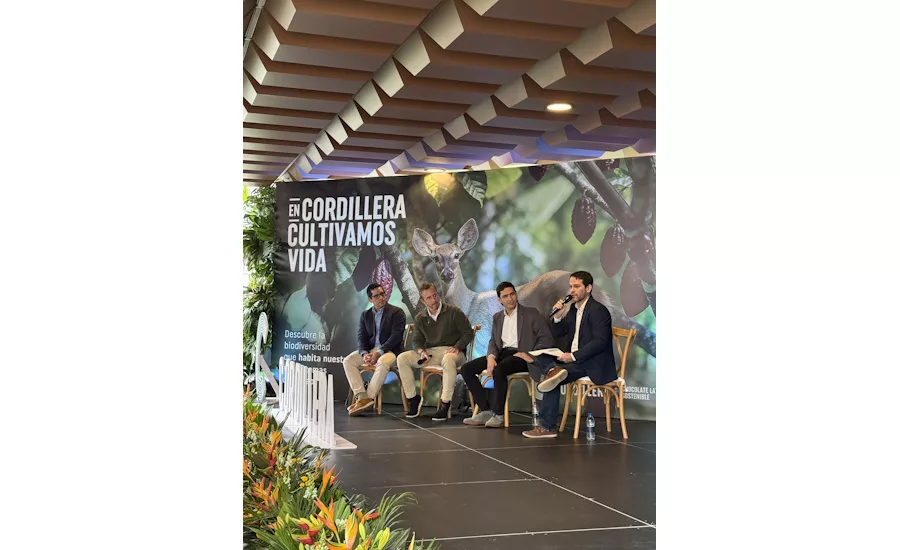
The initiative was presented during a dedicated session on biodiversity in cocoa landscapes at the recent World Cocoa Foundation Partnership Meeting in Amsterdam. It aims to move biodiversity from a peripheral reporting issue to a measurable, strategic pillar of responsible sourcing.
A living cocoa landscape
Cordillera’s cocoa farms reportedly operate as complex agroforestry systems where agricultural production coexists with native ecosystems. A comprehensive biodiversity baseline study, conducted with Proforest and Universidad del Norte, documented more than 570 species across these landscapes, including 34 migratory bird species and over 60 protected or threatened species listed under international conservation frameworks.
The findings establish what the company describes as a first-of-its-kind scientific baseline for Colombian cocoa agroforestry, enabling targeted conservation programs and long-term environmental monitoring.
Jorge León, B2B sustainability manager at Cordillera Chocolate, said the initiative reflects a broader shift in how sustainability is understood within agricultural supply chains.
“We now understand sustainability from a more holistic perspective. A prosperous farmer cannot exist without a healthy environment,” León says. “Cocoa production, biodiversity and human well-being are deeply interconnected, and protecting ecosystems is essential to the long-term resilience of both farmers and business.”
Biodiversity as a strategic foundation
Cordillera Chocolate says that industry observers note that the initiative emerges amid growing regulatory scrutiny of corporate environmental impacts, including evolving biodiversity expectations linked to European sustainability reporting and due diligence frameworks.
León said biodiversity must be treated as a structural element of cocoa sustainability rather than a supplementary concern.
“Biodiversity holds cocoa agroforestry systems together. Without it, there is no resilient farmer, no stable supply and ultimately no sustainable business,” he says.
Cordillera’s cocoa farms are structured as multi-layered agroforestry systems, combining cocoa trees with native shade species, timber, and fruit crops. These systems function as biological corridors connecting fragmented habitats and supporting ecological balance across wider landscapes.
The biodiversity inventory highlighted the ecological role of these farms, identifying threatened species such as the cotton-top tamarin using cocoa landscapes as habitat, while migratory birds including the scarlet tanager rely on them during seasonal journeys.
From measurement to action
León emphasizes that scientific data is central to translating sustainability commitments into measurable impact.
“Data turns sustainability from intention into impact,” he says. “A scientific baseline allows us to understand the ecosystem’s starting point and measure real change over time.”
The baseline will inform targeted conservation strategies, prioritizing ecosystems and species under threat while supporting collaborative action across farmers, researchers, and value-chain partners.
Farmers at the center of conservation
The initiative places cocoa farmers at its core, recognizing their role as stewards of agroforestry landscapes. Cordillera has worked with Colombian cocoa-growing communities for nearly seven decades, and the company says farmer participation is essential for meaningful biodiversity outcomes.
León highlights the link between biodiversity and climate resilience in cocoa production: “By strengthening biodiversity, we improve water regulation, soil health, pollination, and climate adaptation. This directly reinforces farmer resilience, supply stability, and long-term business viability.”
A sector-wide shift
Cordillera is positioning the initiative as a collaborative platform, inviting partners and stakeholders to contribute to biodiversity-positive cocoa supply chains, it says. The company argues that scaling agroforestry approaches could reshape the future of cocoa production.
“If biodiversity becomes standard practice, agroforestry will form the backbone of the sector while monoculture systems increasingly prove unsustainable,” León says. “This shift would strengthen ecosystems, stabilize supply chains, and support more resilient farmer livelihoods.”
As climate pressures intensify and sustainability expectations rise, the initiative signals a broader transition toward nature-positive agriculture within the cocoa industry, the company finishes.
Looking for a reprint of this article?
From high-res PDFs to custom plaques, order your copy today!