Texas bill aims to slap warning label on Skittles, M&M's
Governor Greg Abbott has until June 22 to approve the measure.
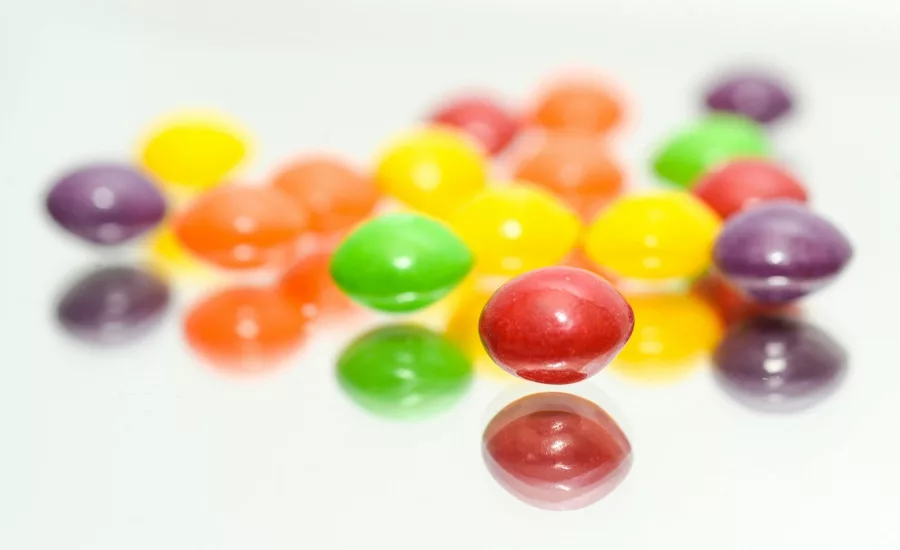
Photo: ClickerHappy / Pexels
Candy and snacks such as M&M's, Skittles, and Doritos, as well as soft drinks like Mountain Dew, could be labeled "not recommended for human consumption" if Senate Bill 25 passes in Texas.
Texas Senate Bill 25 passed unanimously in the state senate before being forwarded to Abbott's desk on June 1, where it is under review, says USA Today. The bill would require warning labels on foods sold there that have synthetic dyes, bleached flour, and other additives, which are banned or restricted in other countries. There are 44 total ingredients listed on the bill.
Texas Governor Greg Abbott has 20 days following the end of the legislative session, which ended Monday, to sign the measure, giving him until June 22 to do so. An Abbott spokesperson said the governor would carefully review the bill, according to the New York Post.
“Gov. Abbott will continue to work with the legislature to ensure Texans have access to healthy foods to care for themselves and their families,” press secretary Andrew Mahaleris told Bloomberg News.
The proposed bill states that starting in January 2027, producers that include these ingredients would have to add labels that say: “WARNING: This product contains an ingredient that is not recommended for human consumption by the appropriate authority in Australia, Canada, the European Union, or the United Kingdom.” The bill calls for the warning labels to be printed in a font size at least as large as the smallest type used for existing FDA-required information, the New York Post says. The labels must also be placed in an easy-to-see location, and designed with enough contrast to stand out on the packaging.
In a letter to Texas legislators on May 19, major food manufacturers and retail giants such as PepsiCo, Mondelēz, Coca-Cola, Conagra Brands, and Walmart expressed dismay over the bill, saying: “As currently written, the food labeling provision in this bill casts an incredibly wide net—triggering warning labels on everyday grocery items based on assertions that foreign governments have banned such items, rather than on standards established by Texas regulators or by the US Food and Drug Administration."
A consultant with the Texas Retailers Association told Bloomberg News: “Texas retailers and our members, including Walmart, worked hard on this bill, made some changes, and we’ll see how it develops over the next 20 days.”
While the bill managed to reach across the political aisle, it is not universally popular. John Hewitt, SVP of state affairs for the Consumer Brands Association, encouraged the governor not to sign it, noting in a statement shared with USA Today: "The ingredients used in the U.S. food supply are safe and have been rigorously studied following an objective science and risk-based evaluation process. The labeling requirements of SB 25 mandate inaccurate warning language, create legal risks for brands, and drive consumer confusion and higher costs."
In April, the U.S. Department of Health and Human Services (HHS) and FDA announced a series of new measures to phase out all petroleum-based synthetic dyes from the nation’s food supply. One of the measures includes working with the industry to eliminate six remaining synthetic dyes—FD&C Green No. 3, FD&C Red No. 40, FD&C Yellow No. 5, FD&C Yellow No. 6, FD&C Blue No. 1, and FD&C Blue No. 2—from the food supply by the end of next year.
Related: Experts react to impending ban of petroleum-based food dyes
Looking for a reprint of this article?
From high-res PDFs to custom plaques, order your copy today!