Holiday packaging lights up consumer emotion
A marketing agency investigates whether seasonal products resonate with shoppers.
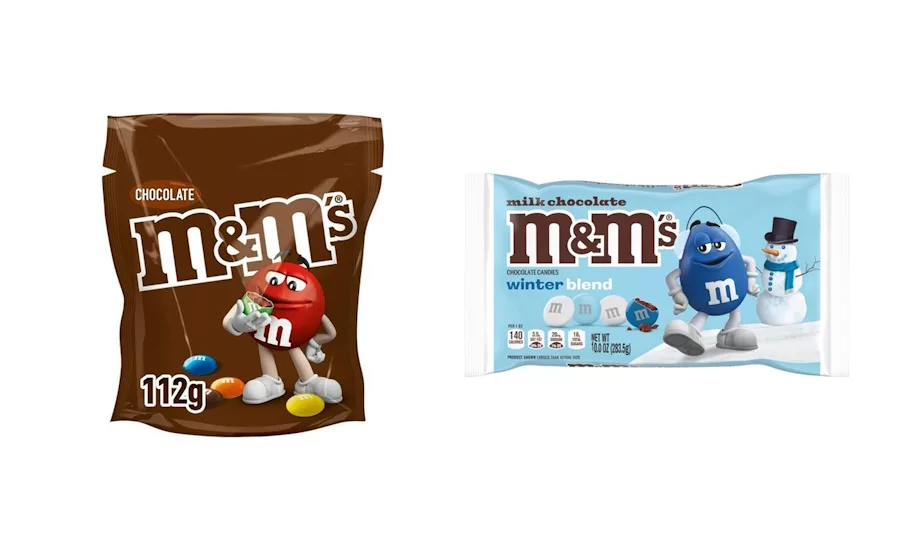
Every holiday season, U.S. candy aisles get a full makeover. Suddenly everything is red, green, sparkly, or shaped like a tree. Brands bring out the festive versions of their classics, and shoppers expect to see them. The big question is why these limited-edition packs actually work on people.
System1 recently tested both seasonal and non-seasonal packaging for six top U.S. candy brands: Reese’s, M&M’s, Twix, Sour Patch Kids, Junior Mints, and Nerds Clusters. The testing used the Test Your Innovation platform, which looks at emotional response and predicts the commercial impact of products, taglines, slogans, and more.
Preference stays stable, even when packaging gets festive
When consumers looked at the regular packaging, they responded with the usual affection. These are well-loved brands, so high likeability is expected. Respondents' reasons for emotion on the baseline products include:
- “It’s a classic” - Twix
- “Love these!” - Reese’s
- “Everyone loves M&M’s” - M&M’s
- “Sour and sweet!” - Sour Patch Kids
- “This product can be consumed by all people” - Junior Mints
- “Fun and colorful candy with a playful texture” - Nerds Clusters
Surprisingly, seasonal packaging did not shift purchase preference. Shoppers said the limited-edition designs were “fun,” “appropriate for the season,” and “nice to look at,” yet most still said they would choose the regular version if asked directly.
One respondent said the Reese's elf pack made him feel “surprised” because it was his favorite snack with what he described as extra festive cheer. Others called the designs “reliable,” “unique,” or simply “fun,” but a few admitted the seasonal look did not matter much if they were not already familiar with the brand.
On the surface, it might seem like seasonal packs do not make much difference, but a closer look at emotional data suggests otherwise.
Emotion tells a different story
Though people do not consciously prefer the festive versions of their favorite sweets (they still taste the same), they react to holiday packaging more strongly.
Across all brands tested, seasonal designs brought up feelings tied to nostalgia and the holiday atmosphere. These are feelings that perform strongly at driving consumer purchases. Within the Test Your Innovation platform, consumers are asked what they think the main advantages of the product are. For many shoppers, the packaging felt timely and festive, and sometimes even better suited for a small gift.
These emotional responses do not always show up in preference ratings, yet they have a big influence on what people actually buy. One participant summed it up while reacting to the holiday Reese's pack by saying, “It feels like a little holiday moment in my hands.”
Why emotions wins in holiday candy sales
Candy often falls into the impulse category, and impulse decisions rely on emotion more than anything else. A product does not need to win in a side-by-side preference test to end up in a shopper’s cart. It just needs to feel right in the moment, whether that’s a craving for chocolate or the search for stocking stuffers.
Seasonal packaging taps into cues people already associate with the holidays, such as tradition, celebration, and gathering with friends and family. Even when consumers say they would typically choose the regular version, the emotional lift that comes from a festive design can nudge them toward the holiday edition while they are shopping.
This pattern shows up year after year in sales data. Holiday-themed SKUs reliably deliver stronger volume despite only modest shifts in stated preference.
What this means for candy brands, retailers
The lesson for brands is simple. Seasonal packaging cannot be judged by stated preference alone. Emotional response plays an equally important role, and when you consider the two together, the value of seasonal packs becomes much clearer.
These designs do not need to outperform core packaging in preference to succeed. Their real job is to elevate emotion, signal the season, and spark moments of joy or nostalgia that encourage impulse buying. This is something they are already doing quite effectively.
System1’s Test Your Innovation platform highlights an important truth. Holiday candy does not sell because it wins on preference. It sells because it strikes an emotional chord. Seasonal packaging adds a timely, mood-boosting layer to brands that consumers already love, and that makes it a dependable driver of seasonal performance even when preferences stay flat.
In a category built on indulgence, tradition, and small moments of delight, emotion is not just part of the story. It is the deciding factor.
Related - NCA: Consumers indulge in candy during winter holidays
Looking for a reprint of this article?
From high-res PDFs to custom plaques, order your copy today!