Jardi Chocolates employs farm-to-table method
Its confections are handcrafted and include innovative flavor combinations.
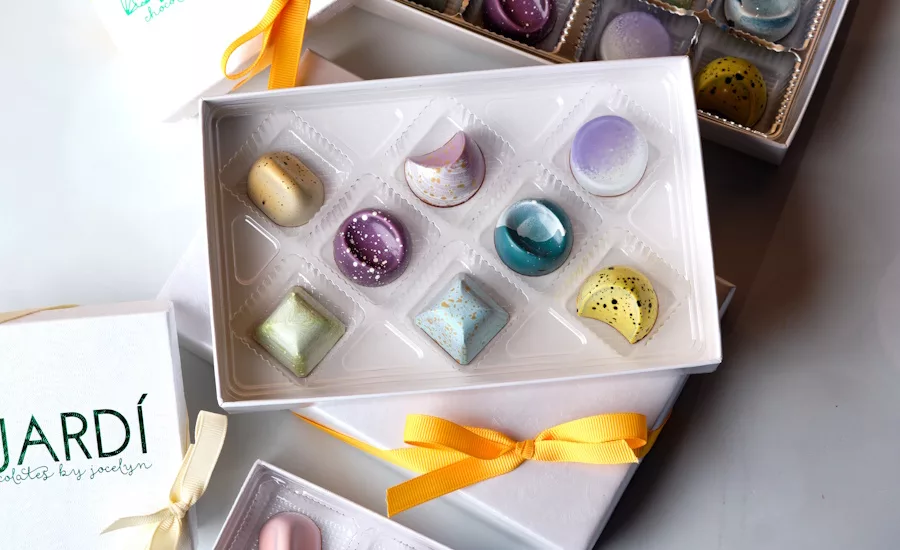
Jardi Chocolates, an Atlanta-based chocolatier founded in 2015 by pastry chef Jocelyn Dubuke, is named after the Catalan word for "garden," and the company was inspired by the natural beauty of Northern Spain.
The woman-owned company is known for colorful, handcrafted confections and inventive flavor combinations made with real ingredients and no preservatives, additives, or dyes. Crafted in small batches in Chamblee, GA, Jardi's bonbons, caramels, and seasonal collections are designed to be both beautiful and delicious, with nationwide shipping available.
To learn more about the company and how it applies the farm-to-table to chocolates, we touched base with Dubuke.
Liz Parker Kuhn: Can you please give us an overview of Jardi? When and how was it started?
Jocelyn Dubuke: Jardi was founded in 2015—I’d been in fine dining for my entire profession before then—Kiawah Island, The Georgian Room at Sea Island, Restaurant Eugene, and chocolate was always part of my tasks as a pastry chef. When I’d reached the point of burnout in restaurants, I sat down and thought about what my favorite part of my job had been and realized it was when I got to make the chocolates for VIPs or amenities or mignardises. At the time, there wasn’t a chocolate shop in Atlanta, so I decided to fill the void in the market—I wanted to be able to sell to restaurants and hotels (like those where I’d worked) who didn’t have the space, equipment, or experienced staff to make high-quality chocolates in-house.
LPK: Do you have a storefront or just sell online?
JD: We do not have a storefront; all our retail sales to the public are done through our online store. We ship everywhere in the U.S. and Canada, and also offer local pickup to those who live or work in Atlanta. We’ve been slowly introducing new ways for local pickups to happen—we now have a separate locking entrance that is attached to our building (and therefore climate controlled!) for people to come by at their convenience to grab their order, without having to worry about being around. So much of our wholesale sales are still done via face-to-face encounters that it was becoming hard to arrange a set "pickup time," so this is a much better experience for everyone.
LPK: How can you apply the farm-to-table mindset to chocolate?
JD: Chocolate (in my opinion) is one of those fabulous ingredients that can always handle innovation—sweet or savory, salty or sour— there’s a place for every taste with chocolate. It lends itself almost effortlessly to new flavor combinations, which means when a certain fruit or herb is in season, it can become the highlight, and when its season is over, we switch to the next. Utilizing food science to extract every morsel of flavor and saving it for use throughout the year is a really fun part of recipe development for me; right now, we’re slowly dehydrating dozens of pounds of fresh ginger to use for holiday flavors! I’ll also infuse herbs in butter—firstly to really open up their flavors and show them to the best of their ability, but secondly to preserve them for use when the colder months come and the market is looking a little bare. Lastly, for fruits that can handle it, we’ll puree fruit when it's fresh and perfect, then freeze it for use throughout the year. Citrus isn’t in season right now in May, but we’ve got a stockpile of juice from January that’ll keep us going through the end of the year.
LPK: How can seasonality fuel product innovation and create retail excitement, plus encourage repeat sales?
JD: Seasonal holiday sets keep my regulars happy—Valentine’s Day, Mother’s Day, Easter, Eid, Halloween, Thanksgiving, and Christmas all get their own special four-piece, which changes from year to year. Plus, I change up our year-round flavors a little each year—of the 13 we have, about three or four will change each year.
LPK: How can smaller brands remain nimble and creatively differentiated in an increasingly competitive confectionery market?
JD: Not being afraid to stand out is one of the reasons I think Jardi has been so successful and has lasted for a decade. From day one, I didn’t want to use food dyes, even though it was absolutely the industry standard. Standing out with slightly muted colors (that I had to, in many cases, start making myself in-house) against a sea of technicolor truffles was a little difficult at first, but now everyone seems to be switching to dye-free! It’s nice that there are more options for me for dye-free colors since there’s now a larger market, and I’m glad to have been ahead of that trend. Also, so many new chefs want to jump on a popular trend without finding a way to make it their own. Sure, we did Hot Cocoa Bombs in 2020 and have a Dubai bar now, but we used housemade marshmallows in the former and no artificial pistachio flavor in the latter; it satisfies the demand for the trend but still gives new customers a taste of what Jardi is—and keeps them coming back! Learning from other chefs you admire and using their recipes, designs, and ideas while you are still learning is great, but once you’re building your brand, you can’t keep relying on others’ innovations.
LPK: What’s next for Jardi for the rest of 2026—any products in the pipeline?
JD: As I mentioned with the mountains of ginger, we’re already gearing up for Q4! We’ll have new collections for Halloween, Thanksgiving and Christmas, plus new flavors in our Advent Calendar (though the fairy tale story of my corgi will remain the same). I’m also playing around with a separate line of snacks to pair with wines and beers but that is still a little way off.
LPK: What’s your favorite Jardi product to enjoy?
I tend to gravitate towards salty snacks more than sweet ones, so I’m a sucker for the nut-based products. The cashew caramel crunch truffle will never leave my year-round menu because I enjoy snacking on the broken ones way too much! Plus our chocolate-covered nuts- either the Salty Chocolate Almonds or Caramel Chocolate Hazelnuts. I brine our whole almonds in a salt-water solution for 24 hours before they’re roasted and covered in dark chocolate, and those usually end up as part of my lunch, and if I want something a little bit sweeter, I’ll grab the hazelnuts. They’re covered in dark and caramelized white chocolate, so it’s not super sweet, but still a nice dessert.
Related: Hotel Chocolat debuts new packaging, boxed selections
Looking for a reprint of this article?
From high-res PDFs to custom plaques, order your copy today!