Navigating a climate conscious world: Cargill
Empowering farmers through training is essential to build resiliency in the cocoa supply.
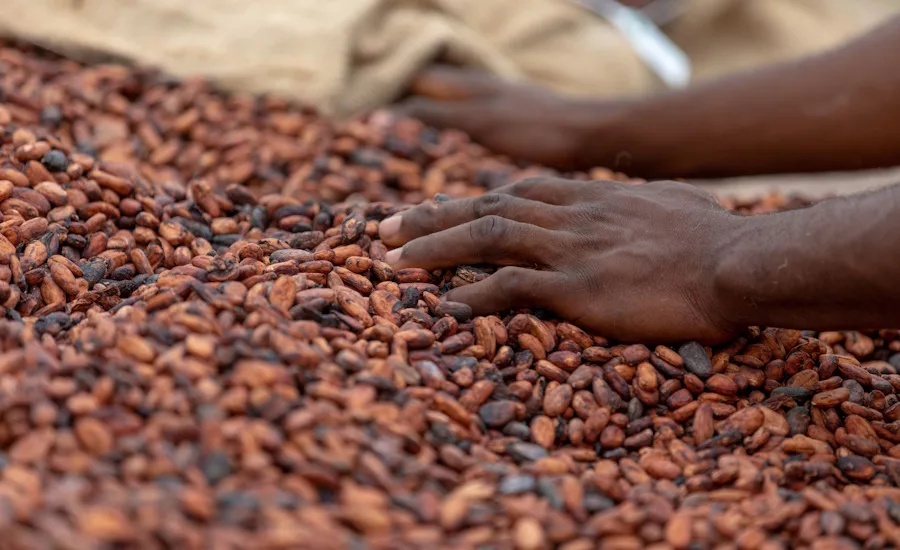
Courtesy of Cargill
Julie Robey, go-to-market sustainability director, food North America, Cargill, recently spoke at the Professional Manufacturing Confectioners Association's (PMCA) conference, from April 7-9 in Lancaster, PA. Robey offered confectioners a primer on "Navigating a Climate Conscious World," looking at the climate considerations associated with the cocoa supply chain.
Candy Industry Senior Editor Liz Parker Kuhn was able to talk to Robey about her presentation and about the cocoa industry in general.
Liz Parker Kuhn: What factors make the cocoa supply chain especially vulnerable to climate change?
Julie Robey: Cocoa, the key ingredient in chocolate, is grown in regions highly vulnerable to climate change—especially West Africa, which produce the majority of the world’s supply. It’s a part of the world already facing rising temperatures and erratic rainfall—realities that place heightened stress on cocoa production.
Adding to the challenge, the region’s smallholder farmers often lack the financial resources to invest in climate-resilient practices, making their crops even more susceptible to extreme weather conditions, pests, and diseases. As climate models predict higher temperatures and more frequent droughts in key cocoa-growing regions, the future of global cocoa production depends on how effectively the industry adapts.
LPK: What steps is Cargill taking to build a more climate-resilient cocoa supply chain?
JR: We’re tackling these challenges head-on, focusing on both farm-level resilience and broader supply chain innovation. One major initiative is our agroforestry program, which has already distributed nearly four million trees in Ghana and Côte d’Ivoire. Growing cocoa under increased shade cover can help protect trees from higher temperatures—plus planting shade trees has the added benefit of sequestering carbon.
Beyond tree planting, we’re investing in farmer-training programs to help growers adopt more resilient agricultural practices. Collaboration with academic institutions is another key part of Cargill’s strategy, with research efforts focused on soil health, fungal disease management and biodiversity.
At the same time, we’re bringing greater traceability and transparency into our systems. Our approach is built on geographic information systems (GIS) software tools, geospatial datasets of forests, and methodologies from the World Resources Institute's (WRI) Global Forest Watch platform. By overlaying farm maps with geospatial data, our teams can detect forest cover changes on our cocoa suppliers’ farms as well as in nearby forests and protected areas. Additionally, we teamed up with Satelligence, which deploys satellite-monitoring technology to detect deforestation in near-real time across our cocoa supply chains.
Alongside work to support farmers as they adapt to a changing climate, we also see opportunities to reduce GHG emissions in our value chain—from how cocoa is processed to how it reaches consumers. Toward that end, we’ve introduced circular economy strategies, including converting cocoa bean shells into biofuel to power our cocoa-processing facilities, and launched zero-emission electric barges to reduce our transportation-related carbon footprints.
LPK: Where does the consumer fit in this picture? Are sustainability considerations still on their radar, or have other priorities overshadowed environmental concerns?
JR: Consumers play a critical role in shaping the future of sustainable cocoa. Climate change is top of mind for many—85% of consumers report seeing its effects in their daily lives, and nearly half actively seek out sustainable products. However, price remains a major hurdle. In a challenging economic environment, many consumers hesitate to pay a premium for sustainability, even if they value it. That said, there’s a growing willingness to spend more on sustainably sourced products, particularly in categories like chocolate and crackers. A newly released study from New York University’s Stern Center for Sustainable Business looked at 2024 grocery store data. They found sustainably labeled products commanded an average 26.6% premium, with some categories—such as sustainable chocolate and crackers —seeing even higher consumer interest. But to turn interest into action, brands need to tell a compelling story—whether through product packaging, digital content or QR codes that provide deeper insight into their sustainability efforts.
LPK: How important are voluntary certification bodies like Fairtrade or Rainforest Alliance?
JR: Organizations like Fairtrade and Rainforest Alliance remain vital to help validate our efforts. They provide independent verification, helping build consumer trust. As sustainability expectations evolve, so do these programs. Fairtrade, for example, has expanded their Human Rights and Environmental Due Diligence framework, requiring companies to commit to greater transparency. Meanwhile, Rainforest Alliance plans to roll out a Regenerative Agriculture program, reflecting the growing emphasis on climate-resilient farming.
LPK: Looking ahead, what are promising strategies to support the long-term viability of the global cocoa industry?
JR: Expanding the use of climate-smart agricultural practices and empowering farmers through training will be essential to build greater resiliency in our cocoa supply. Advancements in technology, including satellite monitoring and GIS mapping for supply chain transparency, will help businesses track progress and meet evolving regulatory requirements. And as regulatory frameworks evolve, companies that proactively align with environmental and human rights standards will be better positioned for long-term success.
Looking ahead, securing the future of cocoa will require a multi-pronged approach—one that blends climate-smart farming, technological innovation, and industry collaboration. Strengthening farmer training programs and scaling regenerative agriculture practices will be key to making cocoa crops more resilient. Meanwhile, advancements in satellite monitoring and geospatial mapping will continue improving supply chain transparency, ensuring companies meet evolving sustainability requirements.
But adaptation isn’t just about mitigating risk—it’s an opportunity to build a stronger, more sustainable cocoa industry. Businesses that prioritize climate resilience will not only safeguard supply chains but also gain consumer trust and long-term market advantage. By acting now, we can create a future where cocoa farming remains viable, ecosystems thrive, and consumers can continue enjoying chocolate with confidence.
Related: Chocolate offers snack and bakery producers innovation opportunities
Looking for a reprint of this article?
From high-res PDFs to custom plaques, order your copy today!