Reduced-sugar confectionery enters a new era
Today's consumers want candy products to align better with modern wellness goals.
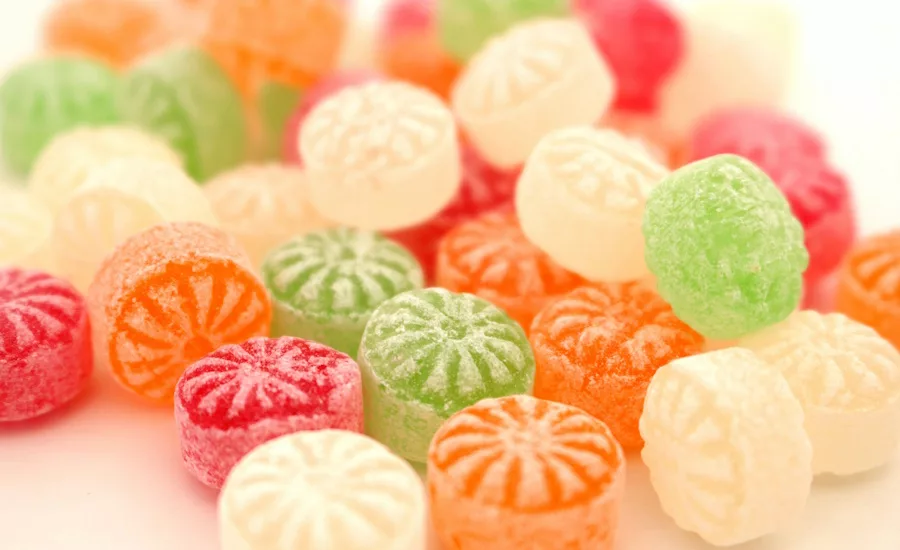
For decades, sugar-free confectionery lived in a corner of the market defined mostly by necessity. Consumers bought sugar-free candy because they were diabetic, following low-carb diets, or managing blood sugar concerns. Expectations were often lower. If the product tasted “good enough,” that was considered a win. That dynamic has changed dramatically.
Today’s reduced-sugar consumer is not necessarily eliminating sugar altogether. More often, they’re trying to moderate it. They still want indulgence. They still want chocolate, gummies, chewy caramels, and hard candy. They simply want those products to align better with modern wellness goals.
That shift is reshaping the confectionery category.
Reduced-sugar products are no longer getting a free pass on texture, flavor, or eating experience. Consumers are willingly choosing these products now, which means expectations have risen sharply. A reduced-sugar gummy that sticks to the wrapper, a chocolate that blooms or cools too aggressively, or a hard candy that lacks the expected glassy snap is no longer viewed as an acceptable compromise. It is viewed as a failed product.
And that creates a major challenge for manufacturers, because sugar in confectionery has always done far more than provide sweetness.
Sugar as a functional system
In candy systems, sugar provides structure, texture, stability, shelf-life management, flavor delivery, and bulking functionality. It creates the glassy matrix in hard candy, controls elasticity in gummies, contributes to browning and flavor development in caramel systems, and drives the melt and snap characteristics consumers expect from chocolate.
Remove sugar, and you remove much of the architecture that makes confectionery indulgent in the first place.
That reality is driving what many in the industry are beginning to recognize as the “polyol pivot,” a broader shift away from dependence on single sweetener systems and toward more balanced, multifunctional approaches to sugar reduction.
For years, erythritol became the dominant bulk sweetener in many sugar-free applications because it offered low calories, low glycemic impact, and relatively clean sweetness. It helped create a bridge between traditional confectionery and modern reduced-sugar demands.
But over time, the limitations became more apparent. Supply volatility, pricing pressure, and ongoing conversations around digestive tolerance and sensory performance forced brands and formulators to rethink their dependence on a single ingredient strategy.
In confectionery specifically, erythritol also introduced technical tradeoffs. Its tendency to recrystallize could contribute to grainy textures over shelf life. Its pronounced cooling effect worked in some mint applications but could distort flavor profiles in chocolate and fruity confections. And in certain systems, it struggled to replicate the plasticity and mouthfeel of traditional sugar.
As a result, manufacturers are increasingly moving toward blended systems designed to distribute functionality across multiple ingredients instead of forcing one ingredient to do everything.
The next phase: from substitution to system design
That shift has renewed interest in ingredients like isomalt and maltitol, not because they are new, but because they solve different problems within confectionery systems.
Isomalt offers excellent structural stability and low hygroscopicity, making it particularly useful in hard candy and applications where moisture migration creates shelf-life challenges. Maltitol, meanwhile, delivers a sweetness profile and mouthfeel much closer to sucrose, making it valuable in chocolate, coatings, and chewy confections where texture and sensory performance are critical.
Together, these ingredients allow confectionery manufacturers to recreate more of sugar’s full functionality while also reducing the risk associated with relying too heavily on any single bulk sweetener. This systems-based approach is becoming increasingly important as consumers expect reduced-sugar products to perform like their full-sugar counterparts.
At the same time, another ingredient is beginning to reshape the conversation around reduced-sugar confectionery: tagatose.
The future of confectionery
Interest in tagatose has accelerated following its treatment on the Nutrition Facts Panel, where it is no longer required to be declared as an “added sugar.” For confectionery brands, that development has significant implications.
Unlike many high-intensity sweeteners, tagatose behaves much more like sugar in food systems. It contributes bulk, participates in browning reactions, and helps support flavor development in applications like caramel, toffee, chocolate, and baked inclusions. That allows manufacturers to reduce declared added sugars while still preserving many of the sensory and functional qualities consumers associate with traditional confectionery.
Strategically, tagatose also helps brands occupy an increasingly important middle ground within the category. Not fully sugar-free, but significantly reduced in sugar. Better aligned with wellness trends, but without sacrificing indulgence.
That middle ground may ultimately represent the future of confectionery.
Consumers are moving away from all-or-nothing thinking. The emerging focus is moderation, balance, and permissible indulgence. Shoppers still want treats, but they want them engineered differently.
For manufacturers, this means sugar reduction can no longer be approached as a simple ingredient substitution exercise. It has become a broader product development and brand strategy conversation involving sensory performance, digestive tolerance, ingredient economics, labeling considerations, and long-term supply stability.
The companies succeeding in reduced-sugar confectionery are increasingly the ones treating sweetener systems as part of a broader formulation strategy rather than searching for a single perfect replacement for sugar.
That evolution is pushing the category toward a more mature future. One where reduced-sugar products are not marketed as compromises or alternatives, but simply as great confectionery products that happen to contain less sugar.
And that may be the most important shift of all.
Looking for a reprint of this article?
From high-res PDFs to custom plaques, order your copy today!