Spraying Systems' Devices Minimize Clogging
Spray nozzles appear to be simple devices, but in service they function
as highly precise instruments. A spray system that is not working
optimally can very quickly cost your operation tens – even hundreds –
of thousands of dollars annually.
By Jon Barber, director
Spraying Systems Co., Wheaton, Ill.
jon.barber@spray.com
Spray nozzles appear to be simple devices, but in service they function as highly precise instruments. A spray system that is not working optimally can very quickly cost your operation tens – even hundreds – of thousands of dollars annually.
When nozzles become partially blocked, spraying efficiency is degraded and your process can be compromised. The most frequent cause of clogging is the presence of contaminants in process water, a condition that is particularly common in systems that use re-circulated water. Other factors that may cause clogging are particle agglomeration, scaling and bearding, which is the buildup of material on the inside and outer edges of the orifice. The negative effects of clogging on spray performance include decreased flow and disturbed spray patterns. When positive displacement pumps are in use, clogged spray nozzles will increase process pressure, whereas flow will be most acutely affected when centrifugal pumps are used.
Quality problems – increased scrap or process problems
If the spray application directly affects product quality, increased scrap is the inevitable result of nozzle clogging. This can happen when coatings, release agents, lubricants or protective films are applied unevenly or with inconsistent coating thickness on the finished product. If the spray is part of an intermediate cooling, cleaning, humidifying or moistening process, the specified performance will be compromised.
Cross-batch contamination also can occur when spray patterns deteriorate and contain uneven cleaning results.
Depending on your process, potential losses can easily reach tens of thousands of dollars in wasted product before a clogging problem is noticed and corrective action is initiated.
Production downtime and additional maintenance cost
Process interventions due to clogged spray systems are of three kinds: monitoring, maintenance and downtime. Systems that are plagued by clogged nozzles generally require close observation and documentation for performance to be on spec. When this labor-intensive process reveals a problem, maintenance is required and often results in downtime – the most expensive intervention of the three.
For example, a plant running is 24 hours per day, 5 days a week and 52 weeks per year at $15 per hour for labor and $100 per hour for downtime. One hour per shift is spent monitoring/maintaining the system: $11,700. Two hours per week is allotted for maintenance: $13,250. The potential for annual clogging equals $25,220.
Minimizing clogging
Proactive maintenance is the best way to prevent clogging problems from occurring but even well-maintained systems can experience problems from time to time. Many spray systems can be efficiently maintained in good operating condition by manually cleaning nozzles at regular intervals. But a word of caution – only use materials that are much softer than the nozzle orifice surface. Plastic bristle brushes and wooden or plastic probes are good. Never use tools such as wire brushes or pocketknives. It is very easy to damage the critical orifice shape and/or size and produce distorted spray patterns or excess flow.
Try soaking the orifice in a non-corrosive cleaning chemical to soften or dissolve the clogging substance when nozzles are clogged and manual cleaning with a non-damaging instrument doesn’t solve the problem.
Add strainers
Most applications can benefit from adding strainers, which are an easy and economical way to minimize clogging. Strainers, including spray nozzles with built-in strainers, trap larger particles and prevent debris from entering the spray nozzle orifice or vane. Popular and effective strainer types include:
Integral strainers can often be ordered as part of the nozzle itself and are available in a variety of mesh sizes, down to 200 mesh, and materials including brass, aluminum, nylon, stainless steel and polypropylene for standard and quick-connect flat spray, full cone, hollow cone and fine spray nozzles.
T-strainers are widely used and available in many configurations. Most are designed to minimize pressure drop and provide simple, fast cleaning and maintenance. Self-cleaning versions, which allow the filtered liquid to pass through the strainer and liquid particles to be returned to the liquid supply, are another option. Strainers are available in a wide variety of materials, including
FDA-compliant materials for potable water usage, for low-, medium- and high-pressure applications. Clean the nozzles with a material that is softer than the orifice, like a toothbrush or toothpick.
Self-cleaning strainers
Self-cleaning strainers offer a unique answer to effective filtration and clog prevention for process water, cooling tower, pre-filtration to water treatment and similar applications. These strainers consist of a series of automatic filters with a self-cleaning mechanism driven by an electric motor. A pre-screen protects the cleaning mechanism from large particles, after which the main screen removes debris down to 10-micron particle size. As debris accumulates on the main screen, it creates a filter cake, which causes a pressure differential across the screen, triggering the cleaning process when it reaches a pre-set value. One version uses a suction scanner that rotates in a spiral motion while vacuuming the filter cake from the screen and expelling it through the exhaust valve.
Suction scanning is equally as effective at filtering two- and three-dimensional sand. Particle adhesive characteristics have no significant impact on the efficiency of this process, making it well suited for greasy or oily water.
Maximum Free Passage (MFP) nozzle designs
MFP nozzle designs are another effective answer to clogging. These nozzles feature open flow passages to ensure that most contaminants can pass through. MFP nozzles are an excellent choice for applications requiring maximum liquid throughput such as aerating, dust control, chemical processing, food processing, pulp and paper, gas scrubbing/cooling and fire suppression/prevention or anytime there is debris in the water or where re-circulated liquid is being used.
However, be sure to research MFP claims as there can be a big difference in the performance of these nozzles. One simple test is to drop a ball bearing of the free passage diameter size through the nozzle. It should pass through freely. Another attribute to evaluate is spray pattern. Some MFP nozzles don’t provide the promised spray pattern. Watch for very thick edges and light centers in full cone nozzles and heavy centers in hollow cone patterns.
Self-cleaning nozzles
Self-cleaning nozzles are available in a number of configurations and operating styles. For example, nozzles with clean-out needles are ideal for intermittent spraying applications using liquid that can dry in the orifice between uses. The clean-out needle can be activated manually or automatically, depending on nozzle type, and slides through the liquid orifice to clear obstructions. Automatic spray nozzles can be equipped with a clean-out needle that cleans the liquid orifice after each spray cycle for maximum protection against clogging.
Other self-cleaning nozzles retract a purge piston when line pressure is reduced to remove fibers and other solids from a clogged nozzle. Spray headers, with internal brushes that rotate and remove debris from nozzle orifices, also are widely used in applications where less than pristine water is used.
Anti-bearding spray set-ups
Anti-bearding spray set-ups reduce bearding and clogging by changing the air current around the spray tip to prevent drops from falling back onto the nozzle and causing buildup. In some cases, users can run their spray operations up to 20 times longer without shutting down.
Heated spray nozzles and systems
The addition of a fluid-filled heat jacket or electric band heater can ensure trouble-free atomization of hard-to-spray liquids such as waxes, adhesives, starches and syrups and further minimizes maintenance due to clogging. When spraying an extremely difficult solution such as chocolate, an automated system may be required. Heated automated systems use closed-loop temperature control to ensure liquid temperature is ensured all the way from the tank to the target. The pressure tank, liquid and air lines are usually jacketed or heated to ensure consistent flow rates and clog-free operation.
Pulse Width Modulated (PWM) flow control
When used with a spray controller, some electrically actuated spray nozzles can utilize pulse width modulation (PWM) to reduce clogging. By cycling the nozzles on and off up to 10,000 times per minute, low flow rates can be achieved using larger, clog-resistant spray tips that reduce maintenance downtime.
For example, at a duty cycle of 50%, the nozzle sprays half the time and the flow will be 50% of the maximum flow rate at a given pressure for the nozzle. When used with a dedicated spray controller, automatic spray nozzles can utilize PWM flow control to reduce clogging.
Automated spray systems
In many automated spray systems, the spray controller can automatically adjust spray performance to compensate for changes in operating conditions. This minimizes clogging in many applications. However when spray nozzles do clog, it is detected immediately and operators are notified to minimize scrap and lost production time.
For quality control, a miniature sensor mounted near the orifice of a nozzle can optically detect a spray pattern emerging from the spray tip and send a “spray present” signal to the controller. Unconfirmed spray cycles – often the result of clogging – can activate alarms or stop production. Each spray cycle can be documented and logged by the spray controller.
In other types of automated operations where a dedicated spray controller is not used, such as tank washing, monitoring devices can be added for clog detection and performance validation. Acoustic monitors, for example, can be used with all types of tanks and tank cleaning nozzles to “listen” for the normal sounds of tank cleaning. Mounted outside the tank, they detect weak sound waves that indicate a change in spray pressure and clogged or partially clogged nozzles.
In addition to clog prevention and detection, automated spray systems offer many benefits:
• Accurately detect nozzle wear
• Monitor flow and other performance criteria with automatic shutdown for selected faults
• Adjust flow rates and spray patterns for variable speed conveyors and varied product shapes
• Control temperature to ensure even application of viscous coatings
• Verify spray cycles in critical applications
In this paper we’ve discussed the problem of nozzle clogging and various remedies in detail. But, just because a nozzle is clog free and spraying doesn’t mean that your spray system performance is optimal since there are many other factors that can affect system effectiveness.
To achieve long-term, efficient, optimal performance, consider your spray system in its entirety and develop a plan for evaluating, monitoring and maintaining it. If you don’t already have a comprehensive Spray System Optimization Program in place, contact the manufacturer of your spray nozzles for more information.
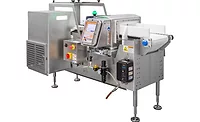
Modular automated spray systems help minimize clogging by making adjustments to compensate for changes in operating conditions.
About Spraying Systems Co.
Spraying Systems Co. is the leader in spray technology with global manufacturing and sales offices in more than 85 countries. It’s extensive product line includes spray nozzles, turnkey spray systems, custom fabrication and research/testing services.
Contact:
P.O. Box 7900, Wheaton, IL 60189-7900
1-800-95-SPRAY
www.spray.com
By Jon Barber, director
Spraying Systems Co., Wheaton, Ill.
jon.barber@spray.com
Spray nozzles appear to be simple devices, but in service they function as highly precise instruments. A spray system that is not working optimally can very quickly cost your operation tens – even hundreds – of thousands of dollars annually.
When nozzles become partially blocked, spraying efficiency is degraded and your process can be compromised. The most frequent cause of clogging is the presence of contaminants in process water, a condition that is particularly common in systems that use re-circulated water. Other factors that may cause clogging are particle agglomeration, scaling and bearding, which is the buildup of material on the inside and outer edges of the orifice. The negative effects of clogging on spray performance include decreased flow and disturbed spray patterns. When positive displacement pumps are in use, clogged spray nozzles will increase process pressure, whereas flow will be most acutely affected when centrifugal pumps are used.
Quality problems – increased scrap or process problems
If the spray application directly affects product quality, increased scrap is the inevitable result of nozzle clogging. This can happen when coatings, release agents, lubricants or protective films are applied unevenly or with inconsistent coating thickness on the finished product. If the spray is part of an intermediate cooling, cleaning, humidifying or moistening process, the specified performance will be compromised.
Cross-batch contamination also can occur when spray patterns deteriorate and contain uneven cleaning results.
Depending on your process, potential losses can easily reach tens of thousands of dollars in wasted product before a clogging problem is noticed and corrective action is initiated.
Production downtime and additional maintenance cost
Process interventions due to clogged spray systems are of three kinds: monitoring, maintenance and downtime. Systems that are plagued by clogged nozzles generally require close observation and documentation for performance to be on spec. When this labor-intensive process reveals a problem, maintenance is required and often results in downtime – the most expensive intervention of the three.
For example, a plant running is 24 hours per day, 5 days a week and 52 weeks per year at $15 per hour for labor and $100 per hour for downtime. One hour per shift is spent monitoring/maintaining the system: $11,700. Two hours per week is allotted for maintenance: $13,250. The potential for annual clogging equals $25,220.
Minimizing clogging
Proactive maintenance is the best way to prevent clogging problems from occurring but even well-maintained systems can experience problems from time to time. Many spray systems can be efficiently maintained in good operating condition by manually cleaning nozzles at regular intervals. But a word of caution – only use materials that are much softer than the nozzle orifice surface. Plastic bristle brushes and wooden or plastic probes are good. Never use tools such as wire brushes or pocketknives. It is very easy to damage the critical orifice shape and/or size and produce distorted spray patterns or excess flow.
Try soaking the orifice in a non-corrosive cleaning chemical to soften or dissolve the clogging substance when nozzles are clogged and manual cleaning with a non-damaging instrument doesn’t solve the problem.
Add strainers
Most applications can benefit from adding strainers, which are an easy and economical way to minimize clogging. Strainers, including spray nozzles with built-in strainers, trap larger particles and prevent debris from entering the spray nozzle orifice or vane. Popular and effective strainer types include:
Integral strainers can often be ordered as part of the nozzle itself and are available in a variety of mesh sizes, down to 200 mesh, and materials including brass, aluminum, nylon, stainless steel and polypropylene for standard and quick-connect flat spray, full cone, hollow cone and fine spray nozzles.
T-strainers are widely used and available in many configurations. Most are designed to minimize pressure drop and provide simple, fast cleaning and maintenance. Self-cleaning versions, which allow the filtered liquid to pass through the strainer and liquid particles to be returned to the liquid supply, are another option. Strainers are available in a wide variety of materials, including
FDA-compliant materials for potable water usage, for low-, medium- and high-pressure applications. Clean the nozzles with a material that is softer than the orifice, like a toothbrush or toothpick.
Self-cleaning strainers
Self-cleaning strainers offer a unique answer to effective filtration and clog prevention for process water, cooling tower, pre-filtration to water treatment and similar applications. These strainers consist of a series of automatic filters with a self-cleaning mechanism driven by an electric motor. A pre-screen protects the cleaning mechanism from large particles, after which the main screen removes debris down to 10-micron particle size. As debris accumulates on the main screen, it creates a filter cake, which causes a pressure differential across the screen, triggering the cleaning process when it reaches a pre-set value. One version uses a suction scanner that rotates in a spiral motion while vacuuming the filter cake from the screen and expelling it through the exhaust valve.
Suction scanning is equally as effective at filtering two- and three-dimensional sand. Particle adhesive characteristics have no significant impact on the efficiency of this process, making it well suited for greasy or oily water.
Maximum Free Passage (MFP) nozzle designs
MFP nozzle designs are another effective answer to clogging. These nozzles feature open flow passages to ensure that most contaminants can pass through. MFP nozzles are an excellent choice for applications requiring maximum liquid throughput such as aerating, dust control, chemical processing, food processing, pulp and paper, gas scrubbing/cooling and fire suppression/prevention or anytime there is debris in the water or where re-circulated liquid is being used.
However, be sure to research MFP claims as there can be a big difference in the performance of these nozzles. One simple test is to drop a ball bearing of the free passage diameter size through the nozzle. It should pass through freely. Another attribute to evaluate is spray pattern. Some MFP nozzles don’t provide the promised spray pattern. Watch for very thick edges and light centers in full cone nozzles and heavy centers in hollow cone patterns.
Self-cleaning nozzles
Self-cleaning nozzles are available in a number of configurations and operating styles. For example, nozzles with clean-out needles are ideal for intermittent spraying applications using liquid that can dry in the orifice between uses. The clean-out needle can be activated manually or automatically, depending on nozzle type, and slides through the liquid orifice to clear obstructions. Automatic spray nozzles can be equipped with a clean-out needle that cleans the liquid orifice after each spray cycle for maximum protection against clogging.
Other self-cleaning nozzles retract a purge piston when line pressure is reduced to remove fibers and other solids from a clogged nozzle. Spray headers, with internal brushes that rotate and remove debris from nozzle orifices, also are widely used in applications where less than pristine water is used.
Anti-bearding spray set-ups
Anti-bearding spray set-ups reduce bearding and clogging by changing the air current around the spray tip to prevent drops from falling back onto the nozzle and causing buildup. In some cases, users can run their spray operations up to 20 times longer without shutting down.
Heated spray nozzles and systems
The addition of a fluid-filled heat jacket or electric band heater can ensure trouble-free atomization of hard-to-spray liquids such as waxes, adhesives, starches and syrups and further minimizes maintenance due to clogging. When spraying an extremely difficult solution such as chocolate, an automated system may be required. Heated automated systems use closed-loop temperature control to ensure liquid temperature is ensured all the way from the tank to the target. The pressure tank, liquid and air lines are usually jacketed or heated to ensure consistent flow rates and clog-free operation.
Pulse Width Modulated (PWM) flow control
When used with a spray controller, some electrically actuated spray nozzles can utilize pulse width modulation (PWM) to reduce clogging. By cycling the nozzles on and off up to 10,000 times per minute, low flow rates can be achieved using larger, clog-resistant spray tips that reduce maintenance downtime.
For example, at a duty cycle of 50%, the nozzle sprays half the time and the flow will be 50% of the maximum flow rate at a given pressure for the nozzle. When used with a dedicated spray controller, automatic spray nozzles can utilize PWM flow control to reduce clogging.
Automated spray systems
In many automated spray systems, the spray controller can automatically adjust spray performance to compensate for changes in operating conditions. This minimizes clogging in many applications. However when spray nozzles do clog, it is detected immediately and operators are notified to minimize scrap and lost production time.
For quality control, a miniature sensor mounted near the orifice of a nozzle can optically detect a spray pattern emerging from the spray tip and send a “spray present” signal to the controller. Unconfirmed spray cycles – often the result of clogging – can activate alarms or stop production. Each spray cycle can be documented and logged by the spray controller.
In other types of automated operations where a dedicated spray controller is not used, such as tank washing, monitoring devices can be added for clog detection and performance validation. Acoustic monitors, for example, can be used with all types of tanks and tank cleaning nozzles to “listen” for the normal sounds of tank cleaning. Mounted outside the tank, they detect weak sound waves that indicate a change in spray pressure and clogged or partially clogged nozzles.
In addition to clog prevention and detection, automated spray systems offer many benefits:
• Accurately detect nozzle wear
• Monitor flow and other performance criteria with automatic shutdown for selected faults
• Adjust flow rates and spray patterns for variable speed conveyors and varied product shapes
• Control temperature to ensure even application of viscous coatings
• Verify spray cycles in critical applications
In this paper we’ve discussed the problem of nozzle clogging and various remedies in detail. But, just because a nozzle is clog free and spraying doesn’t mean that your spray system performance is optimal since there are many other factors that can affect system effectiveness.
To achieve long-term, efficient, optimal performance, consider your spray system in its entirety and develop a plan for evaluating, monitoring and maintaining it. If you don’t already have a comprehensive Spray System Optimization Program in place, contact the manufacturer of your spray nozzles for more information.
Modular automated spray systems help minimize clogging by making adjustments to compensate for changes in operating conditions.
About Spraying Systems Co.
Spraying Systems Co. is the leader in spray technology with global manufacturing and sales offices in more than 85 countries. It’s extensive product line includes spray nozzles, turnkey spray systems, custom fabrication and research/testing services.
Contact:
P.O. Box 7900, Wheaton, IL 60189-7900
1-800-95-SPRAY
www.spray.com
Looking for a reprint of this article?
From high-res PDFs to custom plaques, order your copy today!