The benefits of supply-chain traceability
Large food processors that sell their goods to major U.S. retailers and throughout the world have been tracking their ingredients and finished products for years. Supply-chain traceability enables them to meet national and international food-safety regulations, respond quickly and efficiently to recalls, effectively control their inventories and more. These issues and others are now prompting companies of all sizes to follow suit.
“We’re finding, right now, that a lot of small to medium-sized food processors in the United States are getting on board with traceability,” says Michael Miskin, president, Merit-Trax Technologies, Mount Royal, Quebec. Most large companies, he adds, have been on this track for years.
Regardless of the company size, the benefits of effective traceability to efficient operations are many, and the impact on food safety immeasurable.
Safe and compliant
“The last five years have seen many foodborne-illness-related issues in the food-supply chain,” says Brad Lindemann, president, Matrix Controls Co. Inc., Somerset, NJ, noting that many of these could potentially close a company down if it couldn’t react promptly to recalls. “Major retailers are now placing demands on food suppliers to have their internal processes audited by third-party suppliers—British Retail Consortium, Safe Quality Food, AIB—in addition to meeting basic food-safety guidelines imposed by the FDA. Food companies now have shorter recall time scales, and internal processes are under scrutiny, forcing manufacturers to look at improving and automating traceability.”
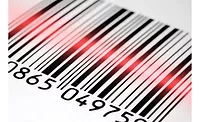
The company uses software and hardware to automate and facilitate lot trace data collection, from material receiving through finished product shipment, says Lindemann. Unique lot codes are assigned to incoming materials and sub-batches, including bulk and hand-scaled ingredients and packaging materials, which are identified with barcode labels that can be scanned throughout the process. Finished product is scanned into sales orders for final customers and shippers.
In addition to providing users with automated lot traceability required by the Food Safety Modernization Act (FSMA) and customers, Lindemann says the system also facilitates procedures and data collection for other aspects required by SQF, Good Manufacturing Practices (GMP) and HACCP programs. “The side benefits of this process are real-time, real-material inventory, minimization of overscaling and minimization of batch inconsistency,” he adds. “Tracking materials, sub-batches, batches and finished product may also help limit the volume of a recall, should one occur.”
Miskin says any food processor today with a “decent” number of SKUs in its product line will have to look to technology to meet the requirements for the Global Food Safety Initiative, as well as pass SQF and BRC audits required by larger customers, retailers or foodservice distributors—including the ability to conduct an extensive mock recall.
“We tend to do a lot of customization, so that the solution fits the needs of the customer,” says Miskin. Barcodes, barcode scanners, RFID, touch-screen-computers and wireless hand-held computers, he says, are the main information technology devices that comprise the company’s traceability systems.
Companies that have not automated tracking could end up conducting a broader-than-necessary recall, says Tom Kozenski, vice president of industry strategy, JDA Software, Scottsdale, AZ, “because they can’t figure out specifically where a certain lot code went. That hurts their brand more and adds more risk to the equation.”
More than just food safety
“What we see, aside from compliance, is the ability to reduce material waste, better inventory control and assurance of consistent quality, which translates into more profit for the manufacturer,” says Lindemann.
Miskin cites increased productivity and better cost management as additional benefits of computerized traceability systems. “The No. 1 benefit that processors get with our systems is that everything is driven through maintaining an accurate raw material inventory,” he explains. “If you don’t have an accurate raw material inventory, then you may have identification through traceability, but you’re not going to derive any of the other benefits, such as improved materials requirement planning and real-time control of current costs and profit margins, so you have instantaneous access to know how the standard costs in your recipes are stacking up against what you’re currently paying for them and the money that you’re making to cover your current production orders.”
Timo Schaffrath, international public relations manager, CSB-System International, Geilenkirchen, Germany, says with CSB Traceability, manufacturers can document and manage the flow of goods along the entire supply chain. “Companies are, therefore, able at any time to determine and consistently prove when, where and by whom the goods were received, processed, stored, transported, used or disposed of,” he explains. “All origin and processing data can be fully stored and transferred to customers and external databases.”
Barcodes have been allowing manufacturers and retailers to better manage their products and inventory since the 1970s. Today they appear on nearly everything and contain a variety of useful information for manufacturers, retailers and distributors.
“Codes printed onto snack foods and baked goods are integral in communicating the freshness and quality of the product to the consumer,” says Casey Robertson, TTO product manager, North America, Videojet Technologies Inc., Chicago. “Additionally, traceability information is often printed, allowing manufacturers to track the batch or lot number of products through their supply chain.”
GS1 US, Lawrenceville, NJ, a member of the global information standards organization GS1, brings industry communities together to solve supply-chain problems through the adoption and implementation of GS1 Standards. Solutions based on GS1 global unique numbering and identification systems, barcodes, Electronic Product Code RFID, data synchronization and electronic information exchange offer businesses a host of benefits.
“We’re in the business of uniquely identifying products, so they can be globally traded in a very standardized way,” says Kaitlin Friedmann, public relations manager, GS1 US. “If everybody’s communicating in the same language, it will make things a lot more efficient.”
In 2013, GS1 US partnered with the International Dairy-Deli-Bakery Association and the International Dairy Foods Association to publish the “Traceability for Dairy, Deli, & Bakery U.S. Implementation Guide” to provide practical traceability guidance for industrywide use.
“It was basically launched to get ahead of the FSMA and Bioterrorism Act and help companies and consumers make informed decisions about technology requirements,” explains Ryan Richard, senior director, industry development, retail grocery, GS1 US.
Tracing our future
So what does the future hold for supply-chain traceability in the bakery and snack industries?
Miskin says the next big thing probably will be wireless sensor networks that monitor temperatures and humidities in real time and match them up with production batches running through the systems, automating this type of recordkeeping and pulling the information into one database.
Miskin also thinks FSMA will continue to drive supply-chain traceability. “Anybody who’s dealing or wants to deal with a larger player is going to have to do this,” he says. “This is ultimately going to be the standard cost of doing business in the industry.”
Lindemann expects the transition from “cumbersome, impractical, paper-based traceability to more-automated, electronic traceability” in the next five years. “Electronic traceability is quicker, safer and popular,” he says, “and can be the difference between a recall that is poor and one that is executed with speed and improved accuracy. I think the U.S. will see traceability standards improved to the levels that have been in place in Europe for many years.”
Kozenski, meanwhile, sees more software and hardware in the coming years. “A big premise of what we’re talking about is scanning or using RFID tags to know the presence of inventory, without writing it down on a piece of paper and going to a computer to enter it,” he says.
Kozenski also expects more government control in this area and, as a result, more companies seeking out suppliers that can help them collect quality data, rather than offer low costs.
“There are leaders and laggards in every business,” Kozenski acknowledges. “Big companies and small companies that are interested in protecting their brands and providing quality to their consumers, their constituents, their advocates to their brand, will do things that are necessary, whether the government’s involved or not.”
Looking for a reprint of this article?
From high-res PDFs to custom plaques, order your copy today!