Improving snack and bakery facility food safety for FSMA compliance
courtesy of Rite-Hite Products
The combined snack and bakery industries continually work toward improving operational best practices related to preventative food-safety concerns. However, this fundamental aspect of manufacturing has commanded the spotlight over the past few years as the requirements of the Food Safety Modernization Act (FSMA) come into effect. Meanwhile, we have seen the continued rise of the free-from foods movement, including gluten-free product development—and a simultaneous proliferation of allergen-related product recalls.
Top priorities
“The two biggest food safety issues that snack and bakery facilities face today include managing food allergen cross-contact risks at the manufacturing site and dealing with risk from supply-chain issues,” says Maury Melanie Bandurraga, Ph.D., independent consultant, EAS Consulting Group, Alexandria, VA. “Part of the challenge of avoiding allergen cross-contact issues comes from rapid innovation in product development to meet competitive needs, which can lead to an increase in the complexity of ingredients and products. It is critical to do thorough risk assessments of allergen risk for new products and ingredients, and determine what training, labeling, segregation, sequencing or other control measures will be adequate to avoid food-allergen cross-contact risk. Many plants use contract workers in addition to their own workforce, and it is critical that both groups are thoroughly trained in how their own hygiene and following good allergen-risk-control work practices contribute to managing food-allergen risk.” She notes that despite even the best preventative measures, companies must be equipped with full traceability in the event of an ingredient recall.
The current FDA Reportable Food Registry states 47 percent of all recalls are because of undeclared allergens. Two pathogens account for nearly 45 percent of the balance, with Salmonella accounting for 25 percent and Listeria 19 percent. “Generally speaking, the goal of FSMA is to focus manufacturers of food products on known and likely hazards for their individual food commodity or type of food product represented in this document,” says Len Steed, global innovation manager, AIB International, Manhattan, KS.
“If you look at bakery and snack food as a group, they account for over 13 percent of the recalls due to undeclared allergens,” continues Steed. “Clearly, there needs an emphasis on what preventive programs can be monitored similar to a critical control point (CCP) that will prevent undeclared allergens due to cross-contact in manufacturing and using labels that allow for undeclared allergens.”
FSMA realities
“If you look at pre-FSMA HACCP and food-safety plans, they tended to focus on foreign material, pest and sanitation controls which would not specifically prevent recalls due to undeclared allergens or pathogens,” says Steed. “This is not to say that these and other GMP programs are not important, but the message is clear: What preventive controls must we implement and verify as effective to prevent recalls due to pathogens and undeclared allergens?”
The Preventative Controls for Human Food rules outlined in FSMA present several new considerations for snack and bakery manufacturers as they work toward—and stay within—compliance. Many larger companies are already following the good manufacturing practices (GMPs) required under Title 21 of the Code of Federal Regulations (CFR), Part 117, Subpart B, notes Bandurraga. “For smaller and medium-sized companies, 117B GMPs are more explicit about managing allergen cross-contact and carrying out environmental monitoring to ensure food safety, and future FDA audits will have more focus in these areas,” she says.
“There are new requirements under 117 for appropriate training and documentation of training records to show each worker coming in contact with food, or affecting food safety, is qualified for their role with appropriate training,” Bandurraga continues. “Many companies are already doing this, but the shift with 117 is that ‘if it isn’t recorded, it didn’t happen,’ similar to the expectation for other FDA-regulated product areas such as OTC drugs and medical devices. Accurate recordkeeping will be essential to ensure FDA audits around food-safety training are successful.”
A top FSMA challenge is the new Subpart G section on supply-chain controls. “Moving from what may be best practices to manage the biggest food-safety risks a site faces to obtaining documentation confirming who is controlling the food-safety risk for each ingredient or product is a massive undertaking,” says Bandurraga. “The documentation challenge is immense … some facilities deal with hundreds, if not thousands, of ingredients, from hundreds of suppliers.” High-risk ingredients might require a regular supplier site audit.
The requirements for Preventive Controls also apply to any internationally sourced food or ingredient destined to be consumed in the U.S. These food manufacturers are required to register with FDA and update that registration every two years. In addition, importers are subject to the Foreign Supplier Verification Program.
“If your supplier is controlling the significant hazard, then you—the receiving entity—will agree to use only approved suppliers and have documented records and verification activities for those suppliers,” says Steed.
Sometimes, this is easier said than done. “In a competitive bakery/snack food environment, rapid innovation is common,” says Bandurraga. “Where new products are developed, new ingredients are sourced, or suppliers are changed, it will be critical to regularly update the preventive-control plan and supply-chain program to reflect these changes.”
Software solutions help snack and bakery companies keep data current and traceable. “Companies are able to collect and store pertinent production data required by FSMA—and produce it on demand,” says Brad Carney, president, FlexiBake, Vancouver, British Columbia. “Recall can be accomplished easily and instantly in the case of mock or real recalls. Product tracing is provided and allows instant access to the original production data and raw materials consumed.”
Software solutions
Paperless systems exponentially increase recall and traceability productivity. “SQF Sentinel is a paperless food-safety system ensuring the timely collection of food-safety data,” says Bob White, president, Focus Works, Patchogue, NY. “The system allows for automatic monitoring and reporting of all control points, including temperature, humidity and all required tasks.” All standard and nonstandard data entry forms can be entered into the software system to electronically collect the data, he notes. Typical forms might include inspections, sanitation, surveys, complaints, internal audits, corrective action, non-conformance, employee training and/or HACCP. “Data collection can be done utilizing standard computers, touchscreens, tablets and other mobile devices,” he says.
Such approaches help maintain compliance with FSMA by eliminating data input errors, and operators falsely recording data, notes Bill Grimaldi, senior systems integrator, Focus Works. “There is also a major savings in labor, and other costs associated with paper systems. Since the data is electronically stored, audits are simplified, eliminating the need to maintain and present thousands of pages of collected data. Audits can be performed on screen and with quick and simple reports.”
Safety on the move
The FSMA Sanitary Transportation of Human and Animal Food requirements are not necessarily new, but how they define and document responsibility for preventing unsafe food adds an additional step, notes Steed. “If your product is not entirely enclosed or requires temperature control and documented cleaning of the railcar or bulk motor vehicles to prevent the food from becoming unsafe, then the shippers, loaders, carriers and receiver must have written agreements/contracts specifying which party/parties are responsible for sanitary design, temperature control, cleaning and inspection.”
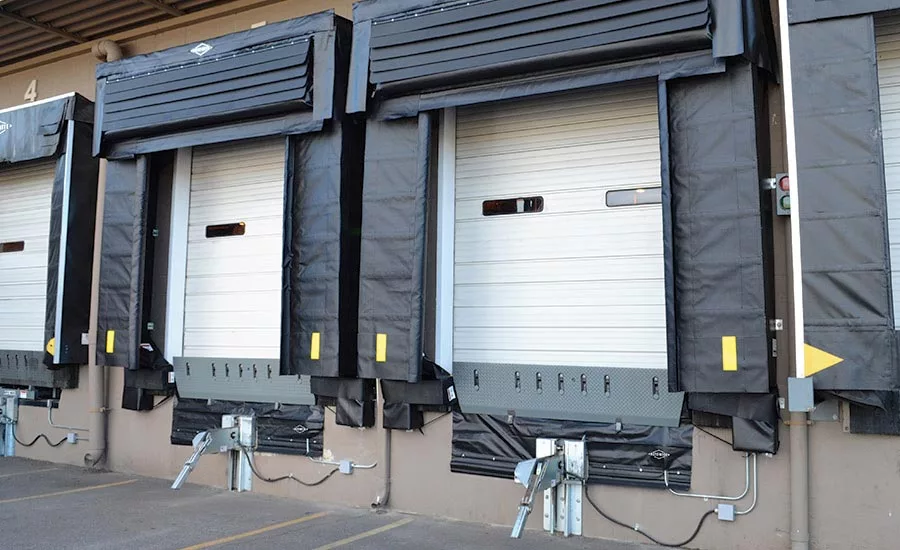
Loading docks face food-safety challenges related to cleanliness, notes Troy Bergum, products manager, Rite-Hite Products, Milwaukee, WI. “With open loading dock doors and insufficient seals and shelters, the best opportunity for contaminants, such as dust, insects and rodents, to enter a facility is through the loading dock. With the pending Sanitary Transportation part of FSMA going into effect April 1, 2017, there will be an increased emphasis of making sure all of our food is being handled safely at all points in the supply chain.”
Bergum suggests incorporating a drive-through application on the loading dock to keep it clean and enhance security. “Drive-through setups allow trailers to back up to the loading dock with their doors closed,” he says. “Once the semi-trailer is firmly secured to the dock, the trailer doors can be opened inside the facility, and the security seal can be broken. This helps to reduce the potential for product spoilage, tampering, pilferage and theft by providing access only from within the facility.” An automatic vehicle restraint is often fixed to the outside of the building at the loading dock, typically beneath the door, to enhance safety and security, along with a loading dock leveler and custom-designed dock shelter.
“The newest dock shelters provide a complete seal around all four sides of a trailer when at the dock,” says Bergum. “This helps keep bugs, rodents and other debris out. It also keeps conditioned air inside a facility, ensuring cold-chain integrity and energy savings.”
Looking for a reprint of this article?
From high-res PDFs to custom plaques, order your copy today!