Advances in chemicals and lubricants to improve sanitation
Companies search for non-water-based sanitizers and dry cleaning methods for peak sanitation
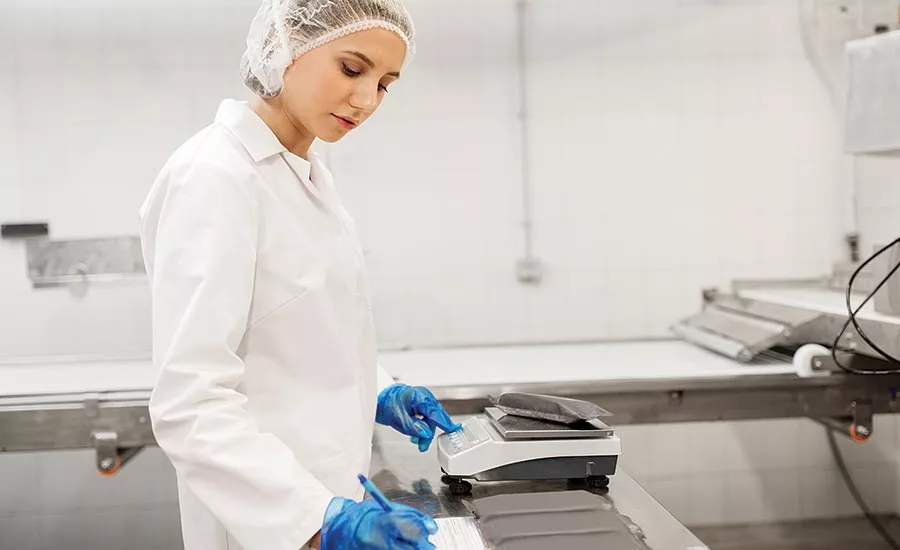
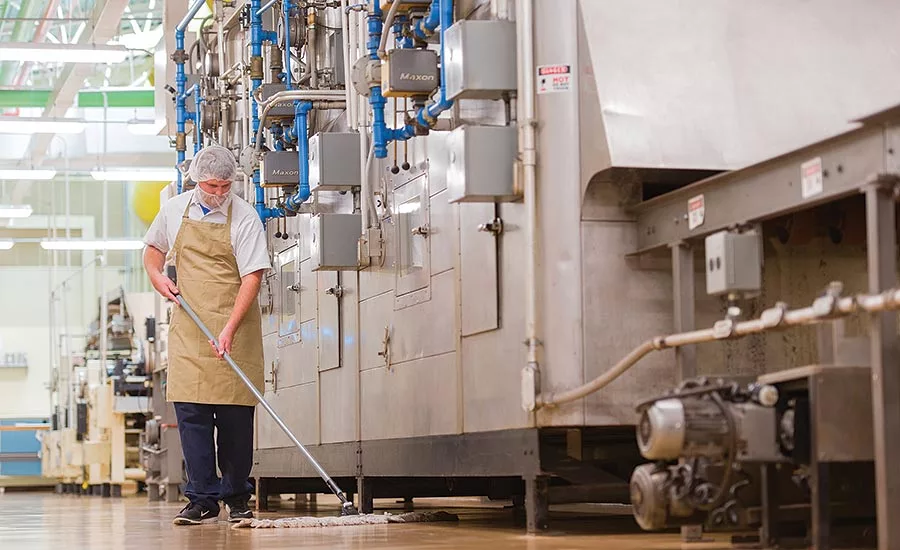
Chemicals and sanitation products are essential in the food industry, and recent product advancements help improve snack and bakery facility sanitation.
“Many snack food manufacturers produce their products in dry processing facilities,” says April Zeman-Lowe, national account manager, Best Sanitizers, Inc., Nevada City, CA. “Using an alcohol-based surface sanitizer is ideal for low-moisture environments because of its highly evaporative properties.”
Zeman-Lowe says that using an alcohol-based surface sanitizer instead of a water-based surface sanitizer helps reduce excessive moisture in the facility, making it easier to avoid unwanted moisture, and maintain a dry environment, while effectively reducing pathogens and cross-contamination.
Sanitation best practices
It is important that bakeries use dry cleaning methods wherever possible, such as vacuuming, brushing, and sweeping, comments Scott Bowman, food safety professional, AIB International, Manhattan, KS. “As soon as you introduce water, you have an increased risk of pathogen growth and other microbial activity. A bakery is better off when it is kept as dry as possible, but wet cleaning methodologies are better suited for the mixing and make-up areas.”
Bowman says that bakeries typically don’t use a lot of chemicals for cleaning when compared to other food industry segments. Bakery expenses for sanitation chemicals are probably about one-tenth of what they might be for a meat, dairy or another wet-cleaned facility, he says.
“In recent years, chemical suppliers have done a great job providing products for specific cleaning tasks. They’ve taken a more-scientific approach, which has improved the cleaning process overall,” Bowman says.
“With new FSMA rules, having onsite access to credentials such as letter of guarantees, NSF registration letters, and safety data sheets is now more important than ever,” says Zeman-Lowe. “Auditors will want to see proper procedures and food safety measures in place, making it imperative to have documentation and recordings of your plant’s food safety plan.”
Best Sanitizers recommends using cleaning and sanitization chemicals manufactured in a cGMP, FDA, and EPA/FIFRA compliant facility, and are backed up with testing and documentation to show compliancy and quality.
It has become essential to develop fast ways to clean, says Bowman. “When you do sanitation, you are not generating revenue. However, sanitary design can facilitate more-efficient cleaning. With a better design, we can really fine-tune a process and make champions out of production and quality departments.” The shift to using computerized systems for sanitation scheduling also improves efficiency. Many plants also now utilize clean-in-place (CIP) technology.
Best Sanitizers recently released a new product for dry processing facilities, Alpet D2 Quat-Free Surface Sanitizer, says Zeman-Lowe. “Food processors and handlers in need of a surface sanitizer without quaternary ammonium now have an effective product for cleaning and sanitizing food-contact and non-food-contact surfaces in their facilities.” The sanitizer is ready-to-use and doesn’t require a rinse. “It kills 99.9 percent of tested bacteria in 10 seconds on pre-cleaned, non-food contact surfaces, including non-porous waterproof footwear.”
Bowman says that undeclared allergens are a leading cause of recalls across the globe, so one of the biggest adjustments to best practices is related to allergen cleaning. “When a company uses equipment or production lines that make products both with and without allergens, the residue must be effectively removed when the non-allergen-containing products are produced,” he explains. “Sanitation is one of the most-common and effective means to ensure the protein residue is removed from surfaces.”
Depending on what is being produced, a dry-cleaning method or a wet or chemical wash might be required, Bowman adds. “In all instances, the sanitation procedures established for this process must be validated to ensure that they work and are effective. Once these procedures are established, the actual task should be verified every time it is carried out.” Examples of cost-effective systems include high-sensitivity ATP measurement, high-sensitivity nonspecific protein detection and specific allergens tests in lateral flow strip formats, he says.
Sanitary side of lubricants
Eva Otel, marketing and sustainability manager, food and beverage, SKF, Gothenburg, Sweden, notes that while food-safe lubricants won’t harm people, selecting the right lubricant can minimize the usage levels. “Today, we work with a process where we try to take away, minimize and control, which gives us a three-step process to minimize and control and usage of lubricants in food production.”
Today’s processing environments pose challenges. “Hygiene requirements, as well as ever-shorter production times, faster-running machinery, and warm and cold loaded machine components are just some of the challenges to keep food processing plants profitable,” says Marius Czech, food market manager, Klüber Lubrication, Londonderry, NH.
Czech says that a higher level of safety is achieved when companies use lubricants that come from NSF ISO 21469 certified facilities. NSF certification ensures that food-grade lubricants are manufactured in a hygienic environment, using both best practices and safe ingredients.
“At Klüber Lubrication, we have five global locations that are NSF ISO 21469 certified. By having NSF ISO 21469 certification, we ensure that our products are manufactured through a hygienic process that works to avoid risks for contamination. We also offer food processors support on best practices—such as proper storage, handling and application—to further mitigate risks and deliver a high standard of safety,” Czech comments.
HACCP programs require the use of NSF H1 registered food-grade lubricants for machinery applications in which there is the potential for incidental contact of the lubricant with the food product, says Jim Gerard, executive vice president and chief marketing officer, Lubriplate Lubricants Co., Newark, NJ.
Bowman says that product contamination from equipment using lubricants is a significant concern. “A plant still using non-food industrial-grade lubricants risks an expensive product recall that could damage the company reputation. Food-grade lubricants protect the manufacturer, because the FDA allows for contamination with food-grade lubricants up to 10 ppm.”
To reduce the risk of contamination or fines, many companies are switching to food-grade lubricants that are registered with NSF, Bowman says.
“Advancements in lubrication technology have led to a new generation of food-grade synthetic lubricants that satisfy food safety guidelines and withstand the demands of modern food processing equipment,” adds Bowman. “Manufacturers can minimize the potentially costly risks of lubricant contamination of food products while also enhancing equipment reliability and plant productivity.”
Looking for a reprint of this article?
From high-res PDFs to custom plaques, order your copy today!