Companies employ pest prevention to keep snack and bakery facilities safe and sanitary
Pest-prevention strategies depend on the types of products produced, facility type, and other factors
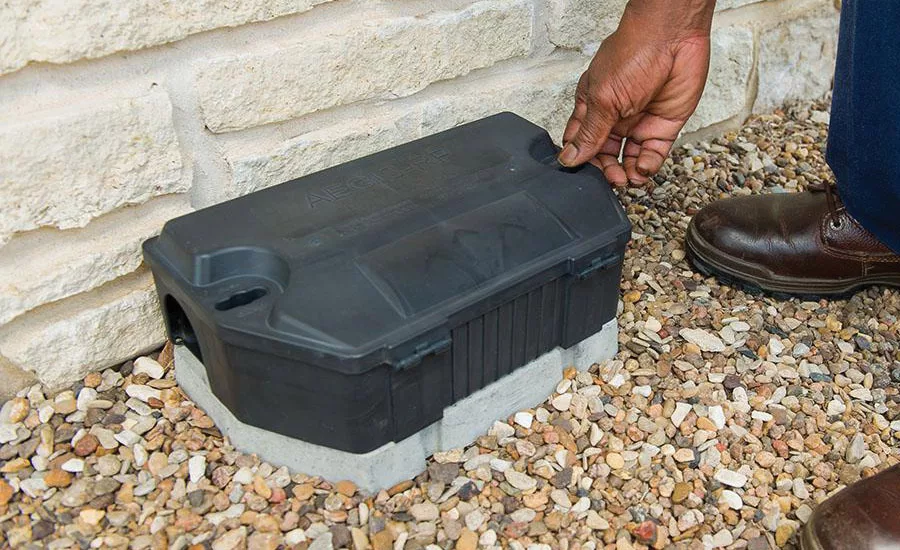
Pest prevention is extremely important for snack and bakery facilities—any and all pests that get into product then make that product unusable, and can cost thousands in product recalls.
Top facility pests
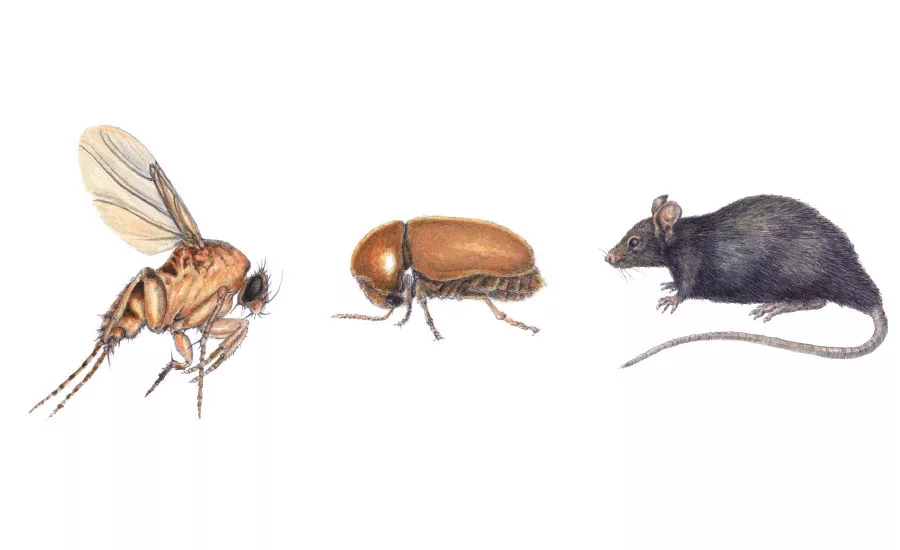
“Pests plaguing a facility can depend on the products made, the process and the raw ingredients used,” says Pat Hottel, technical director, McCloud Services, South Elgin, IL. “The stored product beetles would top my list. This includes insects like the red and confused flour beetle, cigarette beetle and warehouse beetle.”
Jill Carson, manager, operations, APAC, AIB International, Manhattan, KS, likewise finds that the confused flour beetle and the red flour beetle—which are very similar to each other—are top pests in this industry.
The house mouse, due to external pressures, can also be a common pest, migrating indoors from the exterior, Hottel says. “Pest birds like the house sparrow and pigeon can also be a pest issue due to the same reasons. Even on the exterior, these pests present food safety risks from droppings and feathers. There is also an increased risk of a bird moving into the facility when they are nesting or roosting close to the structure.”
Dave Colbert, vice president, sales, Xcluder, Buffalo Grove, IL, says that a primary focus is rats and mice—and protecting the many ways in which they gain access to food and shelter. “I can tell you that all food production facilities, including bakeries in both rural and urban areas, are a very popular target for rodents,” he says.
Pests found in snack and bakery processing environments can vary based on a number of factors, says Jim Brixius, technical services manager, Rentokil Steritech, Reading, PA. “These include the products being manufactured, ingredients being brought in, geographic locale, environmental conditions surrounding the manufacturing facility, and more.”
There are a few key groups of pests that disrupt these facilities more frequently than others, Brixius says:
- Stored product pests. Plants or other facilities that store, sell and process grains or other dried products, or that use these products as ingredients, may face challenges with stored product pests, like Indian meal moths, flour beetles, cigarette beetles, drugstore beetles, and merchant grain beetles.
- Rodents. Any food facility can experience problems with rodent pests, including the three most common, he says: house mice, roof rats and Norway rats.
- Filth flies. Filth flies include a number of fly species, but for snack and bakery facilities, the most commonly encountered is the house fly.
- Small flies. These include fruit flies, drain flies, and phorid flies.
- Cockroaches. There are two species of cockroaches that most commonly invade snack and bakery manufacturing facilities: American cockroaches and German cockroaches
- Ants. Multiple species of ants can invade food processing facilities, especially those that may be processing sugary, sweet ingredients that ants find attractive.
Condition-specific pests
Pests that plague a facility can be dependent on what products a company is making. “Ingredients can impact the type of pest,” says Hottel. “Different-stored product pests will prefer different foods and there can be a correlation between food ingredients and pest type.” Certain stored product pests, like Indian meal moths and saw-tooth grain beetles, will more commonly infest ingredients like dried foods and chocolate, she explains.
“Pests like the German cockroach will be found in areas of warmth and moisture,” says Hottel. “In the case of small flies, moist organic material, which is not properly removed by sanitation efforts, can be responsible for their survival. There are several insects that are mold feeders so an amount of humidity and moisture can impact the development of those insects.”
The pests we see typically changes based off of factors related to cleaning practices and the supplier, as opposed to the product, says Carson. “Each stored product insect tells a story. For example, a site that is having issues with mold will be prone to having pests such as the flat grain beetle, which is a mold-feeding insect. Alternatively, if a supplier is having issues with a pest, it will carry through and then become an issue at the site purchasing from that supplier.”
The types of foods that a facility manufacturers will directly affect the primary pest challenges it faces, as different pests are attracted to different types of foods, concurs Brixius. “And it’s not just finished product that is attractive to pests; manufacturers should remember that specific ingredients can pose their own pest challenges.”
Some pest challenges, however, are not product-based, but created by the environment within the plant itself, Brixius notes. Conditions created within a processing environment can be ideal for pest survival. “Areas that remain wet, for example, may experience small fly problems. These areas could include mop areas, drain areas, floor machines, or any part of a facility where organic debris builds up. American cockroaches can also be a problem in operations where drainage is present, especially trough-style drains.”
Brixius says that sanitation is also crucial to preventing pest issues. “Grain milling and processing can create dust that settles on surfaces and become ideal food and breeding sources for store product pests. Deep-cleaning machinery can ward off problems with German cockroaches.” Busy facilities where loading dock doors remain open can experience issues with any number of pests, including flies, rodents, and even night-flying insects such as moths, he says.
Preventative measures
The primary components of successful integrated pest management are sanitation and exclusion—creating physical barriers to keep pests from gaining entry in the first place, says Colbert. “Trash should be disposed of in clean, tightly-sealed containers and kept far away from the building. Standing water should be avoided in sinks and gutters. Equipment, food surfaces and floors should be cleaned and sanitized regularly, and food products should be stored away from the walls to avoid clutter and potential nesting grounds.”
Along with sanitation, exclusion is paramount to protecting a facility against rodents, which means first identifying how and where they might get in, Colbert says. “The tiny gap beneath an unprotected door, for example, is an easy and popular target for rodents, many of whom can enter a building through an opening as small as ¼ inch. Rodent-proof door sweeps are therefore indispensable. Loading door docks, window cracks, drain pipes and vents are just a few more of the common entry points that must be protected.”
It’s important to note that caulk, mortar, spray foam and standard rubber door sweeps offer little to no protection against the gnawing power of rodents, Colbert explains. “Xcluder offers a full line of rodent proofing tools including Xcluder Fill Fabric for cracks and crevices, Rodent-Proof Door Sweeps, and a full suite of products to protect the many access points surrounding a loading dock.”
Hottel says that prevention starts with proper design of the building. “Construction materials can affect cleanability of surfaces, pest harborage opportunities and pest access to the structure. For example, corrugated walls are notoriously hard to pest-proof.”
Insulation is sometimes placed over the corrugate, which can provide a comfortable harborage and travel site for rodents, Hottel explains. “Even without insulation, there may be voids created between the outer and inner walls which are difficult to seal due to the corrugate edge. Poorly-sealed elements can be areas where food products can accumulate, providing food for stored product insects.”
Beyond structural design is equipment design, Hottel notes that snack producers and bakeries need to ask themselves if processing equipment has been designed and located to facilitate cleaning. “Areas that are difficult to clean are less likely to get cleaned at the frequency needed to reduce pests, which makes them more pest-prone. Many of the stored product pests can complete their life cycle, from egg to adult, in as little as 30 days. Small fly life cycle completion can occur in less than two weeks. If food deposits are not cleaned before the life cycle is complete, an infestation can develop,” she notes.
Inspection frequency
“Pest inspections are a daily, ongoing occurrence,” says Hottel. “Inspections of ingredients for pests and pest evidences must be performed on incoming shipments. To ensure that the facility is in proper sanitary and structural condition for pest prevention, a minimum of weekly inspections are advised.”
Carson says that the focus should be on pest awareness, rather than setting a designated schedule to do a pest inspection. “If all of your staff working onsite are aware of insect activity, they will be able to identify issues in real-time and promptly take action. That being said, pest inspections should be incorporated into the monthly GMP inspection of the site,” she notes.
A bakery facility in a high rodent population area, such as any major city today, should be inspected daily for rodent activity, says Colbert.
The frequency of your pest management service will depend based on the products a facility produces, any third-party or regulatory audits and inspections it faces, and the facility’s own commitment to pest management, says Brixius. “In most third-party audited facilities, auditors are looking for once a week service, at a minimum. They are also looking for consistent service—your service should be conducted on the same day each week. Some facilities may have a limited budget for pest control, so if a weekly service from your pest management provider isn’t possible, institute and every-other-week service with a pest management provider, and do self-inspections in the other weeks,” he explains.
Documentation is critical for third-party audits, Brixius says. “Auditors are looking for information on pesticide or product usage, the active ingredient, the quantity of product used, pests found, trend reports, and most importantly, that facilities have taken action on any recommendations their pest management providers have made.”
Using a provider that offers an online pest management system can simplify this process and make it easier to quickly pull up any information that an auditor needs, Brixius explains. “Some pest management providers now offer connected devices that automatically record pest activity, such as digital rodent monitoring devices, which integrate with online pest management systems.
Pest problems can migrate to locations from neighboring properties and sites that are some distance away, too, says Brixius. “For example, rodents that are being pushed off a property by construction down the road, or flies, will travel up to four miles in search of a breeding source.”
It’s a good idea to be aware of what is happening in the areas around your facility and let your pest management provider know so that they can put additional measures in place to keep your property protected, says Brixius. “Preventing pest issues begins with understanding your organization’s risk points and then putting policies, practices, and measures in place to limit the likelihood of pest intrusion or the conditions conducive to their development.”
Looking for a reprint of this article?
From high-res PDFs to custom plaques, order your copy today!