Cranberries take a sweet journey from farm-to-table
A visit to Ocean Spray Ingredients showcases the history, effort, and thought each berry carries along its path.
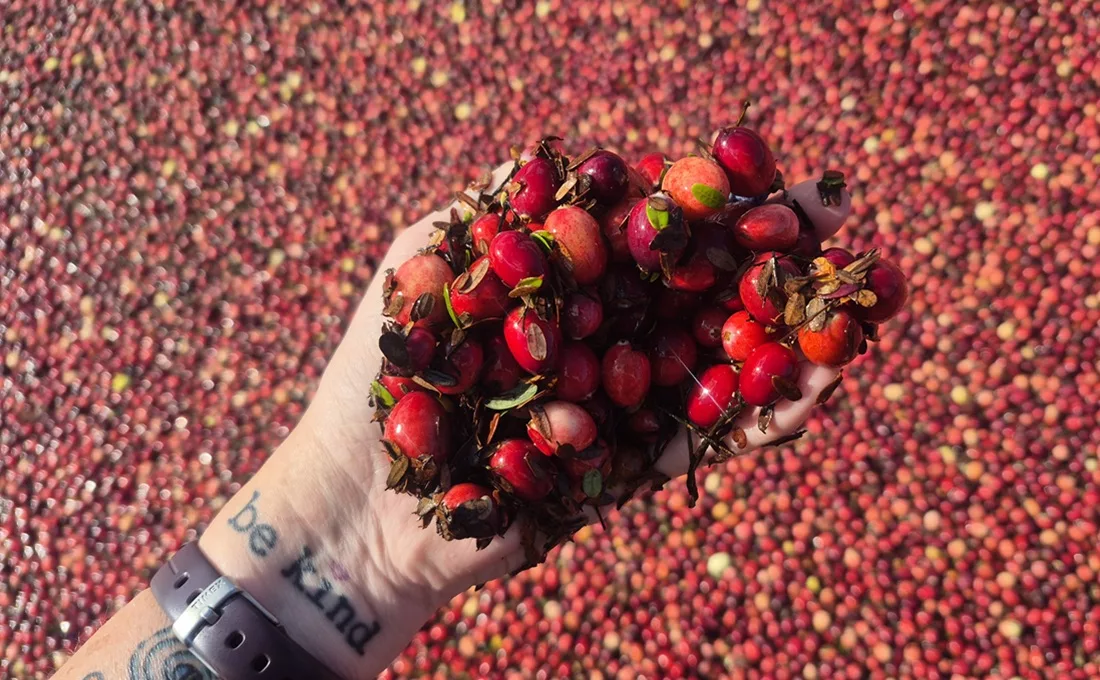
Where does your food come from? That’s a question that a snack/bakery journalist like me usually has a better grasp of than your average civilian, thanks to the great conversations we have with producers, retailers, and other folks in the business.
However, until I visited Ocean Spray’s HQ with other food scribes, chatted with the Ocean Spray Ingredients team, and waded knee-deep in a giant bog, I didn’t fully know about, or appreciate, how much work, thought, and love goes into the journey a humble cranberry takes along the way to becoming part of the foods and beverages we enjoy—not just during the holidays, but all year round.
Ocean Spray is known for quenching thirst with its cranberry juices (my favorite thing about donating blood is the tiny cups of Cran-Raspberry waiting at the end), feeding hungry snackers with its sweetened dried cranberries, and other branded products. It was founded nearly a century ago, founded by three farmers (Elizabeth Lee, John Makepeace, and Marcus Urann) to work toward the mutual growth and benefit of the cranberry industry. The effort skyrocketed, and soon the group grew to include scores of other growers. Today, Ocean Spray is owned by more than 700 farmers across North America and in Chile. Those berries are prized by consumers and producers for their tangy/sweet flavor, reputed health benefits, and impressive versatility (check out our podcast with the OSI team to learn more about that).
While Ocean Spray is the retail face of the company, the Ocean Spray Ingredients team helps bring sweetened dried cranberries (SDCs), frozen berries, concentrates, seeds, and puree to food and beverage manufacturers looking to incorporate the fruit into their products. In addition to providing cranberries in those myriad forms, the OSI team collaborates with customers to provide consumer insights, culinary expertise, and other wisdom to help them craft new products, tweak existing recipes, and generally brainstorm ways to incorporate cranberries into winning launches.
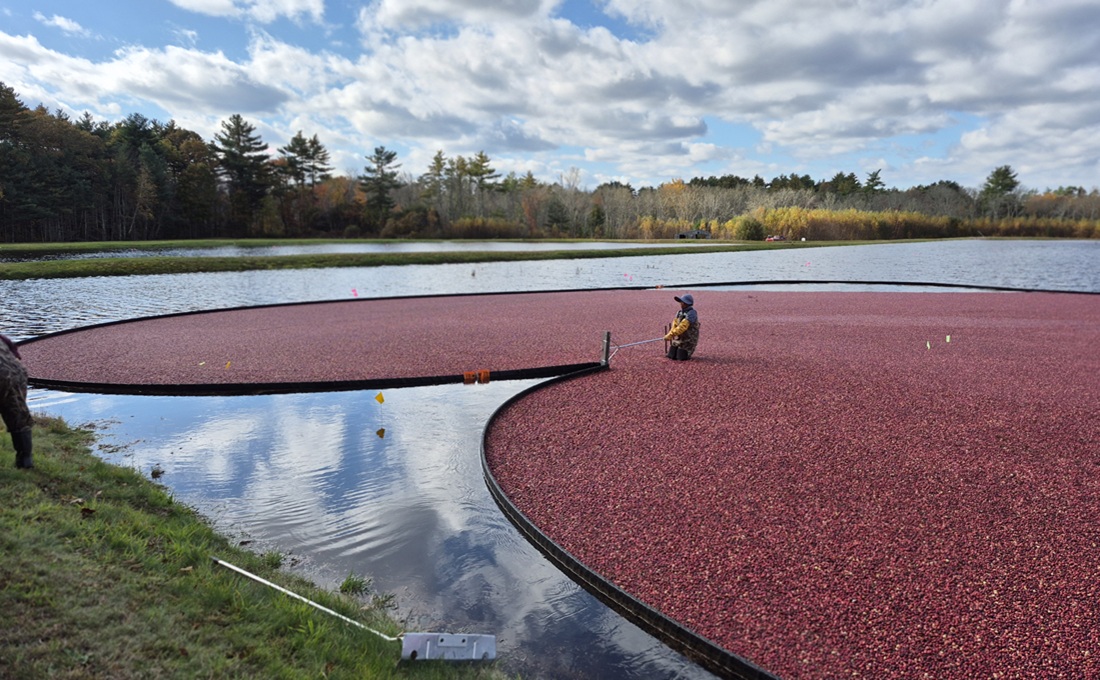 Photo: Jenni Spinner
As cranberries begin life in a bog, our visit to cranberry land began at a bog owned by second-generation farmer Steve Ward. During our visit, Steve was joined by his son Justin (who recently purchased his first bog) and father, Dick—though Dad handed the reins over to his kid about a decade ago, he still dons the waders to check out the harvest as he did that day. The three Wards told us all about Steven F. Ward Cranberries’ eight-bog operation, the vines that date back more than a hundred years, and how harvesting the precious red orbs goes.
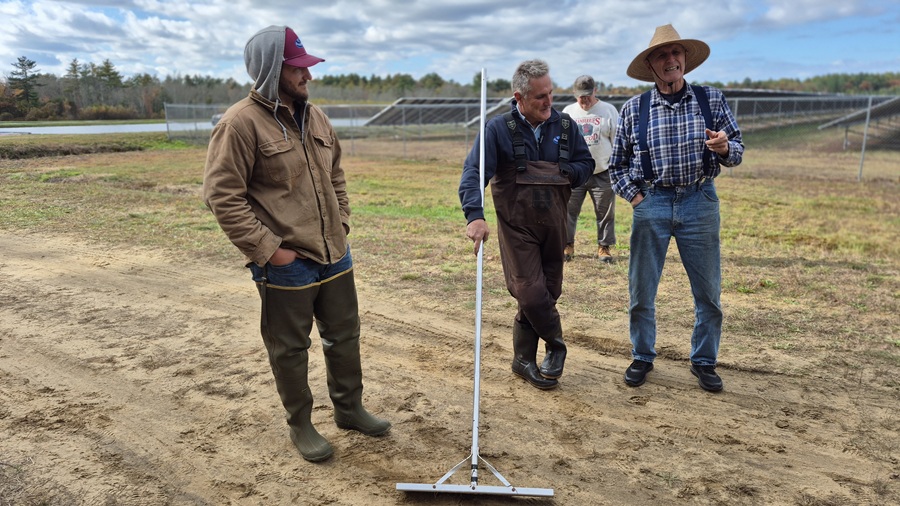 Photo: Jenni Spinner
During the “wet harvest” we witnessed that day, the bog (already flooded with water to buoy the berries) was sectioned off so that the crew could corral them toward a pump that sucked up the berries to be conveyed into the back of a waiting truck. I joined the other visitors in helping push the berries toward the pump (and I ate at least a dozen of the berries floating in the water—don’t tell Steve how many I swiped). The water assisting the process is separated from the berries and restored directly to the bog.
Then, trucks of freshly harvested cranberries are taken to a receiving station for unloading—during the thick of peak cranberry picking season, the flow of trucks bursting at the seams with berries never ends. Trucks take their turns pulling up and dumping their cargo into a hopper. The tiny frogs and occasional snakes that sneak into the load are fished out by the crew and set aside (later, the stowaways are picked up by a local wildlife organization and returned to nature).
Next, the berries are transported to another Ocean Spray facility for further sorting and processing. While Ocean Spray sells scores of fresh cranberries each year (I currently have two bags in my fridge, for snacking and—if they last that long—holiday recipes), most of the berries end up further down the food chain. A combination of high-tech optical sorting, sifting methods, and human eyeballs is incorporated to help sort the berries and kick out ones that aren’t up to snuff, and to determine what their next destination might be, such as washed and bagged for fresh berry recipes, processed for juice/concentrates, or sliced/ diced for SDCs. Some of those SDCs are infused with natural flavors like blueberry and cherry, which are part of the BerryFusions Dried Fruit lineup. It might seem shady for the berries to be disguising themselves as other fruits, but it’s actually for a number of solid reasons—for instance, the SDCs often help producers by delivering a more appealing texture in the finished product or offering easier workability in the formulation than the fruits their flavor mimics.
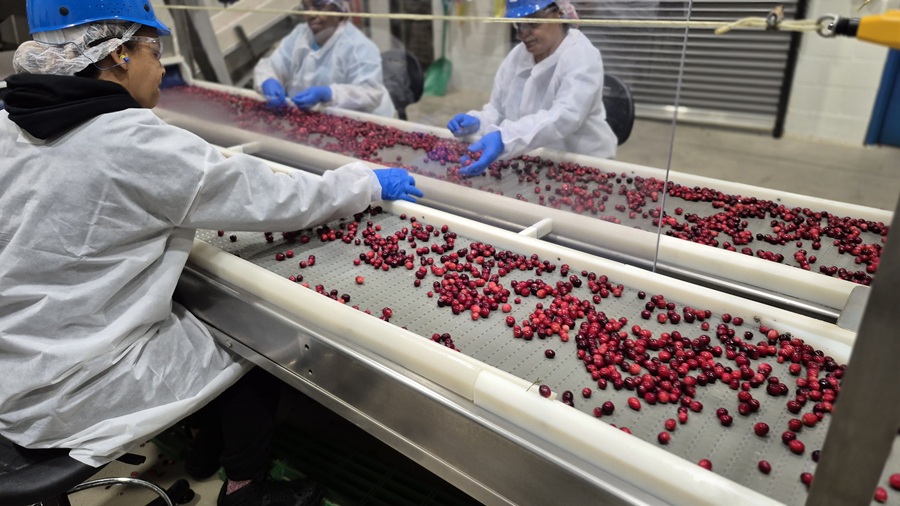 Photo: Jenni Spinner
How do you enjoy cranberries? During this time of year, I’m all about the cranberry sauce—while I still have my late mother’s recipe starring fresh berries (see below if you want to try your hand), I much prefer using canned over playing Martha Stewart. Also, I like whole-berry over jellied, served at the holiday table in a glorious red monolith. Then, while I always enjoyed baked goods and snacks other times of the year, the Ocean Spray tour definitely upped my appreciation for cranberries. I’ve already used some of the samples OSI shared with me in whipping up some treats at home (pancakes, scones, and cranberry-orange quick bread—thumbs up all around).
 Photo: Jenni Spinner
Having said that, I think I’d rather save the effort and munch on creative cranberry concoctions made by bakery and snack producers like you, and I can’t wait to see what you come up with next.
Cranberry-orange relish
Ingredients:
1 medium navel orange
12-ounce package of fresh Ocean Spray cranberries
1/2 cup white sugar
1/8 tsp cinnamon
Directions:
Grate 2 teaspoons of zest off the orange and set aside; then remove the rest of the peel and discard. Then, put all the ingredients in a blender or food processor and whip them up until they're finely chopped. That's it!
Related: Consumers seek health benefits, taste, and sensory experience with inclusions
