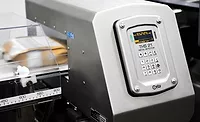
Producers need reliability, simplicity in inspection and detection equipment
In addition to efficiency, bakers and snack makers want their tech to be efficient and easy.
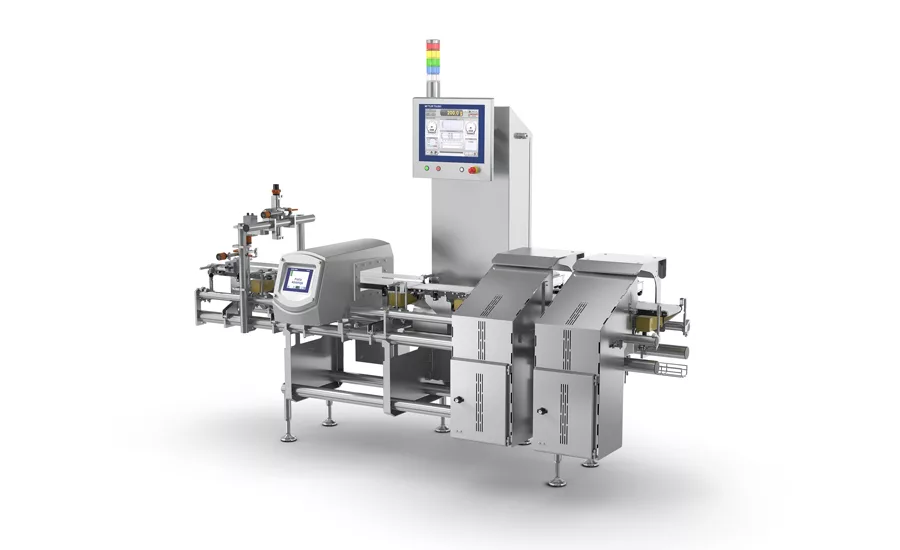
Courtesy of Mettler Toledo
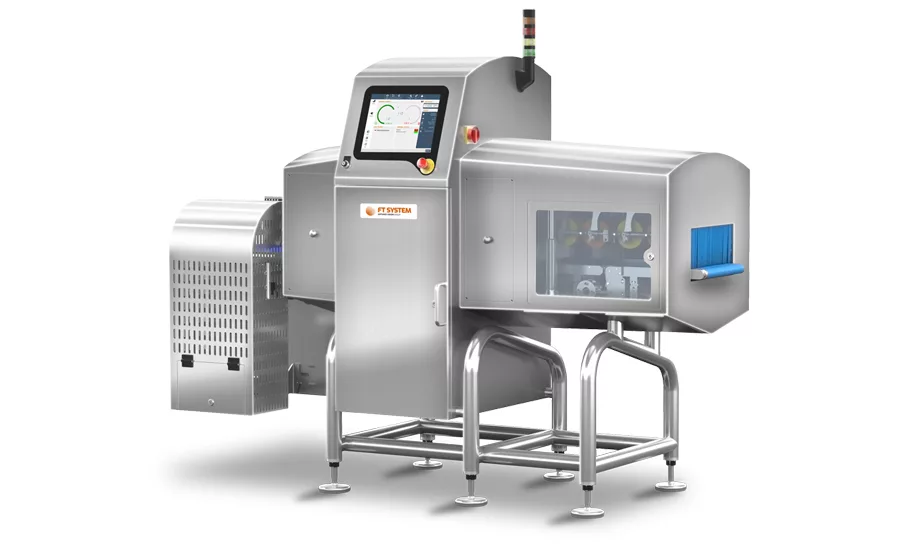
Courtesy of Antares Vision Group
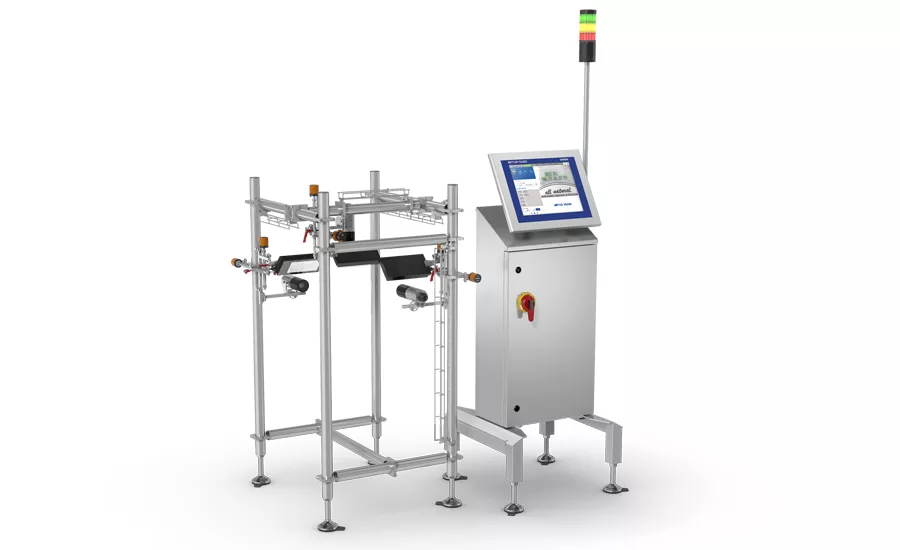
Courtesy of Mettler Toledo
Courtesy of Mettler Toledo
Courtesy of Cassel
Courtesy of Yoran
Courtesy of Cassel
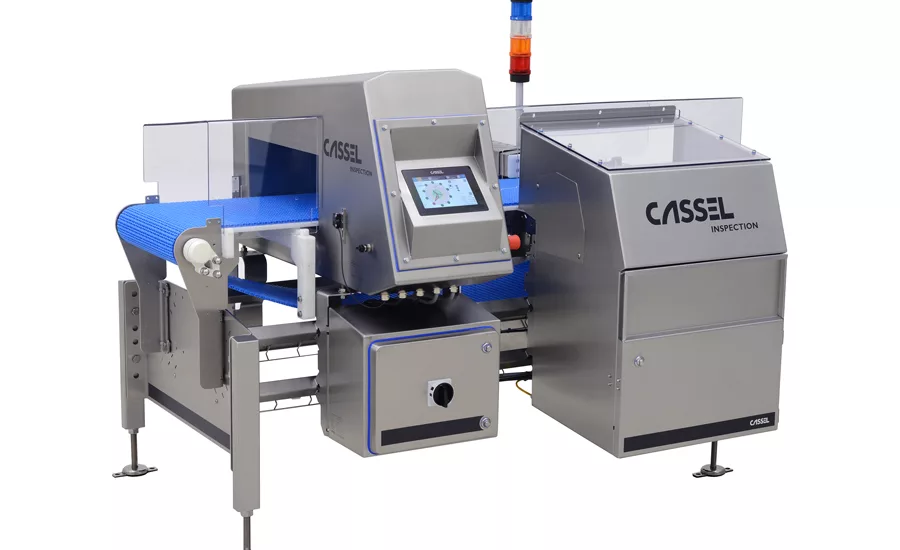
Courtesy of Cassel
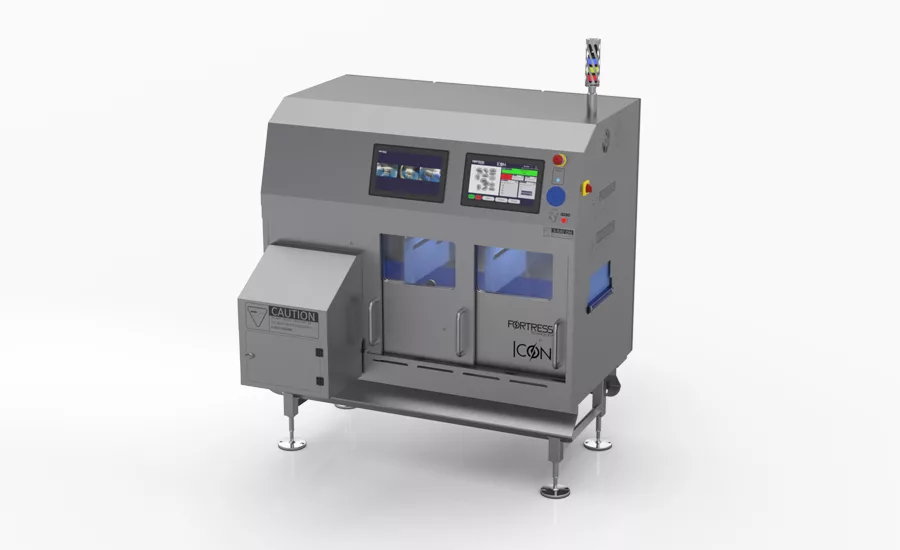
Courtesy of Fortress
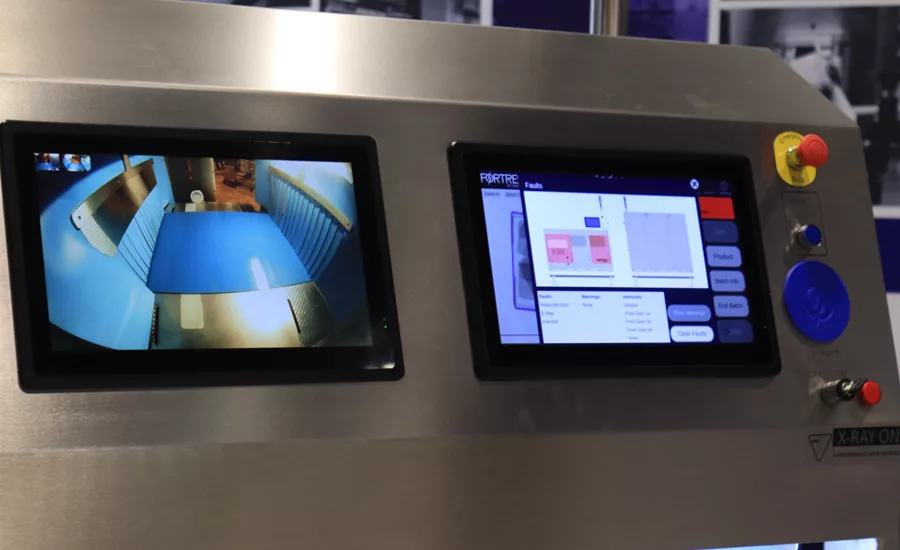
Courtesy of Fortress
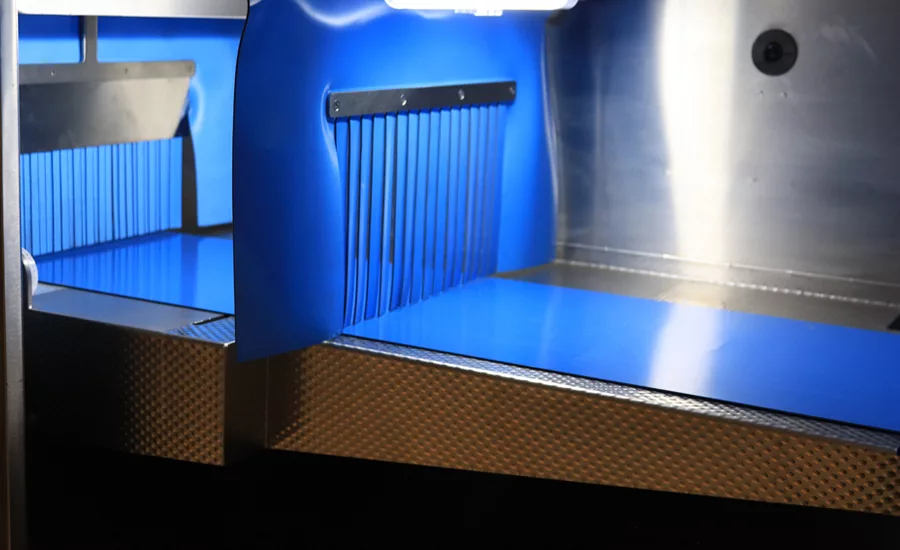
Courtesy of Fortress
Courtesy of Key Technology
Courtesy of Fortress
Courtesy of Key Technology

Courtesy of Yoran
When specifying inspection and detection equipment, snack food and bakery operations have a list of necessary features that is relative short, but all items are more or less equally important. These characteristics include reliability, ease of use, robust reporting systems, efficiency, gentler handling, less sanitation, and the ability to handle different types of packaging.
Need for speed
Mettler Toledo has noted that customers want faster and more automated check-weighing instead of doing manual spot-checks, according to Keri Klein, product line manager for check-weighing and vision.
“Automation is a trend in the industry, specifically in snacks and confectionery, to run faster, get rid of manual spot checks, and more operators to a more productive area to optimize their resources,” she says.
With more variation required due to customer taste preferences, setup time when switching from one product to another has become important, notes Thomas Koshy, director of sales for food and beverage at Mettler Toledo: “Features on the metal detection side as well as the X-ray inspection side go with easy setup, and auto setup wizards to simplify that process.”
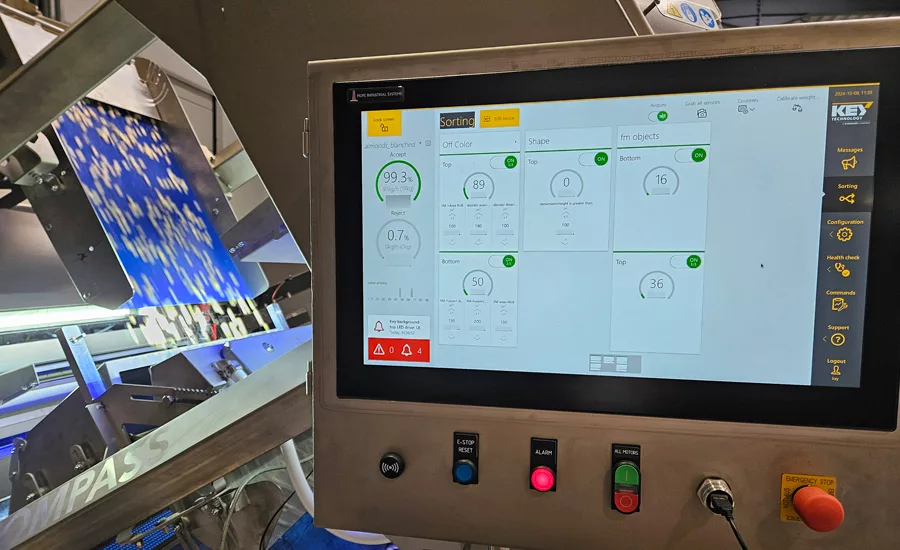
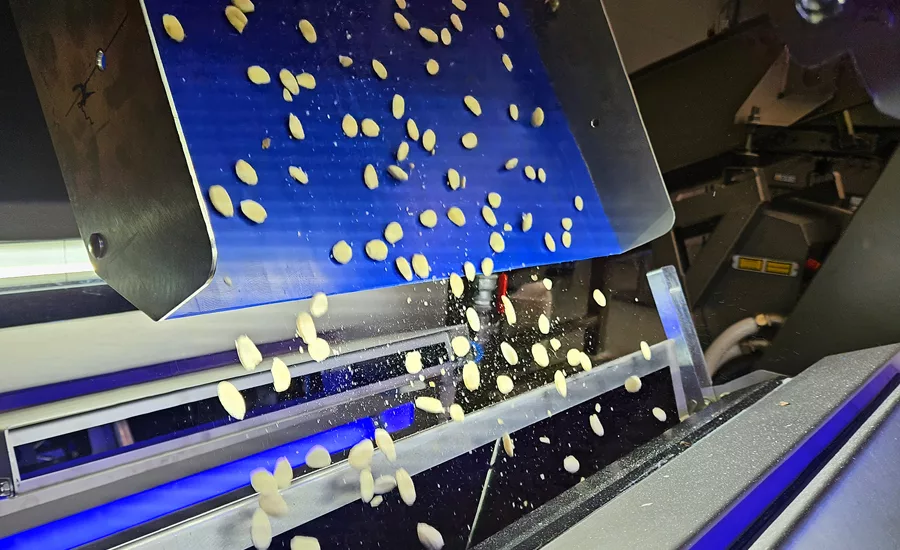
Customers of Key Technology seem increasingly focused on breakage of product, comments Daniel Leighty, vice president of sales.
“They’re more cognizant about the ‘drop’ of any product,” he says. “Lines are getting bigger, and they’re wanting gentler handling of their products. If the drop is lower, there’s less chance of breakage.”
Rudy Sanchez, food handling product manager at Key, adds that customers are asking for more reliable, more robust systems that require less maintenance and sanitation efforts.
Humans and machines
As machine vision enters the food space and companies are trying to do more complicated tasks, they need to train staff who are increasingly specialized, says Anthony Romeo, product manager for Oxipital AI: “People have tried different AI systems and are frustrated with the burden of training,” he relates.
Customers want inspection and detection systems that are easy to use, despite how complex their inner workings are, says Bob Reis, an independent consultant who works with CASSEL Inspection.
“The easier you can make it get it going, or teach or re-teach or even diagnose problems, the better,” he comments. “The other thing you see more and more is the need for some kind of remote assistance. If things go wrong, the machine’s down, and you’ve run diagnostics, otherwise getting service might take hours, or days.”
Customers of FT System North America, a subsidiary of Antares Vision Group, have been focusing on three areas: new packaging formats, product quality and consumer safety, and production line efficiency, observes Richard Reardon, general manager.
“Manufacturers are always looking at new products, formats and SKUs, and inspection equipment needs to be flexible enough to support that,” he says. “They need to reduce waste, reduce the need for human inspection, reduce energy consumption, and require less maintenance.”
Reporting requirements
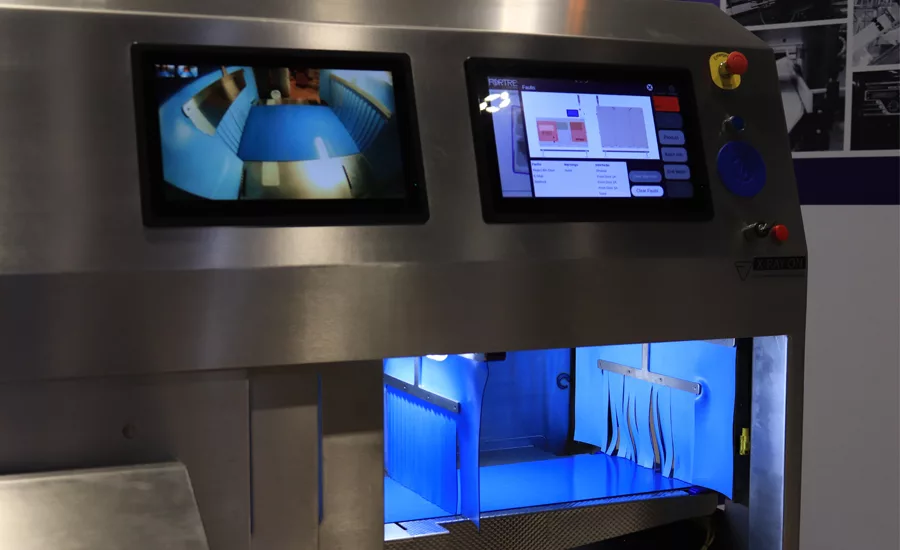
Eric Garr, regional sales manager and production inspection specialist at Fortress, says his customers are focused on getting reporting “up to snuff” and automatic testing. They want to be able to have both an overall dashboard view of their data and then be able to drill down into more granular information, he says, and they want to be able to reduce the need for manual performance evaluations that require the line to stop midstream.
Sesotec has noted a shift in the industry from metal detection to X-ray as large companies like Costco demand it, reports Johannes von Stein, vice president of sales. Changes in packaging are another area of churn.
“There’s a continuous search for replacing plastic packaging with other kinds,” he notes, although that’s slowed somewhat as “the political landscape has changed. Plastics is not the ‘bad boy’ of the industry anymore.”
Customers of Yoran Imaging are focused on productivity rate, sustainable packaging, and traceability, relates Eran Sinbar, CEO and cofounder.
“The production rate today is above 100 or 150 products per minute,” he says. “It requires better control over the process vs. the manual sampling.” Packaging is “mostly moving from multilayer to monolayer materials,” he adds, and regarding traceability, “There is a requirement, for each product, to know what process it has undergone.”
Questions to ask
When considering how to upgrade their inspection and detection equipment, customers should first ask themselves what problems they are trying to solve, and what are their top buying decision criteria, which don’t always align, says Klein of Mettler Toledo. “If your top problems are that you want to run super-fast, have higher accuracy and great sensitivity, but your budget is low—that might conflict,” she says.
Koshy of Mettler Toledo says customers should tee up the price-performance tradeoffs and dig into what their returns will be, in addition to upfront costs. “A lot of times, customers are stuck saying, ‘I have this much to spend,’” he notes. “They lose out on additional value they could create by expanding their scope or specifications.”
On the safety front, Jordan Davis, Mettler Toledo’s product line manager for metal detection, says customers should ask whether their manufacturer has removed hazards through their design, rather than just guarding and preventing access to them: “We work to design those out and keep operators safe,” he says.
Leighty of Key Technology says customers should ask what they should be able to expect from sorting machines in terms of percentages of major and minor blemishes and foreign materials. “If you have a formed-material problem that is white plastic, it will take a different sensor in the machine than if all you’re worried about is cardboard,” he says.
Customers should ask for a performance report from the manufacturer’s optical machine, for their particular product and based on their needs, recommends Sanchez of Key. Leighty adds that most manufacturers have demonstration centers on which customers can watch their machines sort their product and get a preview of what the performance would be like.
Romeo of Oxipital AI recommends asking manufacturers what training looks like: whether it’s expected of the end user, something the vendor will provide, or a combination.
“People are getting burned in not understand the scope of what’s required to set it up,” he says. “People are asking the first-level question of, ‘How can I identify these defects?’ … What can I do with that information, and how can this impact overall yield, should be your next questions.”
According to Reis of CASSEL, customers ask if their system is going to be specifically engineered to meet their requirements, in areas like rejection, product sensing, machine safety and cleaning.
“Sometimes, standard, off-the-shelf systems don’t work,” he reports. “Dozens if not hundreds of things could be done differently to meet the customer’s needs.” The other question: What level of remote support should you expect. “How quickly can you get support in person, or support remotely, to get things back up and running, without causing too much downtime, excessive false rejects, or other problems?”
Reardon of FT System North America says customers need to ensure that a system is designed to need their needs and is not one-size-fits-all. For example, “Can you achieve accuracy at the speed I’m running and still maintain high efficiency without compromising quality?” Secondly, “Is the supplier of the equipment … offering technology in my sector? Can my systems be modified?” “Thirdly, “Am I going to get support from that supplier? Do they offer training?”
Customers should determine what they want from their inspection and detection equipment from a connectivity standpoint, recommends Garr of Fortress, and they should ensure that quality control tools in the system mitigate their particular risks.
“In most production facilities, that’s going to be metal, the most common contaminant that cannot be controlled easily by other means,” he says.
Von Stein of Sesotec recommends delving into the details of what the equipment can do for you, since many perform the same tasks. “Go into the friendliness of the HMI, the easiness of operating the machine itself, the reporting structure on how to have the international validation protocol saved,” he suggests. “How easy is it for operators to learn it?”
The first question customers should ask is whether inspection and detection equipment can meet their production rate, and next would be false negative and false positive rates, says Sinbar of Yoran. “And what is your strategy?” he asks. “Are you a plug-and-play system?”
Other challenges to solve
In addition to obvious problems with quality, safety, contamination, and moisture control, companies that make inspection and detection equipment say they work to solve for labor shortages, data needs and reliability.
Klein of Mettler Toledo mentions labor shortages. “Much of our equipment can automate processes and remove manual steps,” she notes. “These machines have intuitive interfaces and setup which can reduce training time and combat turnover challenges.”
Machines can offset costs through other types of ROI, she adds: “If you put a metal detector upstream and catch metal earlier, you don’t have to rework product at the end, and reduce your scrap level.”
Romeo of Oxipital AI sees inspection systems as a way to get various dimensional data. “It might not be as accurate as a scale, but it’s certainly more accurate than a human eyeball,” he reports. “If you’re trying to inspect for quality, and you want to have the same product give you a weight or dimension estimation, there’s a lot more valuable data than, ‘Is it good or is it bad,’ that a lot of these inspection systems can provide.”
Manufacturers need to solve for the challenge of fitting an inspection or detection machine where the customer wants to put it, in terms of size or layout, notes Reis of CASSEL: “Are there ways the vendor can modify the machine or figure out a layout that’s going to help make it fit into the production line? This, a lot of times, comes down to custom engineering.”
Reardon of FT Systems states inspection systems need to work at a high level of efficiency, with ease of use, and with repeatable certainty. “The systems have to be stable,” he notes. “The other big thing is, does the system generate the data that I need to have? … Does it create reports?”
Garr of Fortress says inspection and detection equipment needs to be user-friendly and reliable, to help companies overcome the labor shortages plaguing them since the pandemic. “I don’t think that problem is ever going to go completely away,” he says. “Having equipment that is not intimidating to operate, can be easily set up, we can easily train operators on, is very important.”
Inspection and detection equipment should be able to handle cross-contamination, moisture and mold, suggests Von Stein of Sesotec, adding that metal detectors alone can’t do all of that. “In the end, the industry will be developing further type of technology, such as vision inspection,” he says.
Equipment and technology need to deliver data according to a customer’s specifications, says Sinbar of Yoran. “We want the customer in this strategy of coming onto a digital production floor because that’s what most of the production lines are targeting,” he says. “We are promising your [sealing and moisture] integrity, but more than that, we are digitizing your production area.”Looking for a reprint of this article?
From high-res PDFs to custom plaques, order your copy today!