Sanitary design best practices for snack and bakery facility construction
Design and build firms continue to refine current best practices for peak sanitary design for snack and bakery facilities.
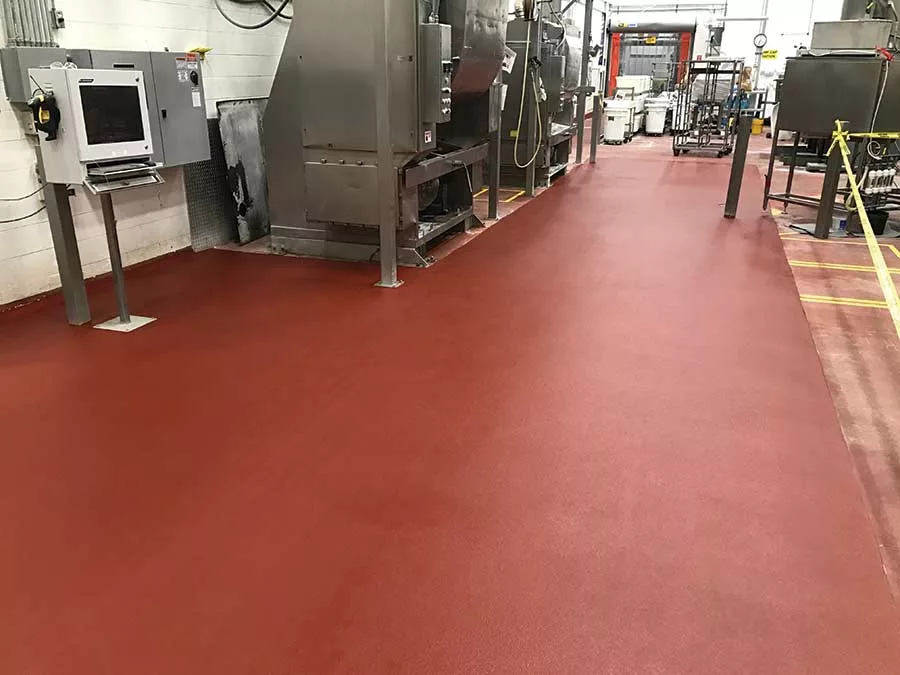
courtesy of Indue Sales & Services, Inc.
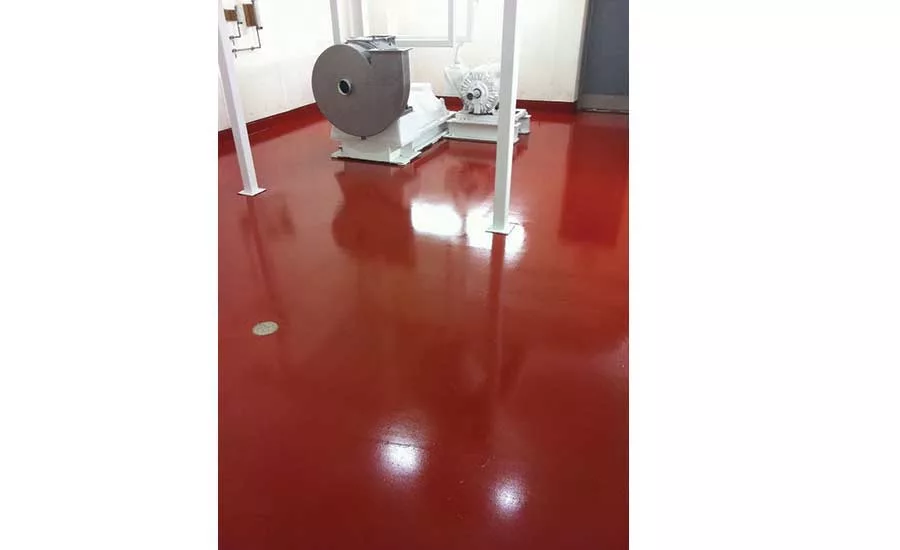
courtesy of Indue Sales & Services, Inc.
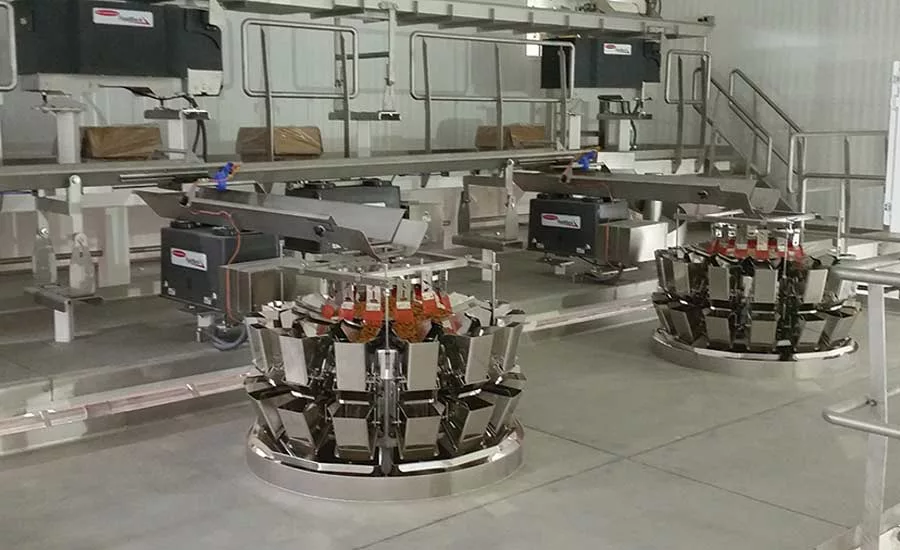
courtesy of The Austin Company
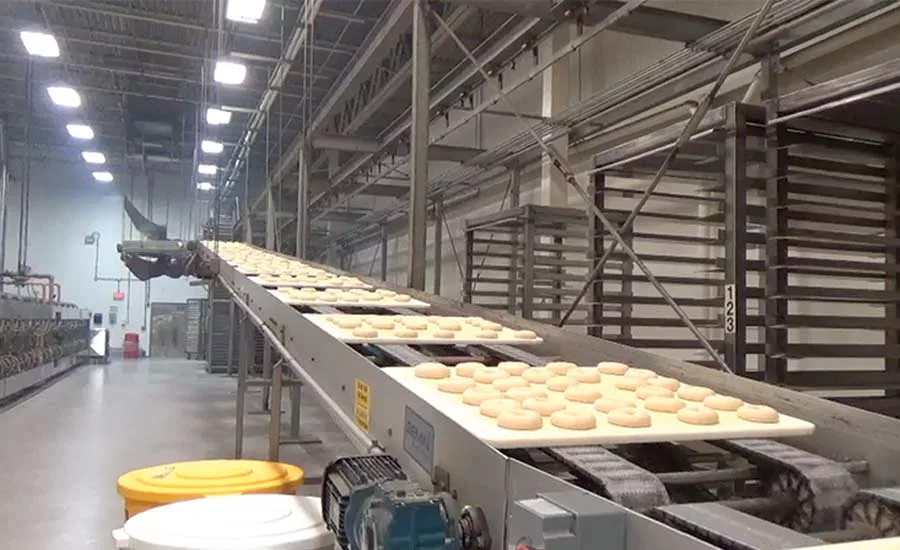
courtesy of The Austin Company
Best practices for the design of snack and bakery facilities—whether building new construction or renovating an existing building—have undergone a significant evolution in recent years.
Today, the industry pays rigorous attention to implementing solid sanitary design solutions, notes Darrin McCormies, senior vice president, director of industrial process engineering, Epstein, Chicago. “Companies have come to the realization that operating a facility that includes critical sanitary design elements results in a more-productive facility, produces products with less risk, and is easier and less expensive to clean and maintain.” This also results in a facility that appeals to employees, visitors and customers—and auditors.
“Sanitary design considerations should be at the forefront of the conversation and among the highest priorities when building a new food processing facility,” says Dan Koehler, vice president, Indue Sales & Services, Inc., Hudson WI.
Advanced perspectives
Engineering innovations have led to upgrades in how snack and bakery plants are designed and constructed, notes Jeff Dearduff, corporate director, baking and snack, The Austin Company, Cleveland. “The use of tilt-wall perimeter construction gives a long-term comfort level that the building envelope will be tight for many years. Old construction methods using block, brick and metal framing always require maintenance and upgrade through their life.”
The goal is to establish the right solutions from the start. “Surfaces and coatings have evolved and are now a key part of hygienic design instead of an afterthought,” says Koehler. Design details such as curbing, drain type and placement, sealing floor protrusions and equipment legs, and choosing the proper coating system are now discussed in detail during the design process, he notes.
Dearduff notes that methods for installing curbs, walls and walk-on ceilings has created a building system that withstands the rigorous cleaning required by regulations. “Smooth surfaces and elimination of paint on walls goes a long way in providing a building that will last and be easy to maintain.”
The use of easily cleaned insulated metal paneling for ceilings and walls, along with impervious, durable flooring, is a common trend, notes Tyler Cundiff, director of business development, Gray Construction, Lexington, KY.
“The easier you make it to keep clean, the more likely it will be kept clean,” says John Koury, architect and consultant to A M King, Charlotte, NC.
A top sanitary concern today is allergens, notes Cundiff. Any facility that will handle allergens needs capabilities to isolate them.
Automation is also a design game-changer today, and should be considered from the start, notes Koury. “Fewer people on the floor means fewer unknowns and fewer chances for contamination from an employee not following good sanitation practices. With an increase in automation, there is also increased need for equipment serviceability and access, while still in a sanitary environment.”
While Dearduff notes that these design elements do increase initial capital investments, the ROI is found in cost avoidance when these methods eliminate potential food contamination events.
Key considerations
Federal agencies have set core standards for designing a snack or bakery facility.
“FSMA has a number of requirements that must be considered and implemented in today’s modern baking plant designs,” says Dearduff.
The first design aspect is separating “raw” and “ready-to-eat” areas. “It goes much further than just having raw material processing in one room and finished goods in another,” says Dearduff. “Separation also refers to people, clothing, shoes, tools, equipment and so on. Walk paths from employee rest areas to production floor work areas for both the raw material side and the finished goods side must be defined and may need to be clearly separated. In some cases, vestibules may need to be provided so that atmospheres can be controlled, re-gowning can take place, and even shoe changing or cleaning must happen.”
Food defense is the other consideration, notes Dearduff. He recommends installing exterior perimeter fencing, as well as locked doors to ingredient systems, production areas and dock areas. “Security camera systems and monitoring outside the plant, as well as within the production areas, is another way to add a layer of security.”
Also, exterior walls often benefit from rodent striping on the floor’s perimeter to identify and control pests, notes Koehler.
The processes and space must be evaluated in terms of food-safety risks, notes McCormies. This will form the basis of necessary sanitary design criteria. “First, in terms of importance, is that any area that has open food product must be designed with cleanable materials.” This includes:
- Designing a tight production space that will completely contain the process to eliminate dust and other materials from intruding into the area
- Eliminating areas that cannot be accessed for cleaning or inspection
- Minimizing horizontal surfaces, harborages, cracks and crevices
Dearduff also notes several other key design considerations:
- How conveyors pass through walls must receive attention to assure that collection of debris does not become a problem
- Overhead piping should have minimal opportunities to pass over product zones
- Internal roofing and ceiling systems and overhead building framing must be easy to reach and clean
- Electrical panels and piping must have room to clean behind where they stand or connect
Once Sanitation Standard Operating Procedures (SSOPs) have been determined, the design and build team needs to choose an appropriate coating system that will withstand the area’s daily use applications, traffic, hazards and sanitation, notes Koehler. “Different conditions and environments will favor different coating applications. For example, most processing/production areas that receive high-temperature washdown are best served by a trowel-down urethane concrete coating that can withstand the thermal shock, heavy traffic and chemical exposure expected from normal operation.” He notes thin-mil epoxy coatings can readily fail when exposed to heavy traffic, harsh chemicals or rapid temperature changes.
Koehler also notes that striking the balance between an easy-to-clean floor and adequate nonskid traits for worker safety isn’t easy. Involving both operations and sanitation team leads in the discussion will help determine the right solution.
Also, utilize a symmetrical drain layout. “Drains should be accessible for cleaning and easily maintained,” says Koehler. And ensure the floor has an adequate slope/pitch. For washdown areas, the minimum floor slope/pitch for adequate drainage is 1/8 inch per foot, he notes. “Water pooling is a telltale sign of poor sanitary design, but may also indicate improper concrete or coating installation. Pooling water presents a critical food-safety risk, as it creates an inviting environment for pathogens and microbes to flourish.”
Production areas should receive a hygienic cove base around perimeter walls to help shed water to drains during washdown and to eliminate potential microbial harborage points where the wall meets the floor, notes Koehler. “Floor protrusions or penetrations should receive cove base as well, eliminating more potential harborage points that are difficult to clean. Minimize floor penetrations and properly seal anchor points, equipment legs and other areas that could trap food particles or be difficult to clean.”
Correct installation of equipment factors significantly into safety. The way a conveyor or machine is attached to the floor is critical, notes Dearduff. Prevent moisture from collecting under a leg or foot to avoid Listeria issues.
Renovation checklist
Renovating an older snack or bakery facility is sometimes desired to help increased productivity—and to comply with current standards.
“Older facilities tend to have layouts that are the result of multiple additions, addressing needs in the easiest places to either place an addition or relocate equipment. These solutions often don’t support good workflow or sanitation design,” says Koury.
“Planning should start with an assessment of current conditions and the risk that exists for potential issues to arise,” suggests McCormies. “The issues should be prioritized and tackled based on this risk assessment.” There are several common sanitary design challenges faced by older bakeries, including:
- Dust, which is a top sanitation issue and potential safety concern
- Large, open work areas with years of accumulated piping, ductwork and structure directly above production lines
- Spaces and equipment that are inaccessible and impossible to clean
- No control of air pressurization resulting in airborne contaminants moving within the facility
Dearduff notes several steps that are typically required to bring older bakeries up to speed:
- Additions of walls for separating raw and ready-to-eat areas
- Rerouting conveyor systems to clearly separate raw and ready-to-eat areas
- Eliminating peeling paint on structural surfaces and equipment
Older floors often need work. “Large-scale renovations are commonly needed from coating or dairy brick system failures,” says Koehler. Dairy brick systems require regular maintenance on grout lines and to replace cracked or broken tile. They might have hollow spots beneath the tile, or failing sloping/mortar beds that potentially harbor microbes and detritus.
Dearduff notes that floors in older facilities might feature cracks in concrete, old epoxy peeling up and peeling paint. Renovations might require fixing the condition of, and degree of sloping to, drains.
“Another common renovation required is resurfacing slippery areas,” says Koehler. “Nonskid levels in coatings will wear down over time.” Other renovations often include fixing pooling water areas from inadequate slope or drain placement, a critical consideration to reducing risk of cross-contamination and microbial growth, he notes.
Also, as is the case with new construction, Cundiff notes that eliminating horizontal surfaces is a top consideration when renovating an older facility.
After all, mitigating risks before trouble arises can prevent potentially significant lost revenue due to downtime and recalls.
For insights into snack and bakery facility design elements related to dry vs. wet sanitation procedures, see "Snack and bakery facility requirements for dry sanitation and washdown."
Looking for a reprint of this article?
From high-res PDFs to custom plaques, order your copy today!