Automating with robotics can help bakers rise
With labor issues causing frustration, the right tech can elevate an operation.
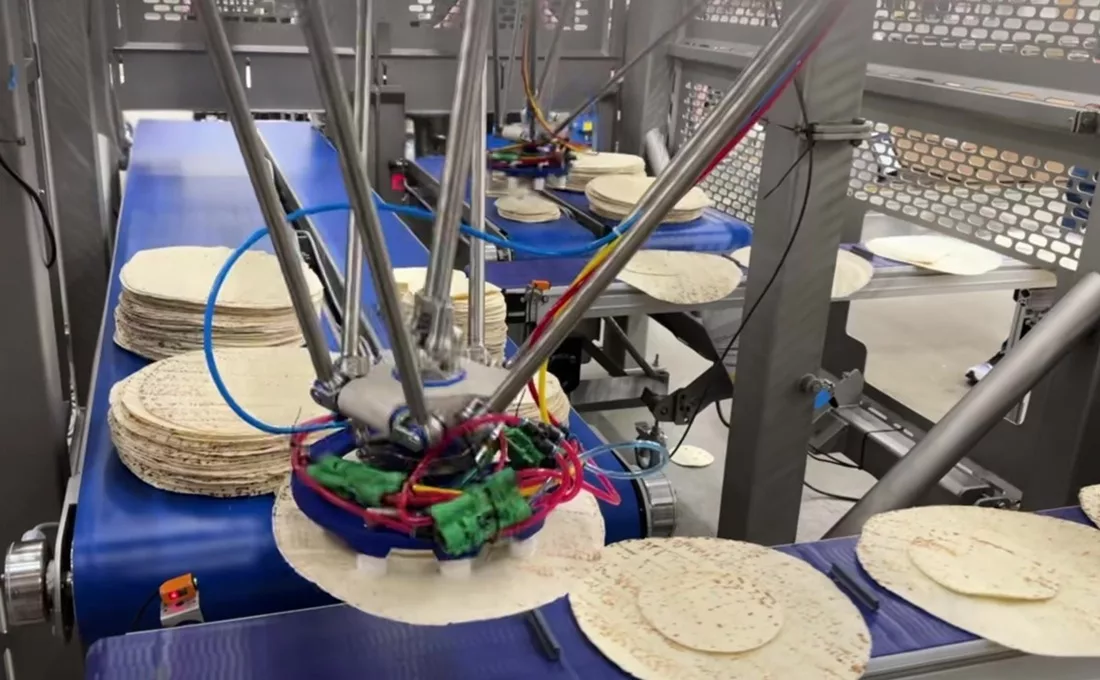
Baking facilities can no longer find enough labor to consistently fill roles, making manual or semi-automated production unsustainable. When it comes to overnight or high-care shifts, turnover rates climb even higher.
Add to that the cost of manual labor. Wages continue to rise, making human workers more expensive.
Meanwhile, facilities must meet consumers’ expectations for high-quality products.
Going beyond the traditional use of robotic solutions in material handling, case packing, palletizing, and product transfer, food-ready, washdown-rated, hygienically designed robots are now compatible with food-contact zones and practical for today’s operations.
Food-handling robots provide a path to stable production, repeatable quality, and predictable output, even in tight labor markets. ROI is achievable within one to three years for bakery processing facilities.
Where to start with robotics
The need to produce more for less is real. With ever-increasing demand for more throughput, not to mention the supply chain and cost pressures that continually mount, it’s not feasible to rely solely on human workers. But where should processors considering adding robotics look first?
Repetitive tasks are a good starting point. Think of low-value, tedious tasks required in the manufacturing process. Using human labor to complete these tasks becomes expensive.
Tasks that may be viewed as unsafe for or unfavorable by human workers are another entry point for automation. For example, in bakery operations, the conditions are often hot, humid, and miserable for human workers. Then there are hot pans, steaming products, and high-speed components. While these conditions are not ideal for humans, they’re suitable for robotics.
High-care bakery applications
Solutions automating high-care applications, particularly those that traditionally involved manual, tedious tasks, are more attainable.
Examples of implementing robotics in high-care bakery applications include:
- Product handling and transfer of cupcakes, muffins, and breads: The oven is high, wide, and hard to reach, not to mention extremely hot, so depanning at a high rate of speed can be demanding for human workers. Further, if the product is delicate and requires picking and transferring directly into the packaging, robotics can assist. Robots could be positioned and programmed to work together to deliver a turnkey solution that meets multiple needs.
- Positioning food items: If items need to be moved to position them for downstream slicing, for example, using human workers doesn’t add value, but it does increase the cost. In some facilities, the food may need to be kept at a lower temperature, which can make it uncomfortable for workers. A robot can accomplish this task in any environment required.
- Assembling products like sandwiches: Sandwich assembly requires ingredients to be picked, placed, and layered on bread or buns, which a robot with an end-of-arm tool like a gripper can easily manage. Complex and quick-change tooling can be added while maintaining production speeds.
- Decorating and finishing: If done by hand, this requires many operators, which can increase costs. Beyond that, it can be a safety issue, as decorating can endanger workers who may develop carpal tunnel syndrome. Beyond that, if the line moves at a high rate of speed, it can be challenging to maintain quality. When dozens of workers are attempting to write the same script, the outputs will vary greatly. The process needs to be repeatable, which robotics can handle.
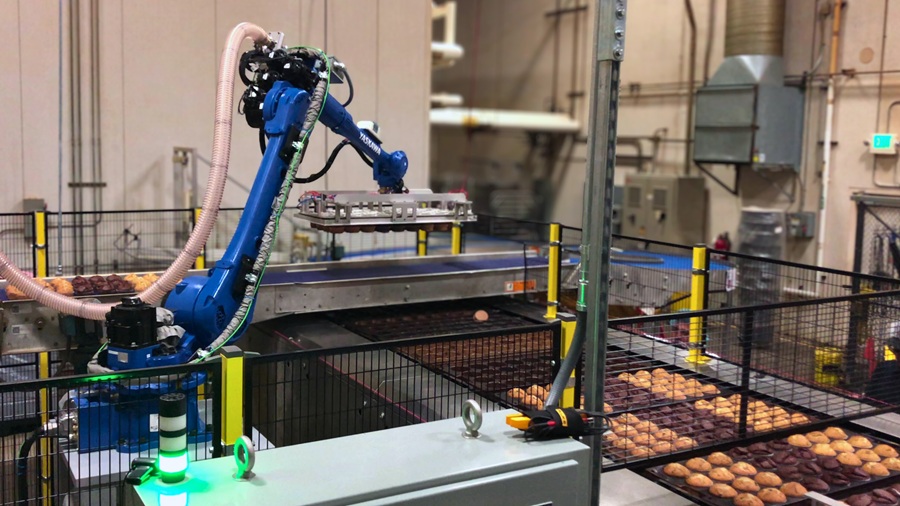 Courtesy of SPI Automation
 Considerations for implementing robotics
Planning to add robotics
When considering adding robots to the operation, pull together a team. Be sure to include members from the engineering, operations, maintenance, quality assurance, product development, and food safety departments, as each views the solution differently.
While engineering is interested in the structural implications and reliability, operations will view it from an ease-of-use perspective. Maintenance will want to consider how to maintain spare parts and if common components are used. Quality assurance will be interested in the product's consistency. Food safety will want to ensure that cleaning and sanitizing are high priorities. Every department’s input matters.
Priorities to consider
As a baking facility plans to implement robotics, needs should be prioritized. Questions like these should be addressed:
- If line flexibility is vital, what are the parameters for it?
- Are multiple robots needed to accomplish the tasks?
- Is quick-change tooling necessary?
- What about uptime, downtime, and maintenance time?
- Once it’s running, is it building momentum for the next steps in the process to be automated?
Consider if it’s wiser to look at the entire facility to develop a solution, or if it’s better to focus on solving a single challenge today to achieve a return on investment before moving on to automate the next step.
Working with an integrator on an initial assessment helps determine the implementation's direction.
Footprint and layout
There is no one-size-fits-all solution. No bakery layout is the same. Not every point in a bakery processing line will be ideal for adding robots. The equipment footprint and layout dictate which solutions are considered.
It’s important to work with a partner who can find a solution that fits within the processor’s facility and can implement a flexible design to maximize the space. Considerations include:
- Is it possible to implement modular systems?
- What’s the most efficient way to use space?
- Can systems be moved in and out for different changeovers?
- How do the robotics integrate with the surrounding equipment to locate and orient the product?
Operation and maintenance
Also, when considering robotics, don’t overlook the operation and maintenance required. Are they easy to operate and maintain?
Be sure to look for a single point of control and the ability to complete long runs and collect data. Tooling should be easy to change out.
Sanitation and cleaning
Be sure to consider the ease of cleaning and sanitizing robotic parts to meet production requirements. When robots are used for material handling, such as packing cases or palletizing, they don’t necessarily require cleaning and sanitization. But when implementing robots that handle the product directly, they should be easy to clean.
Training the team
Building a team to support the system once it’s in place is part of a successful implementation. Some processors send workers to a robot training program to receive specific instruction on end-of-arm tools, vision systems, and more.
By elevating the technical team that supports the system through continued education, that team can champion the robots. Without that spirit of support, the team may quickly become negative if the robot is down.
Using robotics to automate repetitive and unsafe tasks
Food-handling robots increase efficiency and eliminate the cost and risk of manual handling on bakery lines. Look for opportunities to implement robotics to handle repetitive operations or manage tasks that carry safety risks.
Before implementing any solution, consider other steps in the process in which automation could save time and money. To maximize their robotics investment, food processors should look at the big picture and consider the longer-term implications.
Work with a partner that focuses on food production, someone with the experience and longevity to be there tomorrow. Maybe they offer additional options like controls, system integration, conveyor systems, and more.
By adopting a holistic view of the facility’s operations, processors can make informed decisions that deliver benefits for years to come.
Related: PACK EXPO to showcase packaging, processing solutions
Looking for a reprint of this article?
From high-res PDFs to custom plaques, order your copy today!