Case study: Tips for keeping food/beverage warehouses and distribution centers safe, compliant and productive
As regulations change and warehouse requirements become more complex, partnering with an expert can help to ensure durable, cost effective, compliant storage rack
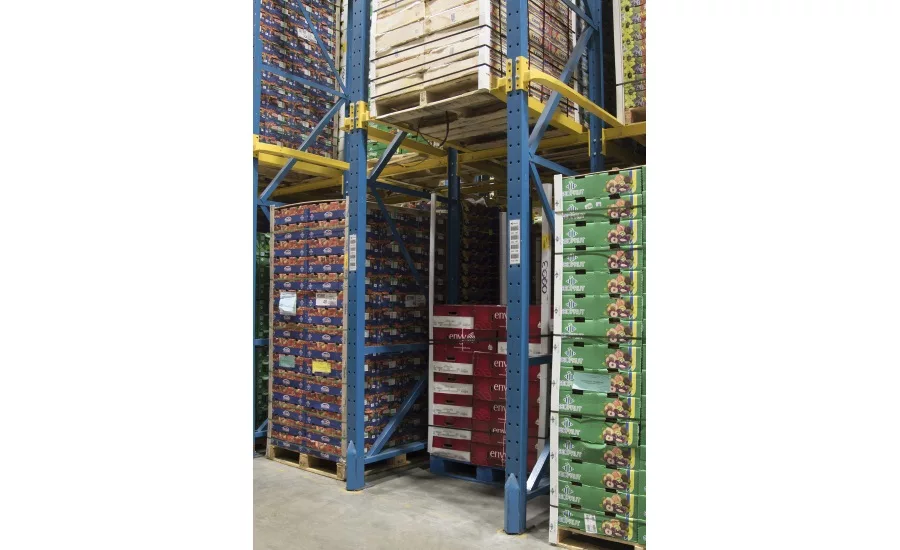
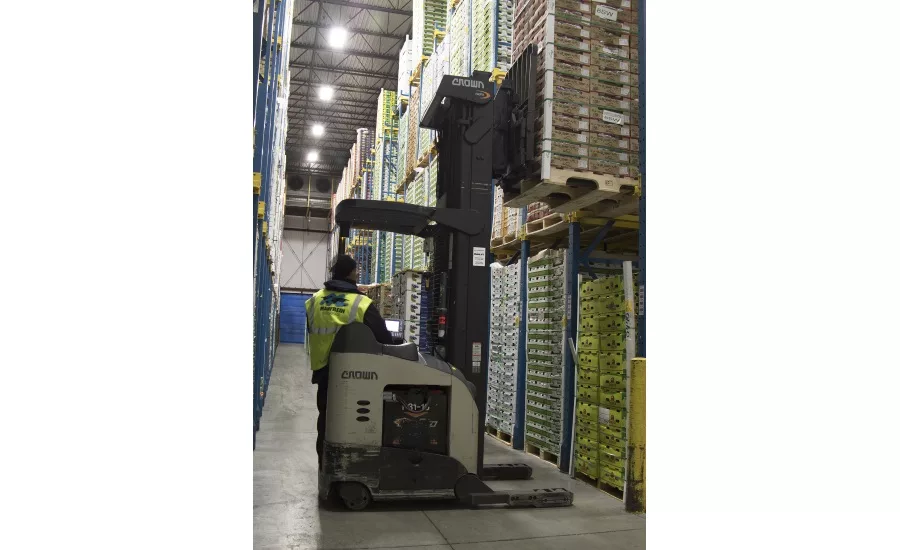
 While it was once common for the majority of food and beverage warehouse managers to purchase standard storage racks that could be “quick-shipped” from rack manufacturers’ stocked inventory, this is occurring less often as racking becomes more specialized and regulations stricter.
Today, storage rack systems are generally considered a building-like element, so are often subject to a variety of federal, state, and local regulations. These ordinances are continuing to evolve—perhaps none more so than seismic standards—and can become a pitfall for warehouse managers unfamiliar with them.
As a consequence, food and beverage warehouse managers should seek expert guidance from a qualified design professional whenever the racking, foundation, or warehouse infrastructure must accommodate unusual stress, loading, function, or other non-standard factors.
Ordering quick-ship pallet racks is convenient, but should be limited to use with non-flammable, non-hazardous product stored inside buildings in low-risk seismic regions.
Usually, with quick-ship racks, there is a maximum pallet load limit that the racking can handle and a maximum bay load limit that the racking and the existing warehouse floor can handle. There is also usually a six-to-one height-to-depth ratio placed on the racking. Any rack outside of these parameters typically requires a qualified design professional's review.
Even when the quick-ship rack is appropriate for a warehouse, there may be a need for expert input if there are special circumstances – for example, if rack installation occurs on a sloping floor.
Despite greater warehouse complexity and evolving regulations, understanding a few key distinctions about racking will help food and beverage warehouse managers to keep their facilities cost effectively safe, compliant, and productive.
Among the key distinctions to understand are seismic standards and environmental concerns for rack-supported buildings. Engineered systems such as pick modules, elevated platforms, and automated storage and retrieval systems (AS/RS) also have their own engineering issues like travel distance, means-of-egress and means-of-access requirements, as well as safety protection and guarding.
Seismic and environmental issues
Because storage racks are considered building-like structures according to the International Building Code, and are represented as such in the Rack Manufacturer’s Institute (RMI) Standard, racks need to be designed to the local seismic requirements just like a building.
Since the RMI is the recognized U.S. specification for the design, testing and utilization of industrial steel storage racks, responsible warehouse managers will want their racks to meet this recognized standard for seismic design.
RMI created the R-Mark Certification Program as a way for storage rack users to clearly identify those rack manufacturers whose components and design are in accordance with the RMI Specifications.
While all U.S. states have some potential for earthquakes, 42 of the 50 states have a reasonable chance of experiencing damaging ground shaking from an earthquake in 50 years, which is generally considered the lifetime of a building.
Another reason for warehouse managers to seek a design professional's input is the fact that seismic zone designations are changing. The United States Geological Survey (USGS) uses ground acceleration values, referred to as Seismic Design Categories (SDC) from A to F.
With seismic requirements increasing in many parts of the country and with a better understanding of structural performance during an earthquake event, these standards will continue to evolve, placing more demand on the rack design.
Seismic separation is another requirement for racks placed within an existing warehouse. This means the rack needs to be a certain distance away from the building columns so they will not collide during an earthquake. In high seismic regions, special inspection is typically required. An independent inspector will watch the installation and verify proper bolt tightening, especially the anchor bolt, along with checking for rack damage and missing or poor welds.
Outdoor racking as well as rack-supported structures must also be designed to account for wind, rain, and snow loads.
In hurricane prone regions, for example, outdoor rack and rack-supported structures must be designed to withstand the force of high-speed winds in addition to standard product and dead loads.
When heavy snowfall is prevalent, the outdoor rack and rack-supported structures must accommodate the accumulated weight of both snow and snow drifts, which occur when wind pushes snow up against taller structures or towers.
In all such unusual environmental conditions, of course, it is essential to consult with a professional about incorporating necessary safety factors into the rack design.
Engineered systems, including pick modules and AS/RS structures
By definition, an engineered system is any non-standard storage rack that requires special design considerations. This can include a variety of rack types and safety equipment that is semi-customized or actually custom-designed specifically to the warehouse application.
Safety
In terms of safety, racking of course must be designed for any unusual stresses, loads, or functions placed upon it. It must also meet applicable fire codes and insurance requirements. For instance, racking loaded with flammable products would require certain accommodations to assure adequate fire detection, containment, and suppression.
Some of the most highly engineered systems actually involve pick modules, elevated platforms, and work platforms. In such engineered systems, a number of key factors must also be addressed to ensure safety, compliance, and permitting.
To comply with the fire code, you need to address the means-of-egress (the path to exit a building), travel distance, and head clearance/exit width. This is based on the number of people who have to evacuate the racking system.
In order to provide safe access and fall protection, the placement of suitable stairs, ladders and guarding should also be implemented throughout the engineered system.
Because dropping off pallets or equipment at elevated levels may be needed as well in such engineered systems, providing for safe drop zones, through an opening in the side railing to allow easy receipt, should be properly planned too.
Serviceability
Ensuring that the engineered system functions as designed and that the employees working on an engineered rack structure feel comfortable is another consideration. Generally, this is referred to as serviceability. The term refers to how certain structural elements like elevated walkways must provide the desired support and stiffness for walking or cart use without unacceptable flex (bounce) or sway.
While such engineered systems require substantial input from a design professional, AS/RS structures—which can be over 100 feet tall and bear loads greater than 100,000 lbs. per storage bay—require even more planning and integration.
In today’s warehouse environment, AS/RS systems are increasingly popular in big box store distribution centers and large freezer companies for their ability to provide very high volume, high turnaround storage with minimal labor.
With AS/RS systems, there is a lot more interfacing between the equipment and the racking. Because these systems use automated cranes and usually map each location on a coordinate plane via computer, the tolerances are a lot tighter.
Since the machines stop at precise locations, each opening has to be at the exact location. So, the racking must be very stiff and the rack must be straight and plumb.
Quick-ship or engineered rack?
While there is no denying that purchasing quick-ship racking is convenient for many standard applications, the truth is that many larger, more complex warehouse applications today require expert input from a design professional. This is almost always the case when it is necessary to coordinate with integrators as well as various safety and trade professionals under deadline. Troubles often occur when someone decides that it is quicker and cheaper to buy quick-ship racking when the application really calls for an engineered system.
So, when optimal storage, material flow, safety and compliance is required in a warehouse, proactive managers will get the help they need up front to avoid costly surprises, delays, or retrofits.
About Steel King:
Steel King Industries, Inc. is a manufacturer and integrator of material handling products and systems that improve operational efficiency in a variety of environments including manufacturing, assembly, distribution centers, storage facilities, and warehouses. As the nation’s only single-source manufacturer of pallet racks, drive in rack, flow rack, pushback rack, pick modules, mezzanines/work platforms, cantilever racks, portable racks, industrial containers, custom shipping racks, and industrial safety guard railing, we are uniquely qualified to assist you in planning and executing your material handling system.
Looking for a reprint of this article?
From high-res PDFs to custom plaques, order your copy today!