Doors open opportunities for energy efficiency: Rytec
According to an expert, high-performance doors can make a difference in bakery and snack facilities.
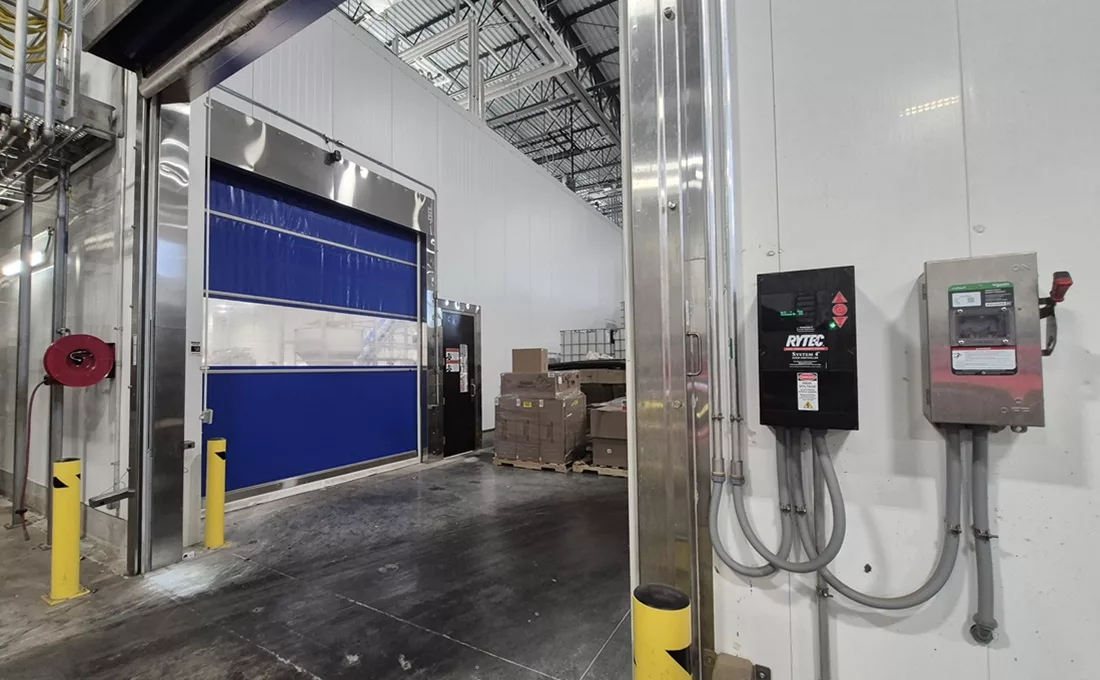
Baking and snack food processors are adding more products and functions to their facilities to stay competitive. However, the extra activity increases energy use—not only from operating more machines, but from the HVAC systems maintaining distinct temperatures between different rooms and zones. Modern door technology is making it possible for processors to retain temperatures more effectively and use less energy, while still meeting production goals.
Breaking from tradition
Baking and food processing plants have traditionally been built with little consideration for the type of internal and external doors. These existing facilities often have PVC strip curtains or swing doors (aka impact doors or bump doors) separating rooms internally, while dock areas have had standard fiberglass or aluminum sectional doors, which are not designed for insulation.
Over time, energy efficiency has become a bigger consideration in building design. Engineers most often focus their attention on building insulation, high-efficiency HVAC systems, lighting, and renewable energy sources to meet codes and certifications, such as Energy Star and LEED.
Today, building designers must meet even more aggressive performance targets for energy efficiency from the customers themselves, who have sustainability initiatives. However, achieving a tight interior seal is especially difficult for bakery and snack food processing facilities for a couple of reasons.
First, these companies need to produce high product volumes every day to be profitable. That means many facilities operate continuously, so forklifts are frequently moving through doors to shuttle ingredients and products between rooms.
Second, some baking operations have multiple functions occurring simultaneously under one roof or in adjoining buildings. These operations may include ingredient storage, mixing, proofing, frying, baking, cooling, freezing, packaging, storage, and shipping. Each of these rooms or zones may have different requirements for temperature and moisture levels. Other rooms may have extra environmental challenges for dust control or wash-down requirements.
Traditional doors allow air to escape freely, which can compromise temperature and moisture, leading to food safety issues, failed products, premature spoilage, and code violations over time.
When opening a dock door to load or unload a truck in regions with especially hot or cold climates, the incoming air can negatively impact the indoor environment. As these indoor temperatures fluctuate, HVAC systems must work harder to keep up, consuming extra energy that hinders sustainability goals and increases utility costs.
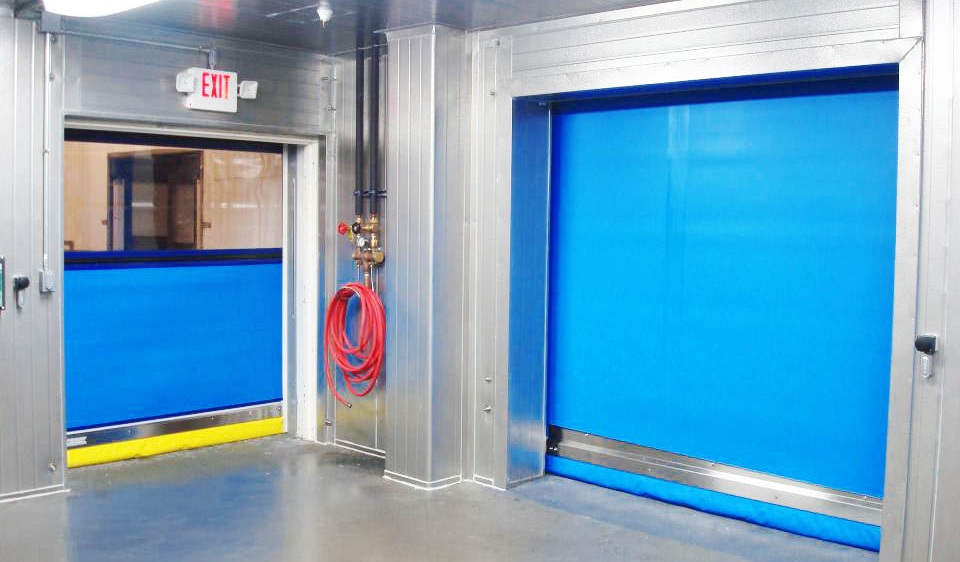 Courtesy of Rytec
The role of high-performance doors
Modern, high-performance doors have features that allow high-production facilities to provide workers with unimpeded access to all areas of the facility while keeping indoor environments relatively stable, thus improving energy efficiency in bakery and snack processing facilities.
High-speed doors available today can open up to 10 times faster than a conventional automated door (up to 100 inches per second). High-speed overhead doors provide unimpeded access to all areas of the facility while ensuring environmental separation.
Some high-performance doors are equipped with extra insulation to prevent frost build-up and control air seepage. To moderate temperature variability in loading dock and vestibule staging areas, high-performance doors may include heated or unheated blowers, depending on the degree of temperature variance.
In case of an accidental impact, doors with a quick-set repair system allow an operator to reset the door with the push of a button after aligning the bottom bar. This feature prevents the door from being left open too long for maintenance.
Door options
There are several options for high-performance doors that improve energy efficiency in bakery and snack processing plants.
- Fabric roll-up and sliding doors have heavy-duty insulated fabric panels—such as those with an R-value of R-4 or greater—to ensure better temperature retention. Steel side frames with fiberglass edges add an extra measure for a tight seal. Side column warmers further enhance a door’s ability to withstand frost build-up for freezer areas. Sliding fabric doors are the fastest option for extra-tall openings, such as those in high-rack storage areas.
- Conveyor retrieval doors allow products to move between rooms via a conveyor system. The doors are designed for smaller openings (up to 6 ft. wide and 13 ft. high) and feature insulation and seals to maintain temperatures.
- Rigid aluminum spiral roll-up dock doors have opening speeds up to 60 inches per second. Double-walled aluminum slats, a rubber membrane on the hinges, and full-height weather seals provide a tight seal against air escape.
- Doors for USDA/FDA compliance allow for easy wash-down and wipe-down. They feature tight seals to reduce air exchange and stainless steel removable side columns for complete wash-down access. The material and parts are chemical- and corrosion-resistant, allowing them to handle harsh cleaners and repeated water exposure.
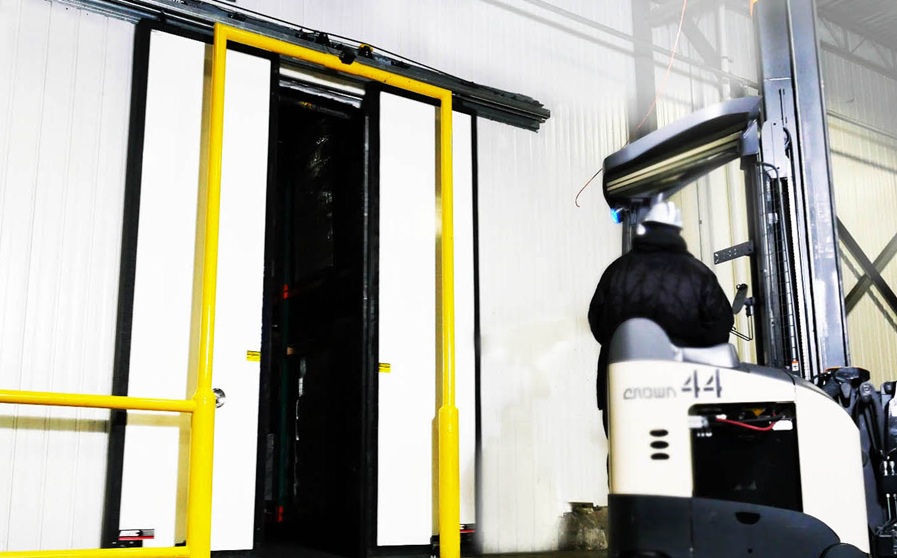 Courtesy of Rytec
Industry examples
A Wisconsin-based frozen pizza processor estimated that its old standard roll-up doors were causing the company to waste seven to eight tons of refrigeration a year just by opening the door to the freezer room. They switched to fabric doors with a 1-inch insulated panel, tight seals on the sides and floor, and built-in heaters to prevent ice build-up. With the door opening at 100 inches per second, the forklifts bringing raw materials to the production line now have a fully accessible doorway in two seconds. The company has seen a reduction in the running time for its temperature-controlling compressors.
An Illinois food distribution facility has an advanced sustainability mission that’s earned it a LEED Gold certification. Part of its energy reduction is using insulated fabric doors with additional thermal barriers built into the header, side columns and bottom bar. The doors have helped the company save 40% on energy and reduce the operating time of the refrigeration system for a longer overall life.
A well-known maker of baked and frozen snack foods has installed 58 high-speed doors across three processing plants to separate the food production areas from the finished goods and freezer areas. By minimizing air exchange between temperature-controlled areas, the doors reduce the energy required for heating and cooling, and support the company’s sustainability goals by decreasing its carbon footprint.
A leading Greek yogurt processor is using 40 high-speed doors between the various production, packaging, and shipping areas in its facility. They use fabric doors with stainless steel frames and an IP65-rated motor for USDA-compliant wash-down. High-speed operation and the full seal of the doors help separate the environments in each area, which vary by temperature and moisture levels. The processor is building another facility and will be installing 21 of the same high-performance doors in order to continue its market-leading product quality.
High-performance doors in food and baking facilities play an important role in conserving energy, especially in facilities with different areas for processing, storage, and shipping. Fortunately, there are many door types and technology options in the market to help meet each facility’s specific needs.
Related: Producers turn to ovens and proofers with energy-efficiency benefits
Looking for a reprint of this article?
From high-res PDFs to custom plaques, order your copy today!