Distribution strategies to preserve product quality
The right distribution strategy helps position food companies for ongoing growth.
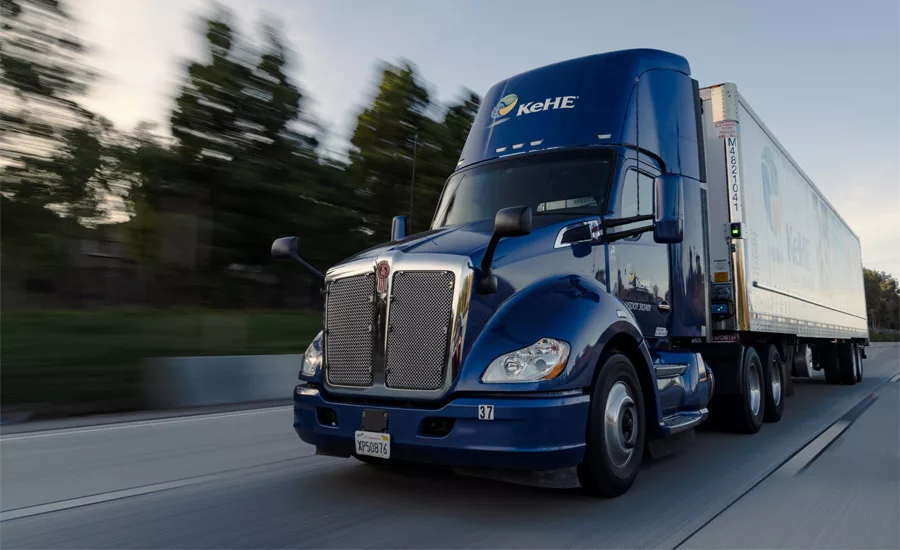
As history has proven in the baking industry, sometimes distribution can make or break a company. Through the years, direct-store delivery (DSD) routes have grown increasingly complex, as the market for drivers has become exponentially more competitive. Meanwhile, complete transparency and tracking of actionable data for analyzing productivity are increasingly standard industry features.
Food distribution grows exponentially more complicated when the products in question require cold-chain logistics technologies to maintain a set temperature range during warehousing and distribution, including products like frozen pizza, snacks and appetizers, and other frozen bakery products, as well as refrigerated bakery products.
In a “regular” year, maintaining distribution remains an amazingly complex aspect of running a food product manufacturing business.
Then came 2020. Over the past year or so, any gaps or potential for error in established systems of distribution likely surfaced under the strain imposed by the worst of the COVID-19 pandemic. And cracks in the system call for repair.
Whether fully managing distribution or outsourcing varying degrees of such logistics, every controllable variable related to supply chains, shipping and receiving, regional and national distribution, and/or DSD requires ongoing scrutiny to identify areas for improvement.
Perspectives on quality
Maintaining ideal conditions for warehousing and distribution is essential to delivering a quality product to retailers and their customers. “Quality processes are the most essential functions in improving and/or maintaining our efficiencies within the storage and delivery spectrum of both ambient and temperature-controlled goods,” says Tom Harden, senior manager, fleet assets, KeHE Distributors, Naperville, IL. “These processes are applied within the scope of warehouse storage down to the ‘final mile’ of direct store deliveries.”
“Strategies start with continuity of supply for consumers, but typically integrate some aspect of technology to support them,” says Johnathan Foster, principal consultant, Proxima, Chicago. “This could be a new TMS or WMS system integration, additional automation/robotic improvements, or robust parking lot tracking/tracing technology. These systems all improve operational efficiency, but can also be used to improve safety or improve an organization sustainability initiative.”
For example, a food company might install a lighting system in the warehouse that controls the lights using motion detection can save energy—but there’s more to it, notes Foster. “It could also decrease the likelihood of a lighting burn out that would create an unsafe dark area of a building and reduces organizational costs. These initiatives can have positive consequences that help organizations within multiple areas of their supply chains.”
Maintaining quality dials down to the details. “We find with great operational efficiencies come quality controls,” says Harden. “Simple measures, such as pick flow and one-way aisles, increase productivity and reduce mistakes. We have also implemented automatic doors with sensors in all dairy and freezer compartments to minimize the time a door is left open. Lastly, our loading practices have been refined to increase the speed of loading by our product staging. Each order has a specific staging location allowing loaders to quickly discern which stop should be loaded next.”
Temperature data monitoring is essential for food safety and quality. “We follow strict guidelines to ensure the quality temperature of our products, from the warehouse to the customer, are met,” says Harden. “These practices start with ‘Cold Standards’ that include proper storage procedures of all types of different products, proper trailer pre-cool procedures, proper trailer temperature settings, remote temperature monitoring, and door up/down procedures for warehouse associates to the driver. Refrigerated trailer telematics is the driving factor behind the design of the many SOPs in place to ensure we have met the Cold Standards. With remote monitoring and automated alerts, any time a procedure falls short, we have visibility to correct it immediately.”
Labor management
Drivers are the lifeblood of this aspect of the industry, and KeHE takes a holistic approach toward these employees. “In terms of safety, a typical day in the warehouse starts with the warehouse team members warming up with basic calisthenics before some light stretching,” says Harden. “During this time, a safety briefing is performed to illuminate any possible hazards that might be encountered, standard safety practices reminding associates of proper lifting, bending, and reaching techniques. We implemented onsite nurse practitioners at our warehouses to assist employees with proper physical therapy for minor events. We encourage our associates to come forward and see the nurse with anything that might seem to trouble them physically throughout their shift. This ensures the safety of our employees and, ultimately has reduced workers’ compensation claims by over 85 percent.”
The industry has a significant challenge in maintaining and building its workforce. “Distribution footprints and the necessary labor to support the warehouse are, and will most likely continue to be, a constraint for cold-storage industries,” says Foster. “The growth of e-commerce has created a real demand for skilled warehouse labor and infrastructure, with all indications showing this growth to continue in the foreseeable future. People have become accustomed to receiving their goods conveniently at their front doors, and this includes temperature-sensitive food products.”
Foster notes Amazon, Kroger, and Walmart delivery options have capitalized on this environment, and their earnings reflect this trend. “Using Amazon as example, it is easy to see that the constraints on the continued growth of curbside delivery would be space, delivery labor, and technology.”
Moving forward
The business of distribution continues to mature at an accelerated rate. “Route management has come a long way in a short time,” says Harden. “Operating a distribution center in the past relied heavily upon static routing models with little room for improved efficiencies in dynamic routing. With the implementation of Dynamic Routing Software, it has increased our cube per route as an organization by 53 percent in the last three years. Increased cube capacity per route equates to reduced miles, reduced fleet size, and fewer gallons of diesel used throughout our fleet.”
Certainly, the ongoing COVID-19 pandemic will catalyze changes. “It is difficult to predict the potential effects of COVID-19 on our distribution,” says Harden. “We did see a big struggle in replenishment during the height of COVID-19. However, as the country has adapted to the ‘new normal’ of COVID-19, supplies seem to be trending back to the level of demand. In-house safety standards have been implemented and adopted throughout the pandemic, increasing the level of safety within our distribution network. For example, KeHE has installed infrared camera technology at our facilities with a check-in procedure for all inbound drivers. We have also adopted a ‘required mask’ policy within all distribution centers, customer locations, and areas where social distancing cannot be maintained at a minimum of six feet apart.”
Last mile delivery continues to be the fastest-growing area of logistics, suggests Foster, with interesting supply-chain dynamics that vary considerably in some areas than other areas of freight. “Drivers serve these supply-chain dynamics, as vehicles are typically utilized as a fulfillment channel,” he says. “Last mile distribution simply does not have the barriers to entry that a truckload carrier would have.”
This is an area poised for innovation. “Like Uber and Lift revolutionized the transit space, last mile space suppliers are currently having success utilizing infrastructure, similar to those in the restaurant industry,” says Foster. “The biggest constraints are good routing software, track/trace capabilities, and ensuring participants can earn reasonable incomes to make the business worthwhile. How the rising fuel costs could impact these resources is to be determined. Companies need to include aspects of these topics into their distribution strategies to be successful.”
Looking for a reprint of this article?
From high-res PDFs to custom plaques, order your copy today!