Strategies for sugar reduction
Sugar content is increasingly scrutinized by shoppers, so formulators are considering options for reduction.
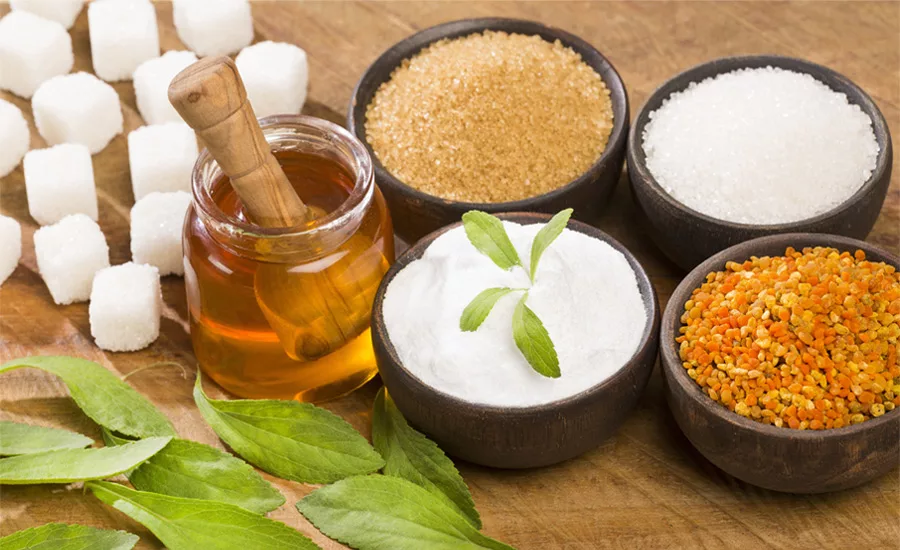
courtesy of: Getty Images
Consumer awareness of ingredients and their impact on health continues to grow as information becomes more readily available across multiple platforms. This has helped create a demand for “cleaner” labels with fewer artificial ingredients. Shoppers are increasingly avoiding ingredients perceived as negative, with sugar reduction among the primary goals in new formulation development.
The sugar reduction trend is expected to be particularly dominant in North America, with an expected growth of $10.8 billion by 2026, at a CAGR of 5.1 percent over that period. In addition to an added consumer emphasis on eating healthy, increased diabetes prevalence and the ever-worsening obesity epidemic are among the most prominent drivers of this growth (“Sugar Substitutes Market,” Aug. 2020, Reports and Data).
In the U.S., Mintel GNPD data show 48 percent of consumers found a “No Added Sugar” claim more appealing than a “Low/Reduced Sugar” claim, as reported during IFT 2019 by Lynne Dornblaser, director of innovation and insight, Mintel, Chicago. This presents significantly more challenges when creating a high-quality finished product that still meets consumer expectations, due to sugar’s role in not only sweetness but a range of other functional properties.
These consumer-driven demands are now recognized by the FDA with new regulatory requirements on labeling. In September 2018, FDA communicated its goal to increase consumer awareness of the quantity of added sugars in food products. With updated label requirements, the FDA hopes consumers can better understand how foods with added sugars can fit into a healthy dietary pattern (“Statement from FDA Commissioner Scott Gottlieb, M.D., on an updated approach for including added sugar information on the Nutrition Facts labels of pure maple syrup and honey,” Sept. 2018, FDA).
As recently as July 2020, changes to the recommended dietary guidelines for sugar intake were published by the Dietary Guidelines Advisory Committee, calling for reducing added sugar intake from 10 percent of total daily calories to 6 percent. The data-driven guidelines are produced by the Department of Health and Human Services and USDA every five years to help Americans make educated choices about their health.
The higher the sugar replacement, the more challenging for food scientists to deliver the flavor, texture, color, stability, and cost-effectiveness demanded by consumers. This continuing challenge is the driver for the development of more innovative ingredients, blends, and other technologies to approach or match the expected properties sugar brings to formulations.
As noted by the Canadian Sugar Institute, sugar plays six main roles besides sweetness (“Roles Sugar Plays in Foods”). Each of these functions is responsible for a key attribute consumers generally seek when shopping for a particular food product. The fluffy, fresh baked bread and creaminess of ice cream on your tongue are both a result of sugars contributing to structure or an important chemical reaction. Understanding the function of sugar in a food or beverage product is crucial when planning to reduce, remove or replace it from an item.
Strategies for decreasing added sugars include the use of high-potency sweeteners, polyols, soluble fibers, functional blends, and nutritive sweetener synergies, but formulators must also consider consumers’ possible concerns, including digestive tolerance and price demands.
Functional bulking agents
Newer ingredients like allulose allow formulators taste, texture, and functional bulking properties similar to sucrose, but with only a tenth of the calories. It is used to reduce or replace sugar in bars, confections and yogurt, to name just a few applications. It also browns during baking, depresses the freezing point when making ice cream and is highly soluble.
Meanwhile, polyols not only provide sweetness but are also among the most common bulking agents employed during sugar replacement efforts. The issues with utilizing these ingredients are the effects on crystallization. All sweeteners are readily soluble in water, but increasing solubility lessens crystallization.
Typically, the solubility of polyols increases substantially by increasing temperature. Heat and supersaturation, followed by carefully controlled cooling, may inhibit crystal formation in a range similar to sugar. However, if temperature is not carefully controlled, supersaturated solutions (commonly used in confectionery) are unstable and can crystallize too rapidly. These crystallized sweeteners are far less capable of reducing water activity, resulting in lower shelf stability.
When controlled crystallization is desired, polyols with lower solubility such as mannitol, isomalt and erythritol provide varying levels of crystal formation and size, which impart desired ranges of texture, from granular to crystalline. With higher solubility, polyols like sorbitol and maltitol are used to replace sucrose in applications that require very controlled crystallization for smoother textures, such as chocolates or other low-moisture products like cookies.
The polyols that are highly water-soluble also tend to be very hygroscopic (readily absorb water). Using polyols that are very low in hygroscopicity, such as erythritol, isomalt and mannitol, results in products that do not absorb moisture, thus reducing the potential for stickiness.
Polyols also exhibit good heat and acid stability and do not undergo browning reactions, attributes that can be advantageous in applications where color development is not desired.
Polysaccharides, such as maltodextrins and soluble fibers, can serve as strong, functional sugar substitutes. In confections, maltodextrins act as bulking agents and may also be used to provide foam stabilization, control sucrose crystallization, form a barrier layer before panning, act as a glaze on panned goods, and serve as a binder in tableted confections (“Confectionery Science and Technology,” 2018, Springer). These ingredients contribute to moisture control, emulsion stability, mouthfeel and body, and offer minor viscosity in sauces and dressings, batters, beverages, fillings, etc.
Soluble fibers allow for closer one-to-one replacement of sugar in most applications. The combination of high-water solubility and high solution viscosity (at Brix ≥ 70 percent) of soluble fibers facilitates the processing of sugar-free and reduced-sugar products. Soluble fibers develop slightly higher viscosities, although they are typically similar to sucrose.
Insoluble fibers develop significantly higher viscosities than sucrose, and are not recommended as sugar replacers in most applications.
Soluble fibers, including polydextrose, inulin, soluble corn fiber, and wheat dextrins are amorphous and do not crystallize at low temperatures or high concentrations. These qualities control polyol and sugar crystallization. The control of crystallization ultimately changes the structure and texture of the finished product (“Fiber Ingredients: Food Applications and Health Benefits,” 2009, CRC Press).
Since soluble fibers resemble the hygroscopicity of sugars, they readily bind with water. By increasing both temperatures and moisture (high humidity), the effect on the glass transition temperature decreases, which can result in shape deformation, stickiness, and/or pooling. By contrast, increasing temperatures and decreasing moisture (low humidity) causes an increase in glass transition temperature, leading to brittle and/or tough textures (“Non-Equilibrium States and Glass Transitions in Foods: Processing Effects and Product-Specific Implications,” 2017, Elsevier).
Utilizing the functionalities of bulking sweeteners (polyols) in combination with soluble fibers results in ideal textures and overall product stability, enabling innovative new products and more control of ingredient interactions in existing products. Once desired texture and stability are achieved with bulking agents, sweetness and flavor can be addressed.
Sweetness, flavor, and taste
With sweetness being the obvious attribute considered when reducing sugars, high potency, non-nutritive and nutritive sweeteners often offer an optimal solution. These options also allow a developer to take advantage of sweetener synergies for improved flavor, intensity, and aftertaste (linger).
Using a sweetness perception curve, the temporal profile of a sweetener (at the same relative intensity) shows the onset and linger potential of that sweetener. Based on this data, combining multiple sweeteners allows a formulator to control negative attributes by balancing onset with linger. This is demonstrated in the common use of erythritol combined with stevia extract. Since erythritol has a rapid onset of sweetness, it counterbalances the long linger associated with stevia extracts while still maintaining a clean label. However, it is important to note that high-potency sweeteners have greater intensities at low sweetness levels than high ones. At some point, adding more high-potency sweetener will not make an application sweeter because the perception/intensity will plateau.
Taking advantage of sweetener synergies is also a way to reduce total sugars in any application. Some sweeteners—when combined—exhibit greater-than-expected sweetness. Sweetness synergy becomes more pronounced as the level of sweeteners increases. These synergies cannot be predicted from the properties of the two sweeteners alone and must be determined experimentally.
Sugar reduction can even be achieved using only nutritive sweeteners through sweetness synergy. For example, combining equal parts of sucrose and fructose will result in an overall 25 percent increase in intensity perception. That increased perception can allow a formulator to use up to 25 percent less total sugars while maintaining desired sweetness. Sucralose is the most commonly used high-potency sweetener with multiple synergies to magnify sweetness; it can be used with other artificial high-potency sweeteners and also with nutritive sweeteners and polyols.
All polyols (or sugar alcohols) contribute to a range of sweetness and exhibit negative heats of solution, resulting in a cooling sensation when dissolved in the mouth. The intensity of this cooling effect depends on the magnitude of the heat of dissolution. Maltitol and isomalt show no cooling effect, while xylitol imparts a strong cooling sensation. Sugar alcohols are commonly paired with high potency sweeteners to achieve the desired intensity with a more balanced profile and improved functionality.
The introduction of functional sugar replacement blends is an ease-of-use way to reduce or replace sugar in most applications. Available blends contain erythritol, allulose, and stevia extracts in scientifically formulated combinations to provide exemplary flavor, optimum performance, clean labeling, and a range of relative sweetness (one to three times sweeter than sucrose). The development of these types of functional blends takes the guesswork out of reducing sugars in new product development formulations.
Improving the consumer experience
Reducing sugar from a technical perspective is difficult, and can affect consumers in ways beyond initial consumption. Gastro-intestinal intolerances are related to the consumption of many of the polyols and soluble fibers needed to reduce sugar and maintain overall functionality, and thus, special care should be placed on formulations of products where larger portions are typically consumed.
The significantly higher costs to source and manufacture healthier food options without sacrificing product quality are also restrictive. Partial sugar reductions or smaller serving sizes may be an easier option in reaching the targeted reductions while maintaining a satisfactory eating experience.
Whenever sugar, or any significant ingredient, is removed from a formula, something must be added to maintain the proportions of the other ingredients, and to sustain the desired product quality and stability. No matter how you “cut the sugar,” the reduced sugar segment is still expected to see continued growth. Again, regardless the demand for reduced sugar options, most consumers still value the indulgent factor of the sugary-based products they grew up enjoying and sharing.
Looking for a reprint of this article?
From high-res PDFs to custom plaques, order your copy today!