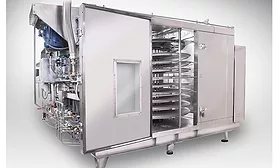
According to the U.S. Environmental Protection Agency's Energy Star program, the domestic baking industry consumes an estimated $800 million worth of purchased fuels and electricity per year, as noted in its guide, "Energy Efficiency Improvement and Cost Saving Opportunities for the Baking Industry" (Nov. 2016 update, available on www.energystar.gov).
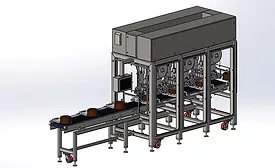
Automation, advances in sanitary design, greater worker safety and additional flexibility in packaging have been among the top requests that manufacturers of cutting, slicing and portioning equipment say they've been fielding from their customers this year.
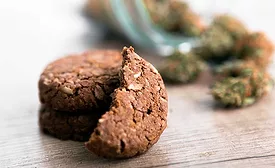
Legal cannabis is already the fastest-growing industry in the U.S., with the first two states to legalize recreational use, Washington and Colorado, currently generating more than $100 million per month in sales.
Snack mixes and nuts have always been a popular snack because they have a "health halo," and are also usually available in on-the-go varieties. Over the past year, consumers have continued to search for better-for-you snack mixes, but at the same time, they're also looking for new and innovative flavors and varieties that are perhaps more exotic than previous incarnations, with touches of indulgence.
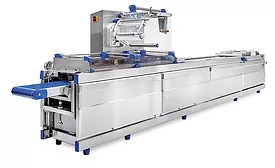
The latest form/fill/seal (FFS) packaging systems are designed to accommodate a wide range of packaging options at high speeds while ensuring food safety via sanitary design. The systems combine flexibility and automation, as they often need to pack different products on the same line. In addition, new designs enable quick changeover.
Ever since Frank Yiannas of Walmart's Food Safety Leadership published his insightful book "Food Safety Culture" in 2008, the food and beverage industry has embraced the reality that having a strong food safety culture is essential for success.
As more bakeries embrace the trend of distributing frozen product, managing temperatures at key points throughout production has arisen as crucial aspects of success.
The idea of "better for you" encompasses much of what consumers desire today in many of their snacks and baked goods: clean label, non-GMO, natural and—at its core—solid nutrition to make those foods a healthy part of their daily diet.
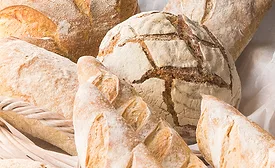
As the artisan bread movement continues to gain momentum across the U.S., one of its most-ancient forms—sourdough—is garnering more-widespread attention.
The autolyse is an optional but easy method to incorporate into the mixing cycle of many artisan breads. The autolyse technique was likely used throughout bread-making history but was codified by Professor Raymond Calvel in his seminal work, "Le Goût du Pain," which has been translated into English as "The Taste of Bread."
 RSS
RSS