Mouthfeel crucial to consumers: Tate & Lyle
Experts from the food solutions firm explain how it impacts rhe eating experience.
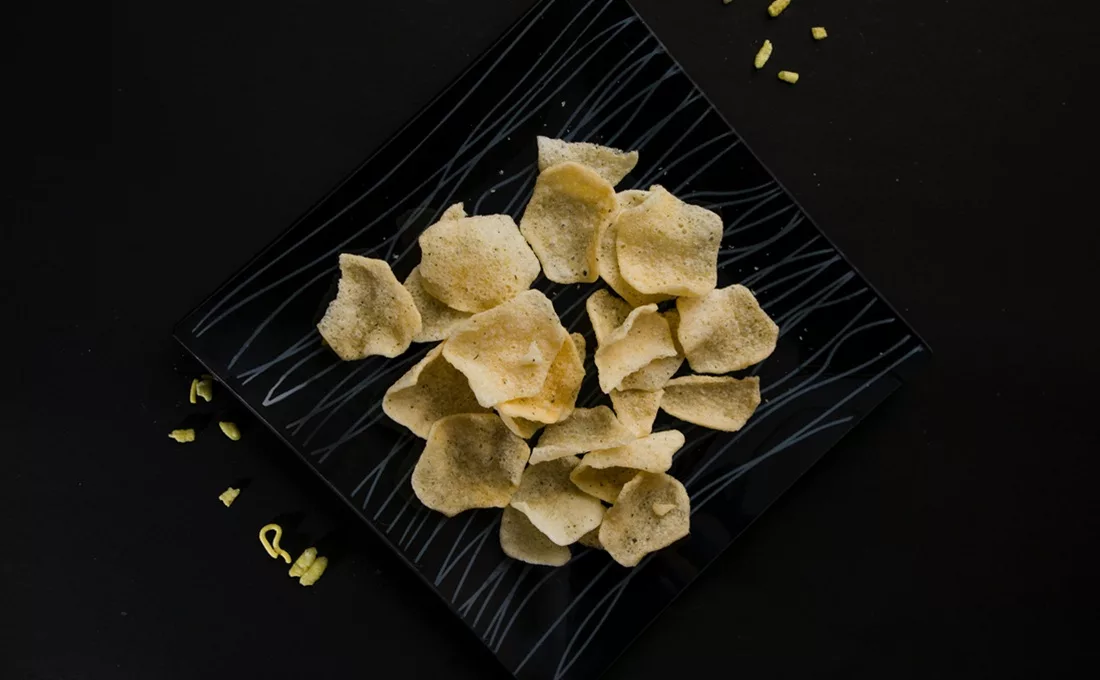
Flavor is not the only factor that impacts the taste and experience of eating something, whether it’s a savory snack, sweet bakery good, candy treat, or other food item. The mouthfeel and other aspects can increase how much a snack appeals to a consumer, how much they enjoy it, and whether they come back to buy again. To learn more, we connected with two experts from food solutions provider Tate & Lyle:
- Adrienne Pohrte, technical service director for bakery, soups, sauces, and dressings
- Venetia Sequeria, senior category development manager
Jenni Spinner: I think most of the people reading this know what Tate & Lyle is about, but could you please share a brief overview of Tate & Lyle’s capabilities and solutions for people in food and beverage?
Venetia Sequeria: Tate & Lyle has been a trusted partner within the ingredient innovation space for over 160 years. For professionals (especially within the baking, snacking, and confectionery space), we offer a very powerful combination of science, consumer insights, and application expertise to help brands meet their evolving needs. Within our portfolio, we have sweetening solutions, mouthfeel solutions, as well as fiber fortification solutions. With the sweetening solutions, we support sugar and calorie reduction without sacrificing the taste or indulgence, so whether it's a reduced-sugar cookie, a better-for-you snack, or what have you, we can help brands deliver that sweetness with balance.
Within our texture portfolio, we help elevate sensory experiences—think a crispier cracker, chewier protein bar, a smoother bakery filling. For example, our portfolio has over 250 starches. We have some proteins we recently combined with CP Kelco, so we are now complemented by hydrocolloids like pectin and xanthan gum, and citrus fiber. And lastly, we have fiber fortification, so we have clean-tasting, gut-friendly, soluble fibers that can be formulated very easily into baked goods and snacks, supporting digestive health and nutritional label goals as well.
That being said, beyond ingredients, we also bring very deep expertise through our global teams in nutrition science R&D, like applications and technical service, that Adrienne is a part of, and consumer insights that I'm a part of. We work closely with customers to create these solutions that are not only technically strong but also resonate with consumer demand on the market when terms of what consumers want: healthier, tastier, more exciting food experiences.
JS: What are some of the key challenges facing companies looking to formulate new products or perhaps adjust recipes for their current products to meet these ever-changing consumer desires?
VS: Formulating or reformulating a product today is more complex than ever. Companies face three major challenges: cost optimization, formulation, and innovation. Cost optimization essentially means finding ways to reduce ingredient costs or to improve processing efficiencies without compromising on that texture, taste, and shelf life—for example, switching to a more cost-effective starch while maintaining the crumb structure of a muffin within the bakery space.
The second challenge we can think of is reformulation, and this is often driven by health trends, regulatory changes, even sustainability goals; for example, reducing sugar, removing animal-based ingredients, or meeting clean-label standards. These changes can affect or impact mouthfeel as well.
The third one I mentioned was innovation, which is about staying ahead of consumer expectations. Today's shoppers are looking for new textures. They're looking for elevated indulgences, or they're looking at hyper crunch in snacks like crackers. We work closely with brands to help create these moment these wow moments, through proprietary insights and advanced formulation tools.
JS: At IFT FIRST, Tate & Lyle had a really big booth, where there were lots of different discussions going on. Could you talk about some of the concepts that you had on tap and some of the focus points that you had going on?
Adrienne Pohrte: We really focused on demonstrating our new capabilities and solutions with our combined portfolio, and with our legacy CP Kelco ingredients, really trying to integrate both historic and new options that we have for our customers—demonstrating what's possible with this expanded portfolio, delivering some new solutions. Holistically, that's what we wanted to demonstrate to the industry: our new power, and each prototype hit on a specific mouthfeel trend. For each concept, we were using our solutions to deliver one of those and help it bring it to life, so you could taste and experience that.
VS: Mouthfeel is the texture and sensation of food as it is consumed. How does it feel? How does it sound and behave in the mouth? It could be the creaminess of a frosting, the crunch of a cracker. It could be the chew of a snack or protein bar. While we see that as taste is the No. 1 driver of purchase for consumers, mouthfeel actually is a very critical part of that entire experience, which means that getting mouthfeel right is essential for satisfying consumers and driving that repeat purchase.
However, what we also see is that it's one of the hardest things to formulate, because consumers know what they like—crispy, smooth, chewy—but they struggle to describe that in detail, which makes it challenging for brands to translate these consumer preferences into product specs. Mouthfeel is also multisensory—it involves appearance, sound, texture, and even temperature, for that matter. It’s very complex, and that calls for deep technical expertise as well as a strong understanding of consumer behavior.
This year at IFT, we launched the Mouthfeel Lab; it was very interactive, and it brought science to life. Attendees could go into the booth, explore prototypes that aligned with emerging trends. For example, think about an aerated texture; we had hyper crunch in terms of a cracker. They could see how these solutions could create that perfect mouthfeel for each application.
JS: One of the things that you had in the booth that brought home the mouthfeel concept for me was a dual-layer pina colada pop. Could you talk a little bit about that prototype, including the components, and how it demonstrated the mouthfeel concept?
AP: This one was really featuring some multi-texturing. Having multiple textures within one component is really exciting for your mouth because you get to experience a lot of different things simultaneously. In the two layers, we had different texturizing components that drove those different textures. On the pineapple one, it was a no-sugar-added pectin gummy. We had a specific pectin in there to get the tender texture, then (because it was no-sugar-added) we were leveraging several of our different fibers, as well as our allulose to give the function of sugar in the product, but without adding grams of sugar.
Then, we created separately a carrageenan gummy, with a foamy texture, chewier, aerated, and definitely different than the pectin gummy. The texture was driven by carrageenan, so again, a different hydrocolloid, giving it a different final texture in the product. To make them, we essentially made a starch board. We got our molds, deposited the pectin gummy first, then we made the carrageenan foam gummy, put that on top, and then dried them in our oven, and then stuck the stick in—pretty straightforward, but a lot of science went into getting that created.
JS: Another IFT sample was crunchy snackers and dill pickle mousse—could you tell us a little bit about that prototype?
AP: This one was focusing on airy and crunchy textures that we had highlighted that are really trendy right now. With the veggie snacker: if you're familiar with like veggies sticks, it's similar to that, but our concept was sheeted and baked instead of extruded and fried—better for you and maybe easier to manufacture for people that don't have extruders or fryers. Essentially, we had a cracker with some veggie powder. We also had our expander starch to help with the machineability of the dough, so it wasn't sticky, and we could run it through our lines. In the oven, the addition of expander allowed it to pop so it was hollow on the inside, like a straw. It was nice and crunchy, and we added fiber to it to help increase the crispy, crunchy nature of the product and increase the nutrition of it. Then, our aerated dill pickle mousse was really interesting—creamy, yet not too dense, because we had it aerated, which really impacted the flavor and texture. It was a fun play on veggies and a dip.
JS: What are some of the things that producers should consider when looking to execute a product with spot-on mouthfeel?
Adrienne: Go back to “who are your consumers, and what do they want?” Think about geography and moments of consumption, in addition to some demographics of that consumer. People are looking for different things at breakfast versus midday, versus late at night. That understanding will help. For example, you might think, “I should really do crunchy,” but some people don't want a loud, crunchy snack at work, so if it's a midday snack that you are developing, maybe you don't want to lean to that side. We found that that can really impact what makes a product hit the mark, hit all the marks for different consumers. Venetia, would you add anything else to that?
VS: Mouthfeel is a very essential part, but it's very difficult to formulate accurately. For example, consumers might say, “I want a crispier cracker,” but what does that really mean in terms of translating a product into a successful product in the market? That's very complex. What we've done is develop Tate & Lyle Sensation. It's a formulation tool that helps crack the code of texture and mouthfeel in three steps. First, insights, our team maps out what consumers of a given geography and category want in terms of mouthfeel. We then translate the language that they used around the desired mouthfeel into a scientific sensory lexicon. Then, we put all that together to offer a very unique toolkit of solutions that deliver the attributes that consumers want the most. We've done this in a couple of different categories, in a couple of different regions. However, we're still expanding this program
JS: Did you have anything to add about the concept of mouthfeel or the capabilities that Tate & Lyle offers to help people pull it off successfully?
AP: Tate & Lyle’s solutions in science are really unparalleled in terms of mouthfeel possibilities and options, and as Venetia just mentioned, our sensation work that we're doing, understanding consumers, translating that into a meaningful, tangible, technical lexicon, and then combining that with insights in terms of how our ingredients can impact those textures. If our customer is running a consumer test, and the consumer is telling them, “I need it crispier,” we can then make recommendations on our portfolio: “Okay, we suggest you do X, Y, or Z to drive that crispiness feedback that you're getting,” and so that helps their speed to market, and speed of innovation. That is really impactful with our over 1,000 different ingredients—it’s really kind of mindblowing how many options that we have that we can play with across our portfolio to deliver whatever it is that consumers need. That is our differentiation and how we can help our customers formulate fast.
Looking for a reprint of this article?
From high-res PDFs to custom plaques, order your copy today!