Non-UPF Verified certification debuts on products
The mark, indicating a food is not ultraprocessed, has debuted on several items.
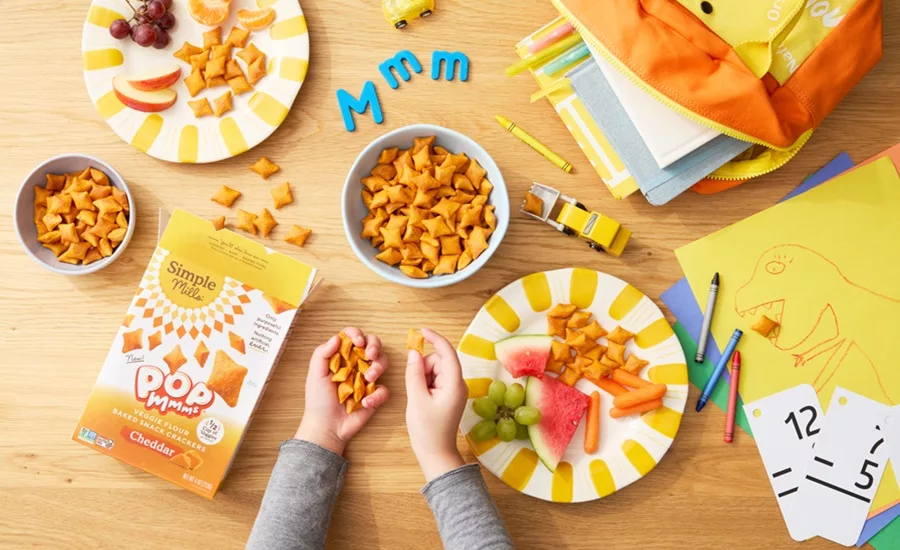
The Non-GMO Project named the first seven brands to earn verification for select products under its new Non-UPF Verified program, a third-party certification designed to bring transparency to how food is processed.
The first brands with verified products—Amy’s Kitchen, Simple Mills, Spindrift, Chomps, Olyra Foods, Yes Bar, and Heray Spice—participated in the Non-UPF Verified pilot program launched in 2025. Together, they helped shape the Non-UPF Verified Standard (v1.1), reportedly ensuring it reflects both scientific integrity and real-world manufacturing conditions.
“The first brands earning the Non-UPF Verified mark helped us test and refine the Standard in real-world conditions,” says Megan Westgate, founder and CEO of the Non-GMO Project. “While the Standard is rooted in extensive research and expert input, the pilot program allowed us to pressure-test its practical application across complex supply chains. These brands strengthened the implementation and demonstrated that setting clear boundaries around formulation and processing is achievable at scale. Many of them have been committed to limiting ultraprocessing for years, and their leadership helped ensure this program is both rigorous and workable for the industry as a whole.”
From concern to clarity: why Non-UPF Verified exists
Ultraprocessed foods have become a concern in nutrition and public health, yet shoppers lack a reliable way to identify them. According to the organization, nutrition labels and ingredient lists reveal only part of the story, leaving the degree and purpose of processing largely invisible.
Non-UPF Verified reportedly was created to bring transparency to that missing dimension, evaluating not only ingredients, but also processing methods, formulation intent, and how foods are structurally altered before they reach store shelves. The Standard is intended to distinguish between processing that supports nourishment and ultraprocessing that fundamentally changes how food behaves in the body.
Momentum around ultraprocessed foods is also growing at the policy level. Recent federal Dietary Guidelines have echoed what researchers have been warning for years: that diets dominated by ultraprocessed products carry significant public health consequences. But from the Non-GMO Project’s perspective, while awareness is rising, practical tools have lagged behind, leaving many consumers unsure how to act on the advice to “avoid ultraprocessed foods.”
According to consumer research conducted by the organization’s Food Integrity Collective, 72% of shoppers are actively trying to avoid ultraprocessed foods, yet most struggle to identify them; this, the organization states, underscores the demand for a clear, trusted standard that brings processing transparency into everyday decision-making.
“Processing has always mattered, even when we didn’t have a shared language for it,” says Westgate. “Many of these founding brands built their companies around a commitment to keeping food closer to its natural state. Non-UPF Verified brings clarity to that commitment, giving shoppers a credible signal that the thoughtful choices these brands have made all along are backed by science and confirmed through independent review.”
Meet the first brands with Non-UPF Verified products
While they span categories from protein snacks and sparkling beverages to baking mixes, snack bars, and pantry staples, the first brands with products earning Non-UPF Verification share a common thread: each reportedly was founded on the belief that food should nourish, not manipulate.
Founded in 1987 by Andy and Rachel Berliner, Amy’s Kitchen reportedly began in a California farmhouse kitchen when Rachel, pregnant with their daughter Amy, couldn’t find convenient organic meals made with the quality ingredients she wanted for her family. What started with a single vegetable pot pie has grown into a family-owned organic food company offering hundreds of frozen and packaged meals across the U.S. and internationally. From the beginning, Amy’s was said to be built on the belief that convenient food should be made with real, carefully sourced ingredients, cooked with the same care you would use at home.
“Amy’s was founded on the belief that convenient food should be made with real ingredients, cooked as you would at home, and held to a higher standard,” states Paul Schiefer, president of Amy’s Kitchen. “Participating in the Non-UPF Verified pilot reflects our ongoing commitment to transparency and to helping families navigate today’s confusing food landscape with confidence. We’re proud to help lead this conversation and advance greater understanding around what’s in our food.”
The company reportedly was founded in 2012 by Katlin Smith after a personal turning point reshaped how she viewed food. While working as a management consultant, traveling often, and relying on convenient packaged foods, Smith wasn’t feeling her best and decided to switch to a primarily whole foods-based diet. As she relates, she started to feel better and realized the power that food has to transform how people feel. Simple Mills was borne from that realization, with a mission to reimagine pantry staples like crackers, cookies, bars, and baking mixes with consumer health in mind by using purposeful, nutrient-dense ingredients.
“Since day one, we’ve been committed to designing foods with purposeful, nutrient-dense ingredients,” states Smith. “We’re proud to have pioneered the use of nut, seed, vegetable, and legume flours in novel ways to deliver nutrition, taste, and texture from whole food sources. We’ve always believed in full ingredient transparency because consumers deserve clarity they can trust. We were honored to be part of the Non-UPF Verified pilot program to help set a standard across categories. It’s thrilling to see the industry catching up to the rigorous ingredient criteria we’ve long championed, and to help raise the bar for what consumers should expect from packaged foods.”
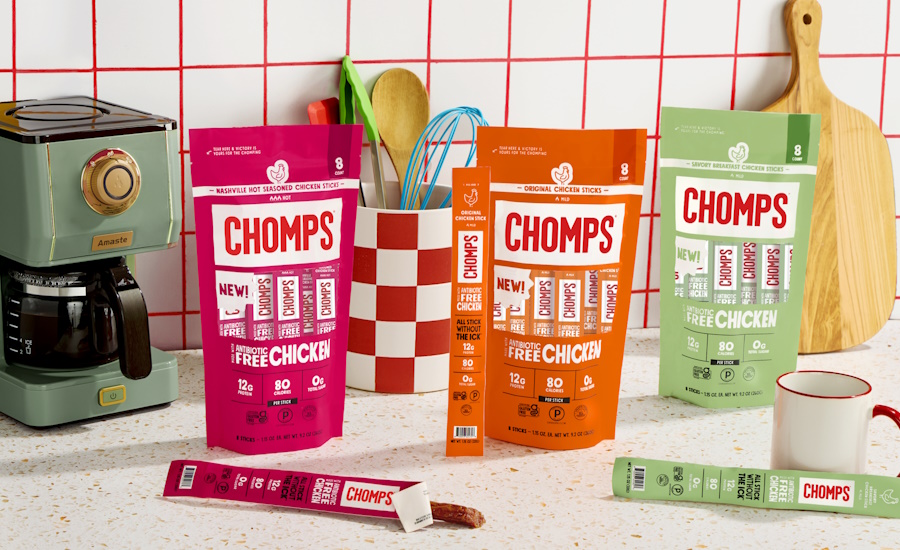 Courtesy of Chomps
Chomps is said to be founded with a clear mission to create a high-quality protein snack made from real ingredients, without sacrificing flavor or convenience. Co-founders Pete Maldonado and Rashid Ali set out to create a meat snack rooted in thoughtful sourcing and simple ingredients. From the beginning, the brand reportedly has focused on eliminating the guesswork in better-for-you snacking while delivering bold, satisfying flavor.
“Chomps was founded on a simple belief: a nutritious snack made with real ingredients should never compromise on flavor or convenience,” shares Elizabeth Carter, president and COO of CHOMPS. “In a marketplace crowded with confusing nutritional claims, our mission has always been to remove the guesswork and give consumers a clearer path to better choices. Joining the Non-UPF Verified program is a natural extension of that commitment.”
Rooted in a five-generation family legacy of stone-milling grains in Thrace, Greece, Olyra Foods is said to have been founded to bring the wisdom of traditional Mediterranean nourishment into the modern snack aisle. Inspired by the Ancient Greek belief in balance, founder and CEO Yannis Varellas built the brand around organic breakfast snacks crafted with time-honored methods—including stone-milling—designed to preserve flavor, integrity, and nutritional value. Olyra’s inclusion among the first brands with Non-UPF Verified products, according to the organization, underscores how deeply rooted food traditions can offer a powerful blueprint for the future of minimally processed packaged foods.
“At Olyra, balance has always been our guiding principle, in the ingredients we choose, the processes we use, and the traditions we honor,” says Varellas. “Being Non-UPF Verified is an independent validation of what we’ve practiced for generations, and a meaningful step toward helping consumers navigate a crowded snack landscape with confidence.”
According to its founders, the company was born from a personal mission: to create a clean, nourishing snack that could support wellness and still feel like a true treat—one the whole family could confidently say yes to. Inspired by co-founder Abigail Wald’s children and a desire to address inflammation through real food, the brand reportedly has spent more than a decade crafting bars with transparency, balance, and a commitment to real ingredients.
“We chose to join the Non-UPF Verified pilot program because we have always done things the hard way, building our bars ingredient by ingredient just as we did in our own kitchen in the early days,” says Brennan Spreitzer, co-founder and partner at Yes Bar. “What resonated so deeply with us was that the Non-UPF Verified team approached this framework the same way: with rigor, thoughtfulness, and a willingness to do the hard work to get it right.”
Spindrift
Founded in 2010, Spindrift reportedly set out to challenge expectations of what a sparkling beverage could be, building its brand around the belief that the best flavors come directly from nature. By using real squeezed fruit rather than concentrates or artificial sweeteners, the company set out to redefine simplicity in a category often shaped by artificial flavorings. Its decision to participate in the Non-UPF Verified pilot is said to reflect a long-standing commitment to minimally processed ingredients and ingredient transparency.
“This verification matters because it helps people clearly identify beverages made without the industrial additives and heavy processing that now define much of the beverage aisle,” notes Dave Burwick, CEO of Spindrift. “From day one, we built Spindrift around real squeezed fruit, bubbles and water, because it delivers better taste and because simple, recognizable ingredients matter. Being Non-UPF Verified makes that long-standing commitment visible.”
Heray Spice
At the foundation of any meal lies its seasoning, and Heray Spice was founded to honor that foundation, reconnecting consumers with fresh, single-origin spices while helping farmers earn fair wages for their crops. Built around ethical sourcing and traditional cultivation methods passed down through generations, the brand is said to be committed to purity, traceability, and keeping its products as close to nature as possible. Its inclusion among the first products to earn Non-UPF Verification reportedly reflects a long-standing belief that integrity in food begins not just with finished products, but with the ingredients that flavor them.
“Verification isn’t just a label for me, it’s a reflection of our promise,” says Mohammad Salehi, founder of Heray Spice. “From our saffron fields to the kitchens they end up in, we want every step to embody purity, transparency, and care. Being among the first brands with products earning Non-UPF Verification is both an honor and a responsibility we carry with pride.”
Raising the bar
By stepping forward early, the organization says, these brands are sending a clear signal across the food industry: that formulation choices and processing methods are no longer invisible. Already, interest in Non-UPF Verified reportedly is growing among brands watching how this first cohort is shaping the conversation.
“The response has been extraordinary,” reports Westgate. “With more than 300 brands interested in applying to the program, it’s clear that the industry is ready to engage with processing in a more transparent way. These first brands with Non-UPF Verified products didn’t just participate; they helped raise expectations across the industry. And as more companies step forward, we have an opportunity to reshape the marketplace around food that is made to nourish.”
What comes next
Non-UPF Verified is now open to brands seeking third-party verification that reflects how their food is truly made. As more products earn verification, the organization predicts, shoppers will gain clearer signals in a crowded marketplace, and the food system will gain a shared framework for accountability and progress.
According to the organization, the larger story is the growing recognition that how food is processed matters, and that the future of packaged food does not have to be defined by industrial shortcuts. They state it can be defined by intention, integrity, and respect for the people and their families who rely on these products every day.
Related: Non-UPF Verified program aims at ultraprocessed foods
Looking for a reprint of this article?
From high-res PDFs to custom plaques, order your copy today!