ABA leaders discuss baking industry’s next level
The group's president/CEO and board president talk challenges and opportunities.
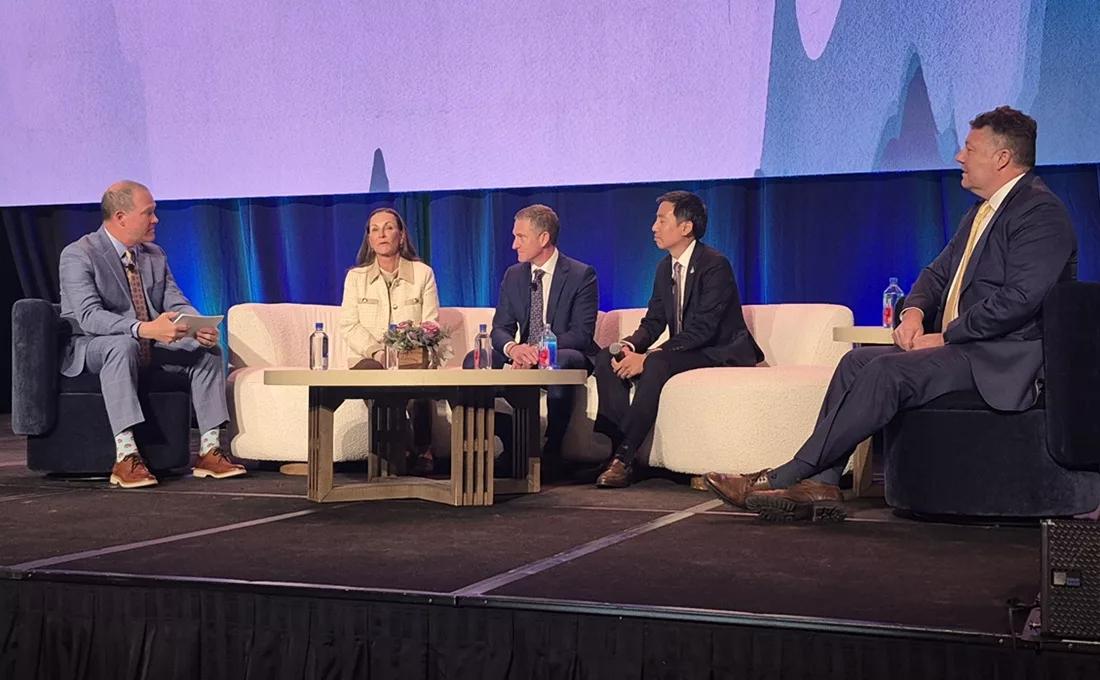
The 2026 American Bakers Association (ABA) Convention—which recently gathered leaders from producers, industry partners, and other stakeholders in Colorado Springs—tackled a long list of challenges and opportunities professionals in the field are wrangling with. During a break in the action, we sat down with two leaders to collect their thoughts on the obstacles the industry has faced, and what might lie ahead:
- Eric Dell, ABA president/CEO
- Brian LeComte, newly appointed ABA board president and president/COO of Gold Medal Bakery
Jenni Spinner: Eric, I think I say this every time we talk, but these are interesting times bakers are going through. Can you share ABA’s perspective on some of the most notable milestones and challenges over the past several months?
Eric Dell: It’s about challenges and opportunities, and they're both in the same area—challenges can turn into opportunities if you treat them that way.
A lot of the challenges over the last couple of months have been regulatory, coming from both the federal and state. Also, we heard earlier today during the GLP-1 session where there may be challenges, but it’s actually creating opportunity for our industry to produce baked goods that meet those GLP-1 consumers where they are and what they're looking for.
Brian LeComte: I’ll add to that—when there are challenges like we've had with consumption over the last couple of years, innovation always spurs up. Innovation, in the long run, is good for the industry—coming up with new products to meet the consumer where they are, especially when the consumer is changing so rapidly. With IBIE, that was good timing—a lot of great discussion happened at the expo, and it ended up being the most successful expo we’ve ever had.
ED: This industry is so resilient. It's amazing to me that bakers can be in a tough economic situation, and they're so positive because they've been through it. What I learned as president of ABA is many of these are multi-generational, family-owned businesses. They've been through a lot, and this is a lot, but they still hold their head up and look at it in a positive way.
JS: Tapping Ambassador Katherine Tai to deliver the keynote, Trade Relations Between the United States, Canada, and Mexico: The Future of USMCA, indicates one area ABA is honed in on. Can you tell us a bit about that area, and why ABA invited her to address?
ED: Ambassador Tai was a late addition to the Convention on purpose. This political and governmental environment changes by the hour. We kept hearing from members about how important all of this was, with trade, a review of the U.S.-Mexico-Canada Agreement (USMCA) was. We wanted to be as timely and as relevant as possible at Convention. We went above and beyond and brought in Ambassador Tai to talk about the USMCA, and it ties into our collaboration with the Baking Association of Canada. It’s all about North America—our supply chains, finished product, ingredients, coming across the borders of Canada and Mexico. It's a big issue for our industry; they're protected now, and we want to keep that protection.
JS: Brian, as a fourth-generation baker who’s been president/COO for nearly a quarter century, you’ve got unique perspective of the industry. Can you reveal what’s been keeping you up at night recently, and how do these challenges compare to the obstacles you’ve wrangled with in previous years?
BL: Nutrition and the changing consumer are the two biggest challenges. But as Eric mentioned, we’ve seen this before. Something very similar happened with the Atkins diet. The way things are coming about with GLP-1 is almost just like we saw then—there was a ton of innovation that came out of that. If you remember, there was an explosion with tortillas at that time, we had the sandwich thins Innovation occurred coming out of Atkins, and we're starting to see the same thing
There’s a lot going on out there in the market, and the baking community is trying different things to figure out what's working and what isn't working. It’s so fast, and every week offers a new challenge.
JS: What about workforce and labor issues—how’s Gold Medal been?
BL: Workforce and labor issues have become a lot better over the last six to 12 months, with turnover reducing. The hiring environment is a lot easier, so that's great news. The work ABA has done, once their strategic plan was finalized, has really helped out in this area, targeting some data about “What's the best way to hire? What are the different positions out there that you need to look for?” It's still tough to hire maintenance mechanics. Outside of that, it's been actually much better.
JS: Another question for Brian: Please share some of the ways in which you feel ABA has helped you and your baking colleagues deal with these issues.
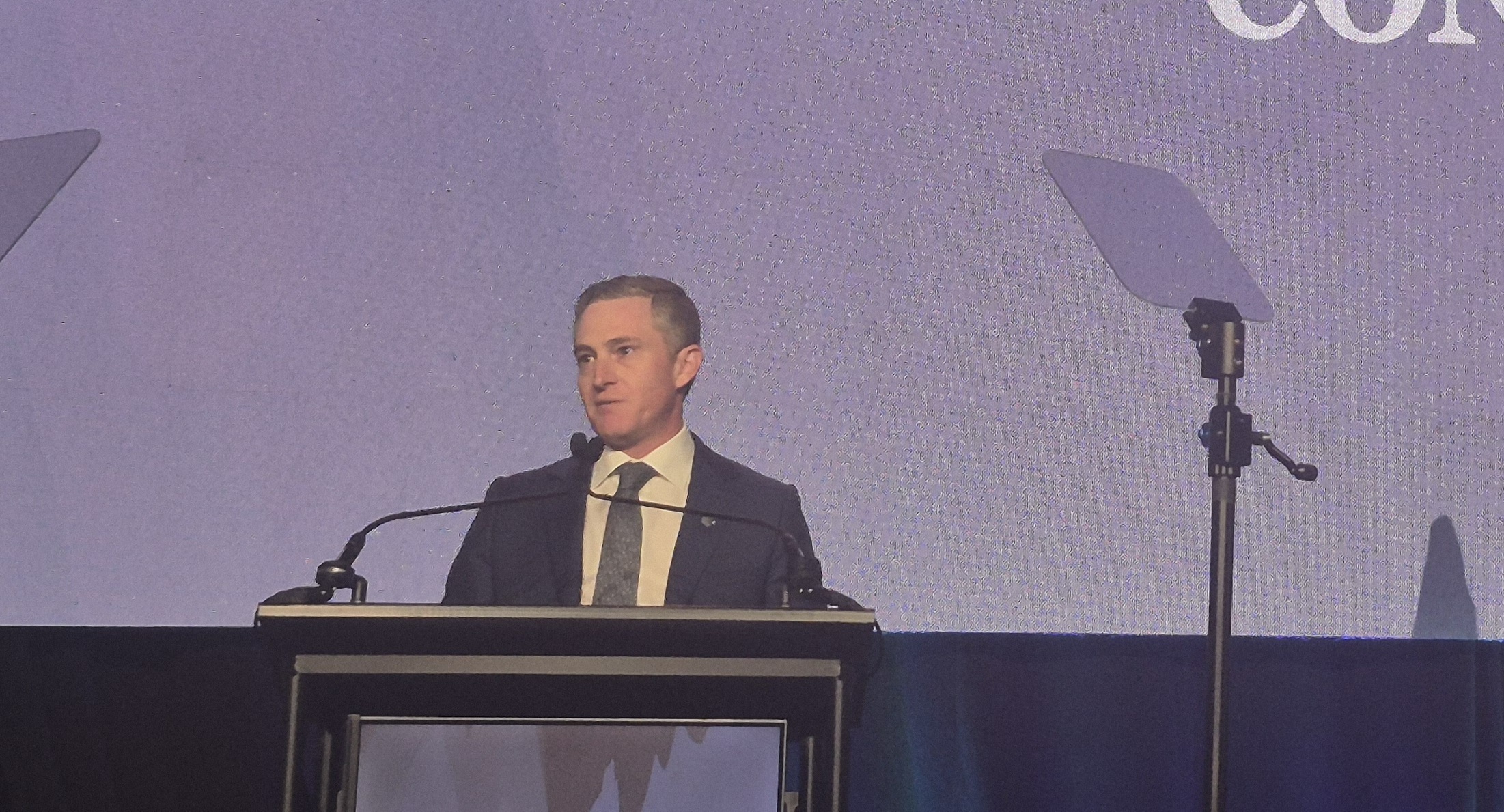 Photo: Jenni Spinner
BL: On the changing consumer, ABA has been instrumental with the Bakery Playbooks. Our team has gotten to the point where we've had conference calls with ABA about some of the data that's out there. It’s been helpful for our team to guide us in our formulation, R&D, and with some of the innovation that we're working on, so it can be more targeted, rather than just a shotgun approach. We’re trying to hit bullseyes.
JS: Eric, did you want to piggyback on that, maybe how ABA strives to meet Gold Medal and the other member bakers where they are?
ED: Absolutely. I think Brian raises a good point, but I'll add to that. ABA’s advocacy work at state and federal levels, on so many issues that we're working on, not only helps bakers, but it also helps the entire supply chain—allies, ingredients suppliers, etc. Advocacy and networking, bringing people together at events like this, putting them in the same place together, like the Dine Around dinners we had last night—there’s so many dinners and occasions to network together.
Additionally, ABA has upped our game with advocacy and research. Brian mentioned the Playbooks, but broader than that, the research that we're doing on tariffs and other issues have really helped us to help the industry. The government affairs team at ABA is first class, so as these issues change—in Washington, but also at the state level—the communication is outstanding.
JS: Earlier this month, ABA made a move by bolstering leadership, with a slew of promotions and additions—please tell us about what these personnel additions/changes say about ABA’s commitment to the industry and its members, and how they’ll empower the association to better further the industry.
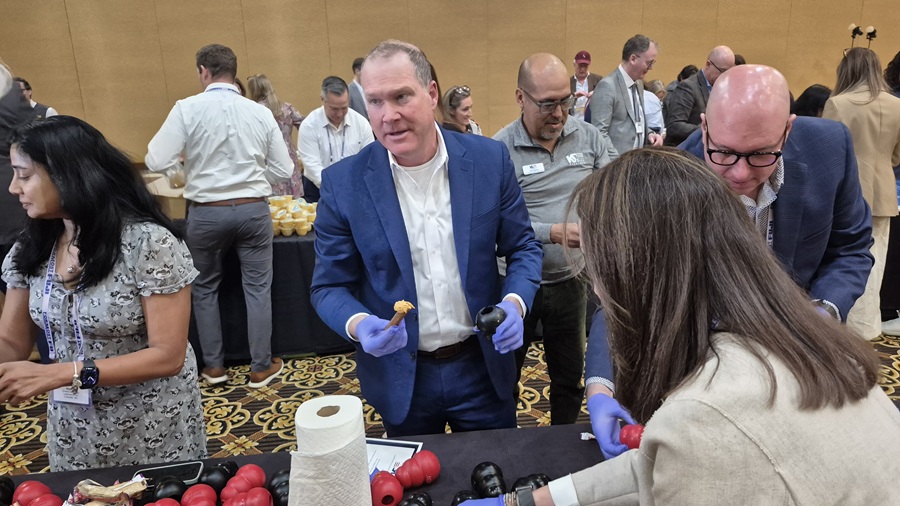 Photo: Jenni Spinner
ED: This all ties back to our strategic plan. One of our goals is higher-level impact. The other two goals are having bakery be a destination workplace and driving category growth—those are outward-facing. The higher-level impact is inward to the association. When I came in, we already had a really great team, so we try to keep elevating. When I was at a previous job, we toured Google, and a guy that had been there like 20 years said, “The goal at Google is always to hire someone smarter than myself.” What we’re trying to do is build a team that’s smarter than me, and surround myself with people who are experts in their field to deliver the best for the association and for the membership. We recently hired a chief staff, we strengthened our finance team, we've insourced our communications department with Christina [Donnelley, VP of strategic communications and initiatives], who now has four people on her team. We have three people in finance now, economists on board. We have the events team structure. It’s all coming together, and honestly, our membership has grown a lot, so we need to service a larger membership while also having the resources to help continue that growth.
BL: I’ll add that it's a credit to the industry that membership, the board and the executive committee are all supportive of this. In challenging times when the industry is stepping up and investing even more resources into this, that's incredibly important to be able to drive things forward.
ED: We're also investing in our partnerships with ASB [American Society of Baking] and others. We’re focused on leading and helping the industry, and trying to lean into the strengths of each individual association, so there's less overlap, and we can really speak as one voice using the strengths of each individual organization.
JS: I know neither of you owns a crystal ball, but you’re both well informed, so you would know better than just about anyone: what are the coming months going to look like for bakers? Feel free to share any upcoming legislation or regulatory issues bakers should be thinking of, or anything else possibly on the horizon.
BL: I think the challenges are going to continue. I don't think we're out of it yet. Again, innovation is a big deal. You’re going to see a lot of innovation coming out—some of it's going to stick, some of it's not. We're wait-and-see. The hope is that within the next 12 months, there's a focus on what new varieties, what new items, what innovation is actually going to stick, and then we’ll be investing our resources as a company into those areas that we know are going to give us our growth over the next five, 10, 20 years. I have the benefit, coming from a family-owned business, that our outlook is not quarter by quarter, it's literally decade or quarter century by quarter century. We’re trying to make investments today that are going to allow this business to grow over the next 20 or 30 years.
JS: Brian, it's not as if you’re not already busy enough, being a fourth-generation baker—why did you decide to take on the chairmanship?
BL: This is my 19th year on the board. I’m somewhere between eighth and 10th year as treasurer—I can't keep track—so I've gotten to know the industry, I certainly keep learning, and I enjoy it. I feel like I know a lot about the organization. I know something about the industry as well. I've been in it my entire life, so I'm ready to take that next step and be in a bigger leadership role with ABA.
ED: Since I came in, we’ve had changes with the board leadership. We built a lot of partnerships and collaborations with Bill [Quigg, president/CEO of Richmond Baking and former ABA chair], with his background and interests. I think with Brian now coming in, with his background in the industry and as treasurer, what I'll say about the organization and how it runs, I think we're at a period now where we're building and strengthening, and it's perfect timing for Brian to come in and help us reach that next level.
Related: ABA Safety Recognition Program sees record participation
Looking for a reprint of this article?
From high-res PDFs to custom plaques, order your copy today!