State of the Industry 2026: Bakers continue rolling with the punches
A leader from the American Bakers Association offers insights about what’s on the industry’s plate.


While 2025 threw an entire combo platter of formidable challenges at the baking industry, overcoming sky-high obstacles is something professionals in the grain-based foods field are very much used to. Surging costs, ongoing workforce worries, supply-chain tangles, regulatory issues—those are all in a day’s work for a baker.
Organizations like the American Bakers Association (ABA) provide resources to help industry professionals face and overcome all of these concerns. What’s more, groups like ABA are collaborating more than ever to come up with ways to help bakery producers not just survive in the face of these worries, but to come out on the other side better than ever.
To get a handle on what issues bakers have faced in the past several months, Snack Food & Wholesale Bakery connected with ABA President/CEO Eric Dell. The industry leader also shared what might be in store in the near future.
Jenni Spinner: As we’re chatting, ABA Convention 2026 is freshly in our rearview. Could you please share some of the hot topics talked about in sessions and around the meeting center?
Eric Dell: At the top of the list was the rapidly shifting policy and regulatory environment. From federal and state nutrition policy to trade volatility and tariff pressures, there was a lot of focus on how these changes are impacting operations and long-term planning, and how companies can stay ahead of what’s coming next.
Closely connected to that was a strong emphasis on the future of the global economy and trade. Attendees spent time digging into how evolving trade relationships and policy frameworks across North America are shaping supply chains and competitiveness for baking manufacturers.
Another major thread was emerging technologies. There was significant discussion around AI, both the opportunities to drive efficiency and growth, and the practical realities of where AI is actually delivering value for manufacturers today.
We also saw much engagement around consumer behavior and evolving trends. New research on shopper habits, including insights into how GLP-1 users are making purchasing decisions, sparked conversations about how bakers can adapt products and strategies to create opportunities and meet changing expectations.
 Photo: Jenni Spinner
On the leadership side, there was a clear focus on how to lead through constant change, building resilient organizations, fostering agile cultures, removing friction, and empowering teams to think and act more like owners in a fast-moving environment.
Finally, there was an ongoing dialogue around industry collaboration and long-term growth. Whether in formal sessions or informal networking, the Convention served as a forum for leaders to align, share perspectives, and think collectively about how to move the industry forward.
Overall, the event was forward-looking, with a strong sense that while the challenges are complex, there are also significant opportunities for those ready to adapt and lead.
JS: Then, please share some of the biggest challenges producers and bakers were faced with in the past year, and some of the key policy issues/developments bakers have wrangled with in the past year.
ED: Labor challenges continue to be a headache (as always), tariffs, supply-chain issues, etc. From a policy perspective, two issues have really led the conversation over the past year: nutrition and trade.
On nutrition, there’s been significant movement at both the federal and state levels, and the industry has been very engaged throughout. Bakers are navigating evolving guidance tied to the Dietary Guidelines for Americans and broader nutrition policy discussions, while also working to ensure that grains continue to be recognized as an essential part of a balanced, affordable diet. At the same time, the industry has taken a proactive approach, making voluntary commitments like phasing out certified FD&C colors in school meals and the broader marketplace, and eliminating ingredients such as ADA and potassium bromate. Those steps reflect how responsive bakers are to consumer expectations and have helped strengthen credibility with policymakers as the industry continues to advocate for practical, science-based implementation of policies.
On trade, the focus has been on stability and access. Commercial baking is deeply connected to global markets, whether it’s sourcing key ingredients, packaging, and equipment, or exporting finished products. Ongoing tariff pressures and shifting trade frameworks have made predictability more challenging, which directly impacts cost structures and operational planning. In response, the industry has leaned into stronger global coordination, including the launch of the Global Baking Council, and increased its use of real-time economic data to better understand and respond to changing conditions.
 Photo: Jenni Spinner
ABA also launched its new Global Supply Chain & Logistics Professionals Group, which combined the former Commodity and Agricultural Policy Professionals Group and Logistics Professionals Group into a single, unified forum representing the full baking industry supply chain. This combined group will address the increasingly complex challenges facing the industry, from agricultural market volatility and global trade dynamics to distribution and regulatory issues.
Together, these two areas, nutrition and trade, are shaping not just day-to-day operations, but also the long-term strategy for baking manufacturers as they navigate a rapidly evolving landscape.
JS: What are some of the legislative issues on the horizon that bakers should know about, and that ABA is keeping an eye on? The U.S.-Mexico-Canada Agreement, Farm Bill, etc.—whatever you can share would be great.
ED: Looking ahead, there are several key legislative and policy issues on the horizon that bakers should be paying close attention to.
Trade will remain a major focus, particularly with frameworks like USMCA and broader North American trade relationships. Ensuring continued access to reliable, predictable markets is critical for sourcing ingredients and exporting finished products, so any updates or renegotiations in this space will have direct implications for the industry.
 Photo: Jenni Spinner
We expect continued activity around nutrition policy and federal rulemaking, as agencies work through implementation of the Dietary Guidelines for Americans and other emerging priorities from MAHA. These discussions will shape everything from labeling to product formulation and consumer perception.
 Photo: Jenni Spinner
More broadly, the months ahead will require bakers to navigate ongoing uncertainty as the policy landscape remains very active and the national conversation around food continues to evolve quickly.
For ABA, this is about “advocacy ignited.” We’re building on a strong foundation to expand engagement, increasing our impact, and driving deeper member involvement. That means turning passive supporters into active advocates, growing grassroots efforts, and ensuring the baking industry is helping shape what comes next—not just reacting to it.
JS: Bakery has always seemed to be a collaborative industry, but it seems with orgs like ABA, the Retail Bakers of America, the American Society of Baking, and other groups forging closer relationships and alliances, they’re getting closer than ever. Could you please talk about some of these strategic partnerships, and how they benefit bakers in general, and ABA members specifically?
ED: We’re excited to be building stronger collaborations with RBA, ASB, and the Bakery Association of Canada to deliver even greater value for the commercial baking sector. We’ve already started to see that take shape through cross-promotion of key events, like the Baking Association of Canada’s Bakery Showcase in 2026, and the development of joint programming, including an upcoming webinar with Ambassador Katherine Tai on the future of USMCA, that will be available to all three memberships.
This collaboration grew from ABA’s broader strategic plan. There was a clear opportunity to drive higher level impact by working more closely with peer organizations, particularly around advocacy, shared insights, training and cross-border collaboration, while still respecting the distinct role each group plays within the industry. All of this is done with the focus of the industry and the association’s members.
 Photo: Jenni Spinner
In terms of benefits, by aligning where it makes sense, we can deliver more value to our members. That could mean stronger, more unified advocacy on key policy issues, expanded access to insights and expertise, and more opportunities for engagement across North America.
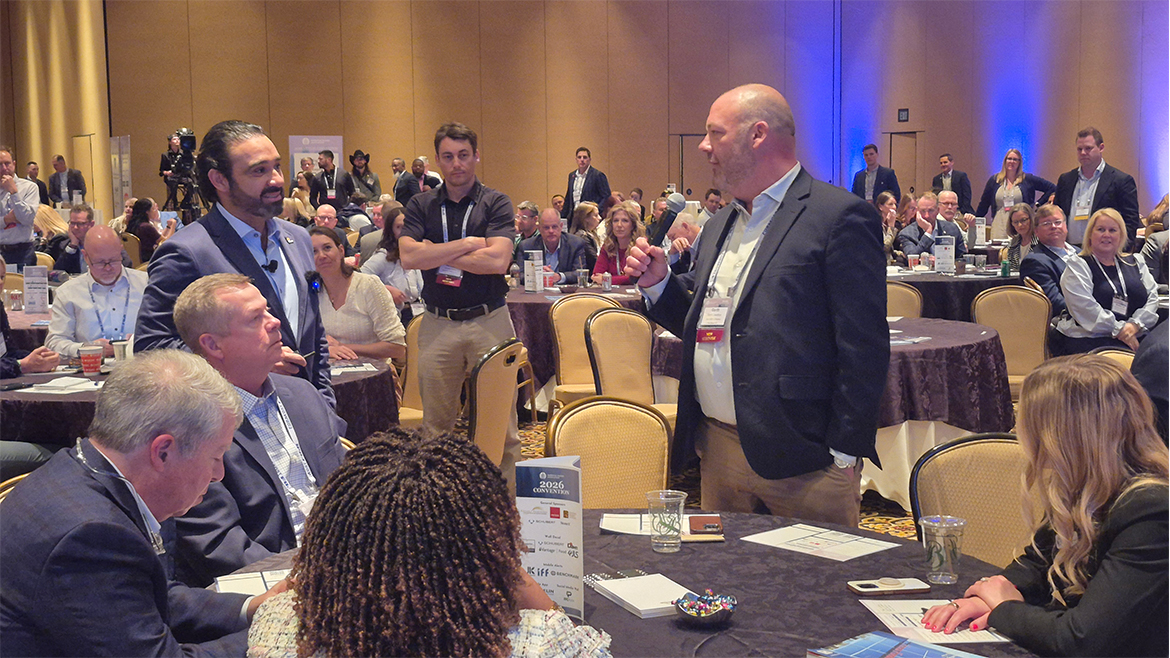 Photo: Jenni Spinner
The work is ongoing and building momentum. You can expect to see collaboration continue to ramp up over the coming months with more joint initiatives and offerings. The goal is to keep moving from coordination to deeper integration in ways that are practical, member-focused, and impactful.
JS: What other ways is ABA going to work to help the industry that we didn’t already cover? Please feel free to mention programming, events, whatever you feel is appropriate.
ED: A big part of ABA’s focus is creating more opportunities for members to actively engage and help shape the future of the industry.
One of the most impactful ways to do that is through advocacy. We’re continuing to expand opportunities for bakers to connect directly with policymakers, whether that’s joining us in Washington, D.C. for the September 15-17 Fly-In or engaging with lawmakers in their home districts. Members of Congress want to hear directly from our industry and those conversations make a difference.
We also encourage members to open their doors and host facility tours with Members of Congress and their staff. There’s no substitute for seeing baking operations firsthand, and these visits are one of the most effective ways to build understanding and long-term support among policymakers.
In addition, ABA is investing in stronger member connections and peer collaboration through our professional groups. These groups are open to all members and provide a valuable forum to share insights, discuss challenges, and learn from others across the industry.
All of this ties back to a broader goal: making sure our members are not just informed, but actively involved—whether that’s through advocacy, networking, or shaping the conversations that will define where the industry goes next.
Looking for a reprint of this article?
From high-res PDFs to custom plaques, order your copy today!